
Mother-of-Pearl Double-Door Jewelry Chest: Landscape and Longevity Motifs
This piece is chosen by those who prefer magnificence when it remains disciplined by structure and meaning.
”Its brilliance does not flash outward all at once; it unfolds like a lacquered landscape at dusk, deepening as one lingers before it.“
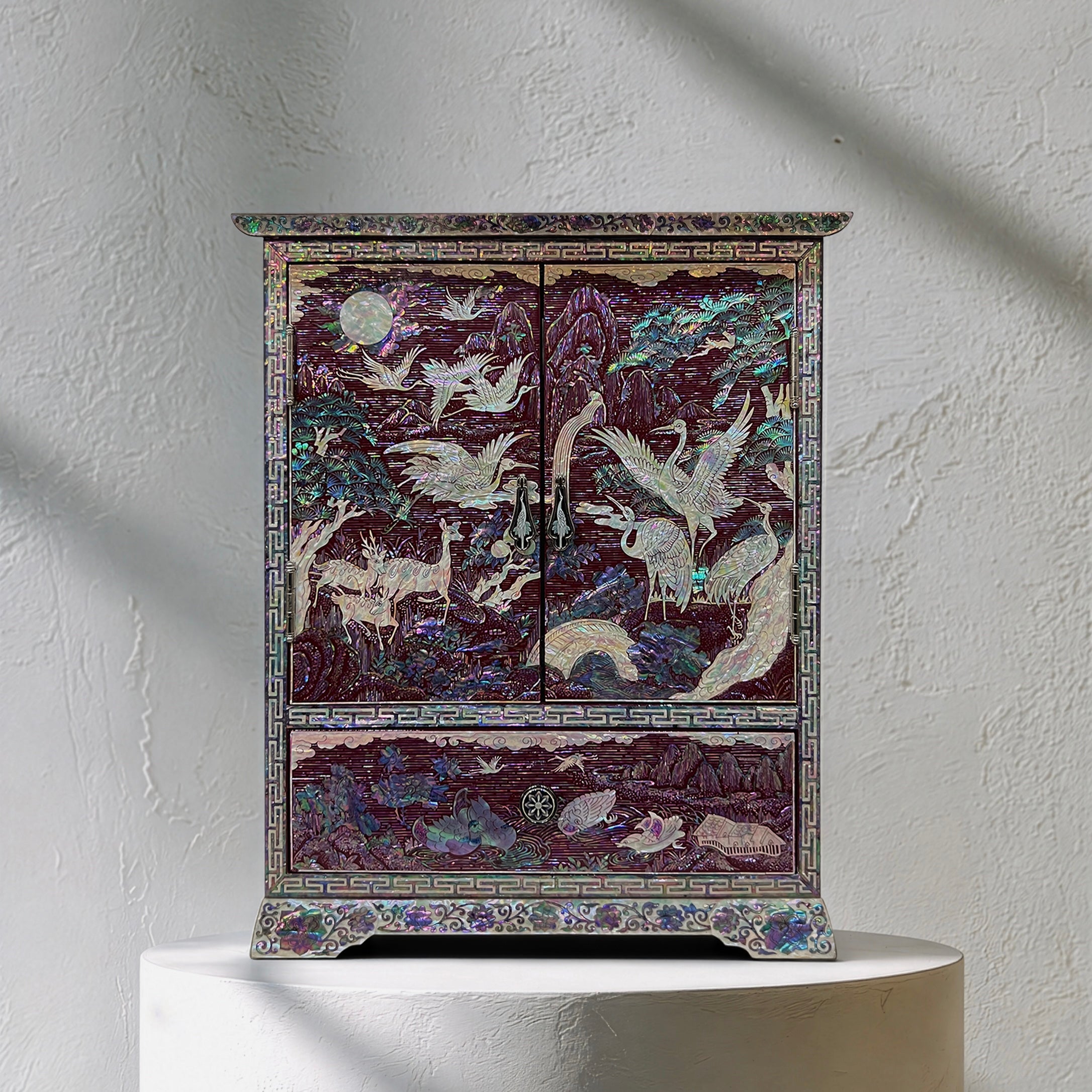
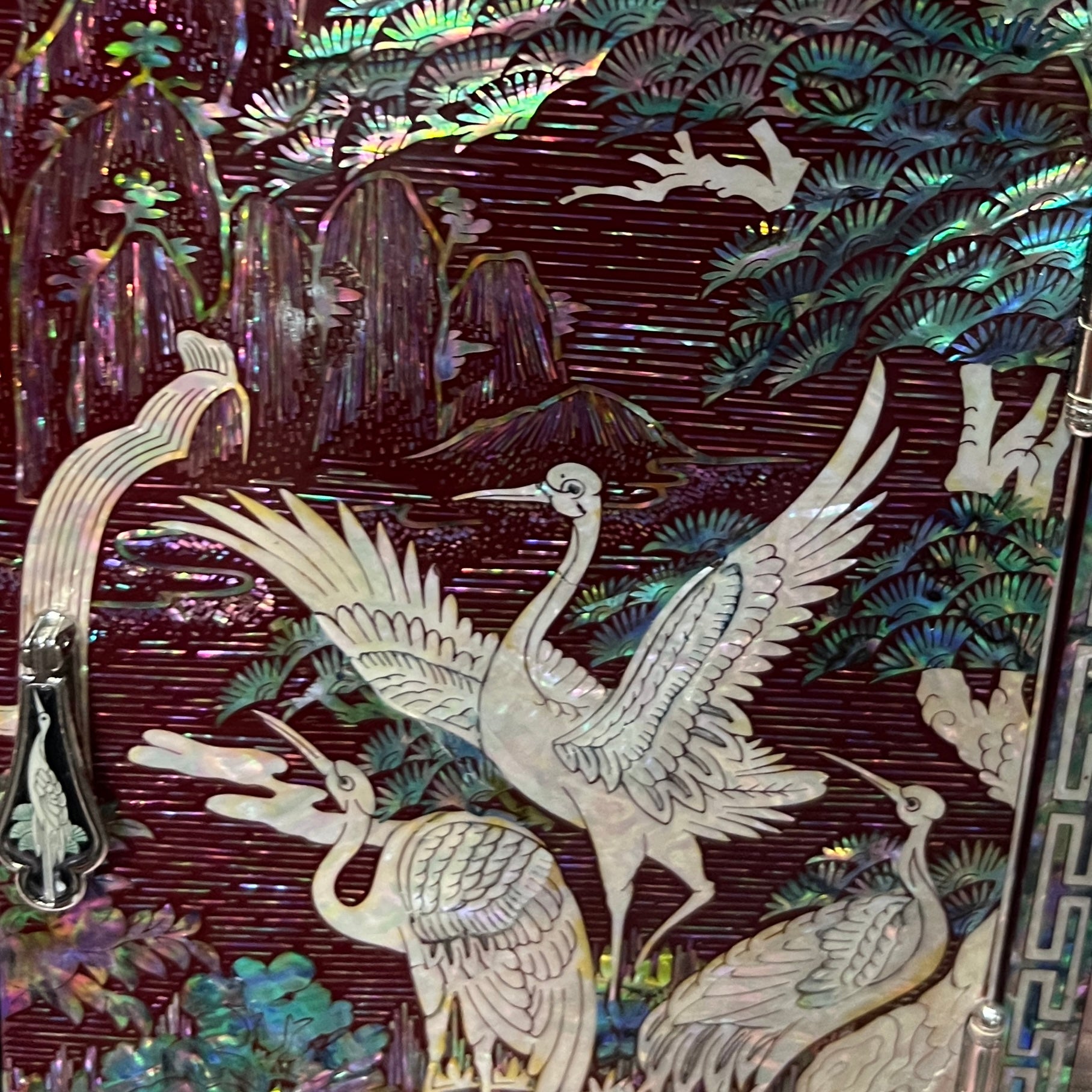
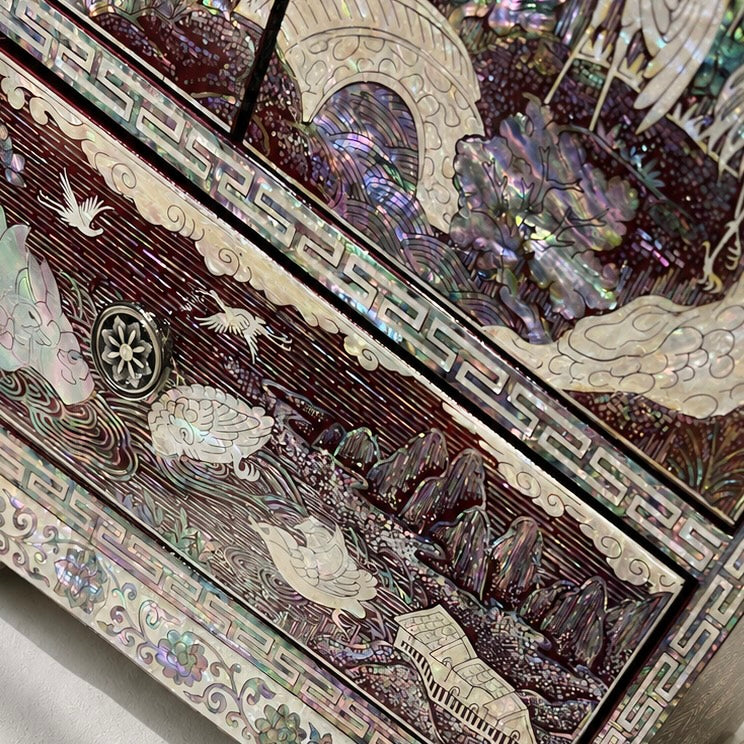
Created by the Korean mother-of-pearl master Lee Young-ok, this double-door jewellery chest is shaped as an object of both splendour and containment. Its wine-red body provides a warm, saturated depth against which the applied shellwork can breathe and shift, sometimes bright, sometimes muted, according to angle and light. That chromatic decision is essential. Had the ground been lighter, the imagery might have scattered. Here, the dark red field gathers the many motifs into one continuous atmosphere, allowing radiance to remain calm.
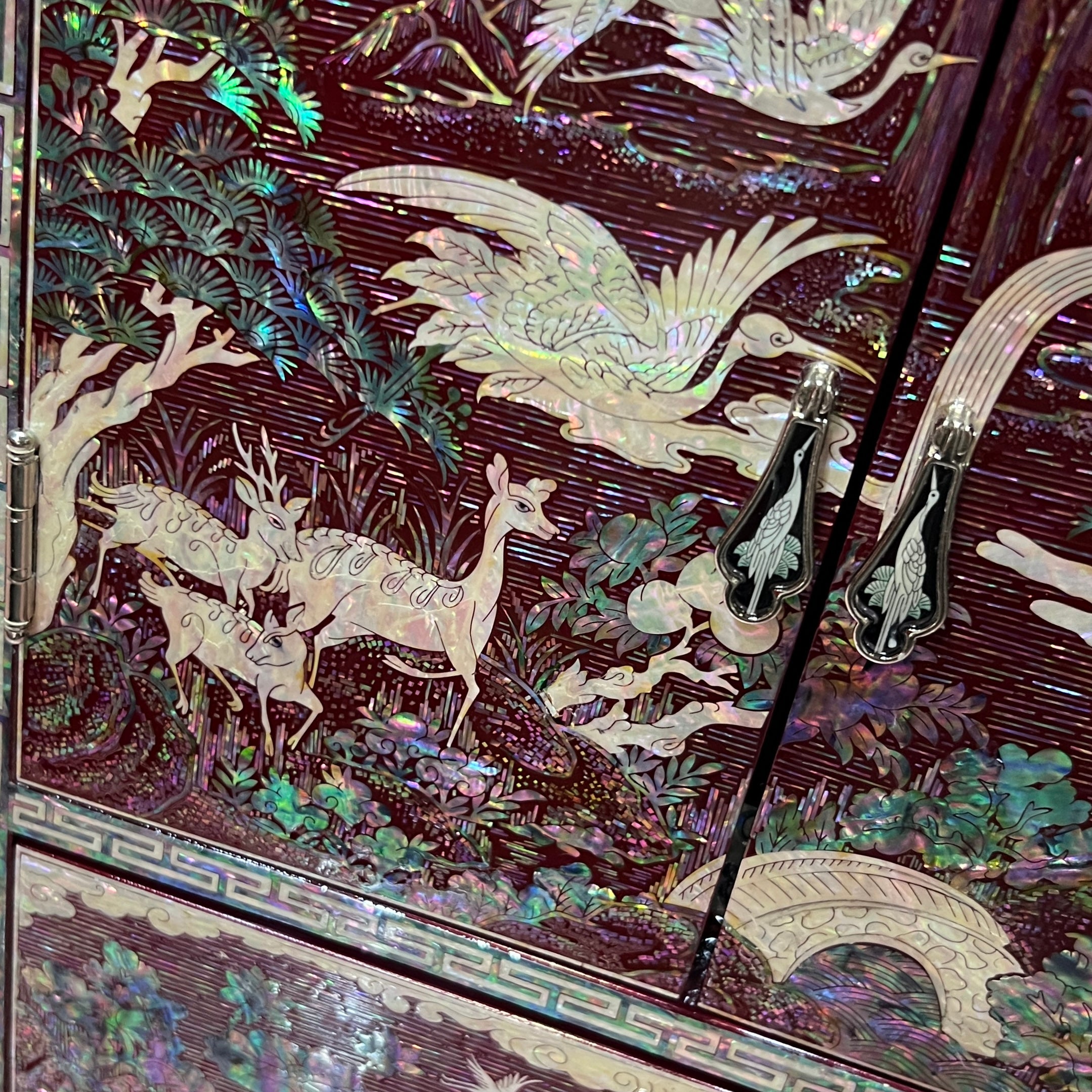
The cabinet was made this way because its purpose is not merely decorative enrichment, but symbolic enclosure. Korean longevity imagery is traditionally cumulative: cranes, deer, pine, mountains, water, and celestial emblems work most powerfully when they are seen together as a complete auspicious order rather than as isolated signs. This chest adopts precisely that logic. The outer surfaces become a protected landscape of long life and blessing, so that the act of storing precious things is placed within a wider cultural imagination of preservation, continuity, and good fortune.
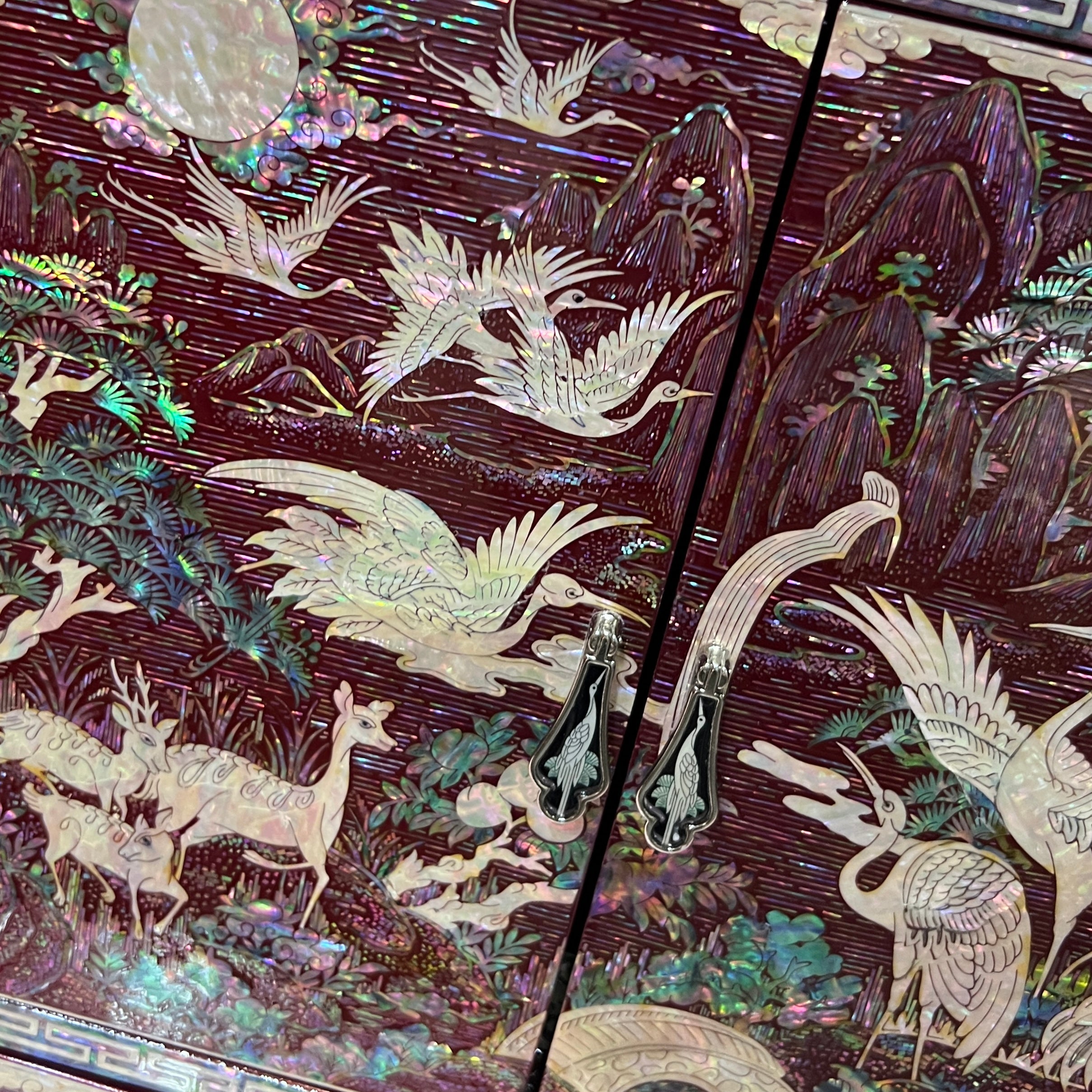
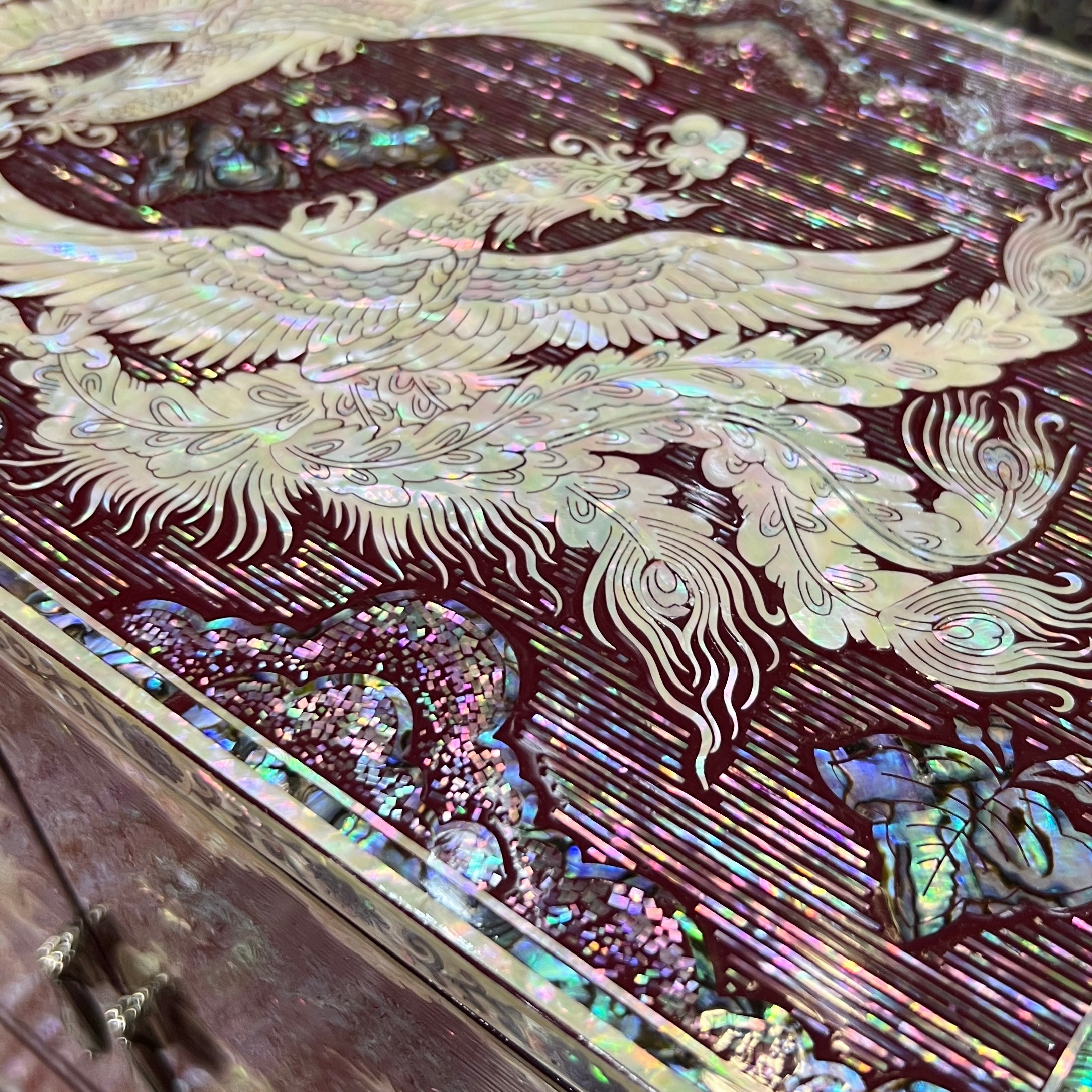
What is especially striking is the treatment of surface. The shellwork is not confined to large pictorial motifs alone. Much of the visual density comes from extraordinarily fine linear detailing, in places almost thread-like, produced through the demanding cutting and setting of very narrow shell elements. This painstaking method gives the work its vibration. Mountains seem to tremble with distance, water carries movement, feathers open into light, and foliage acquires texture without heaviness. The labour is not hidden, yet neither is it announced. It is absorbed into the quiet authority of the whole.
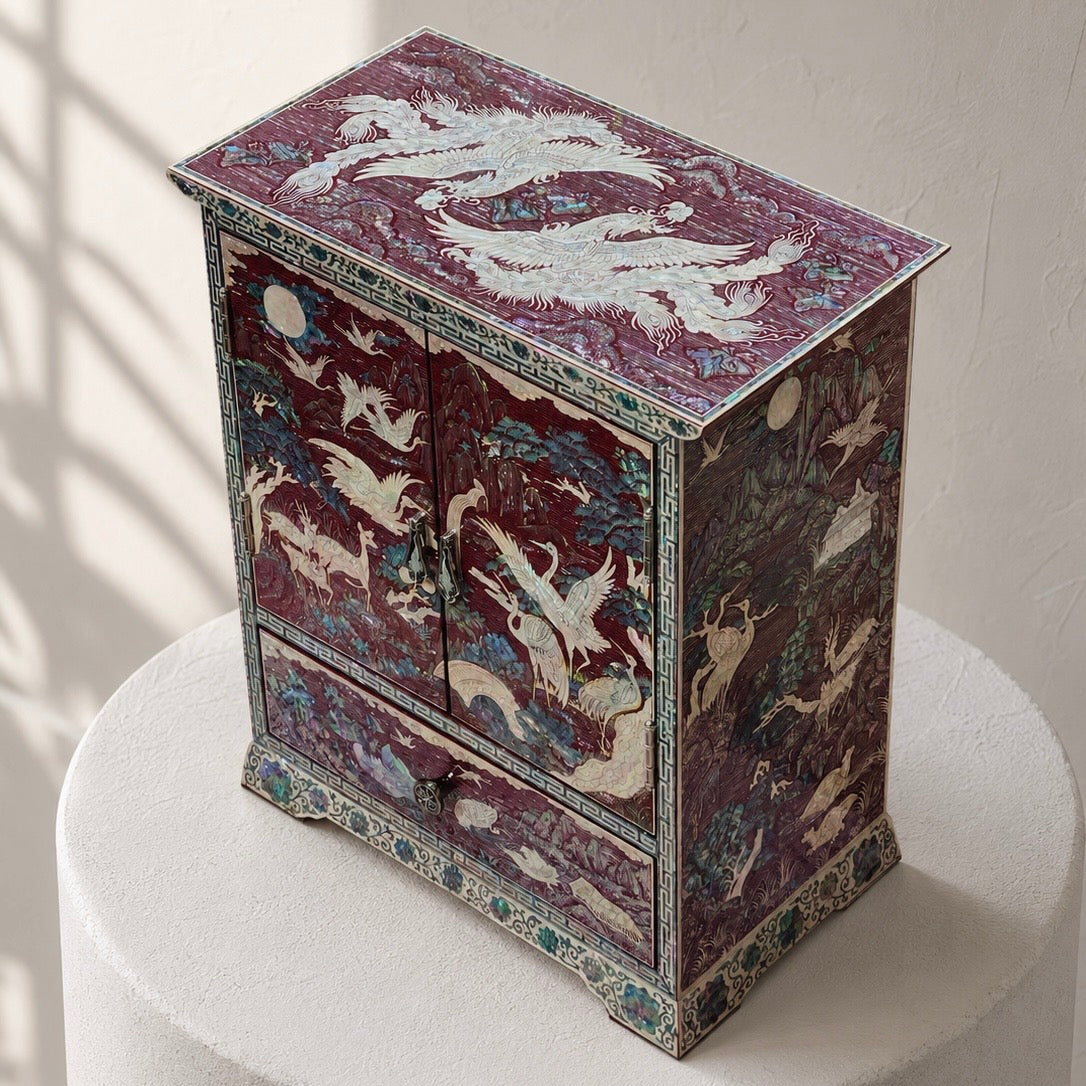
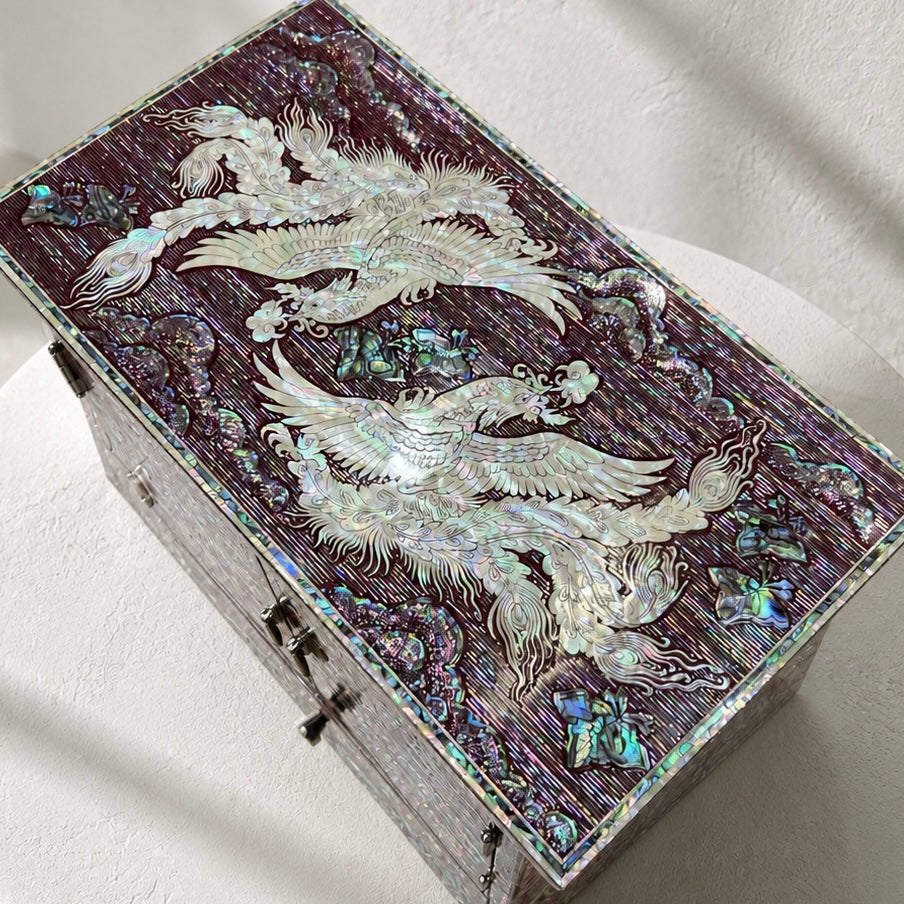
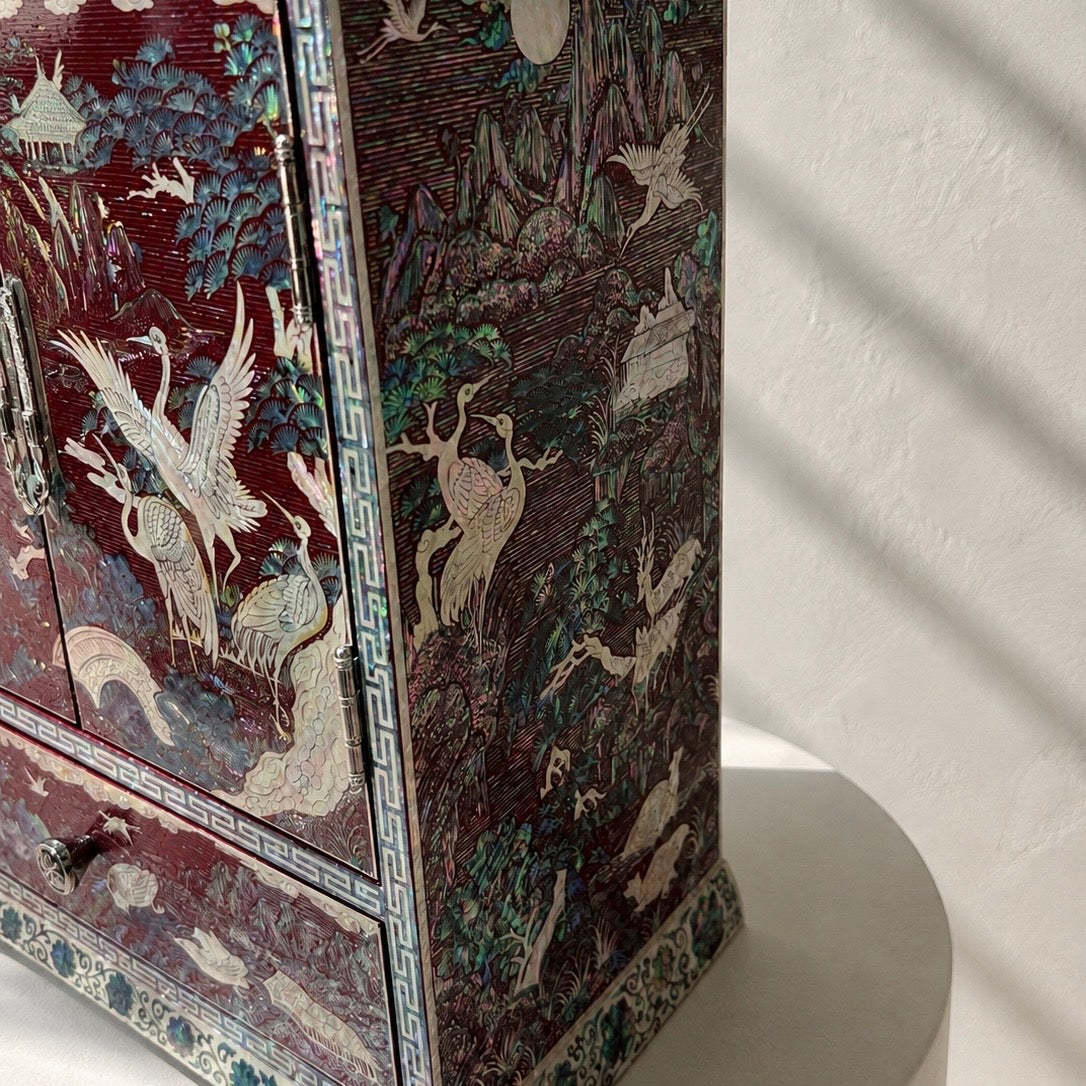
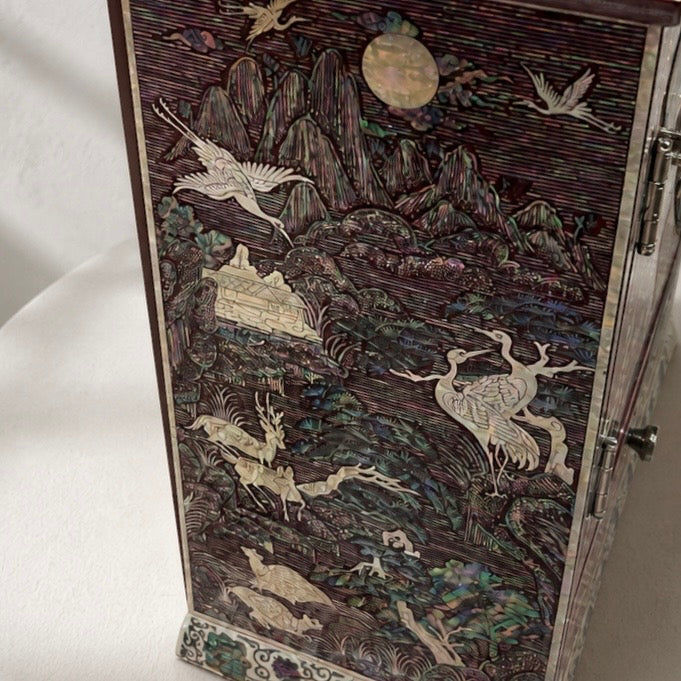
The object’s pictorial programme also deserves close attention. The exterior doors form the principal stage, presenting cranes and deer within a mountainous waterscape. In Korean tradition, these are not arbitrary decorative creatures. Cranes and deer belong to a visual language of longevity; pine speaks of constancy; mountain and water lend permanence and expansive order. The top panel extends this world upward with a pair of large auspicious birds in flight, giving the cabinet a kind of celestial roof. Whether read specifically as phoenix-like birds or more broadly as auspicious birds, their placement above the chest is deliberate: they elevate the cabinet’s visual register and complete the object from above, where lesser works often fall silent.
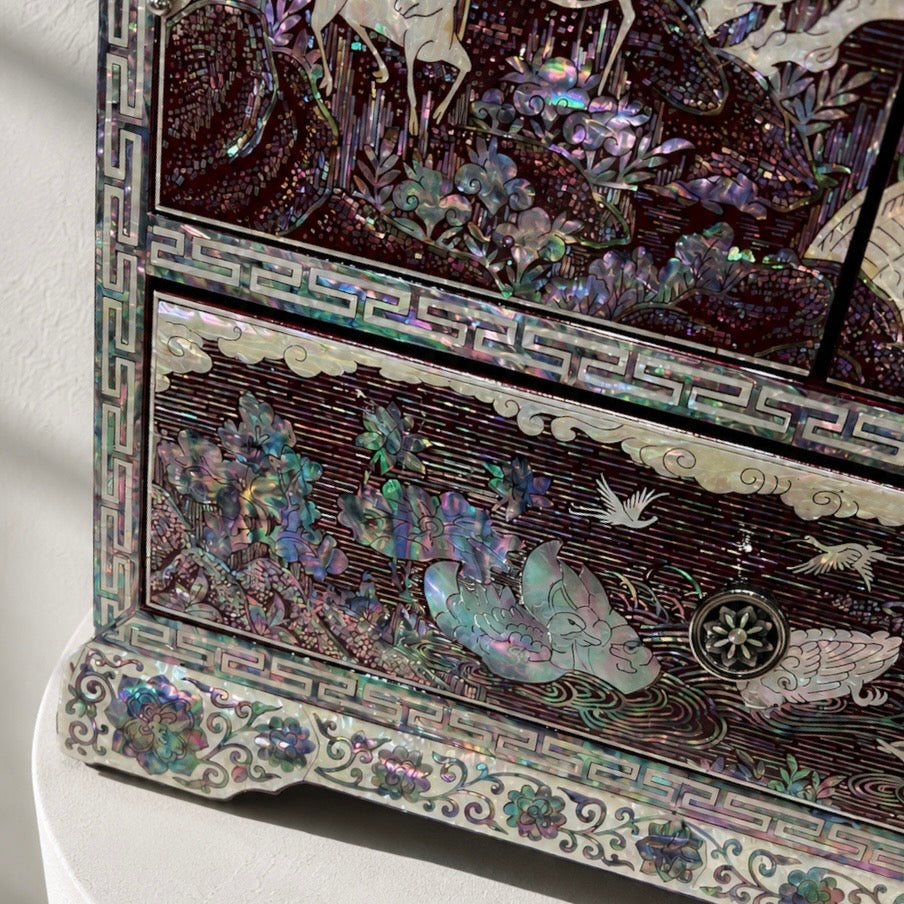
The side panels are equally important. Rather than functioning as secondary ornament, they continue the landscape so that the chest remains fully alive in profile. This continuity shows why the work had to be made as a cabinet of this scale. A smaller, flatter object would not allow such pictorial extension. Here, volume becomes part of meaning. The viewer does not confront a single image, but moves around an inhabited world.
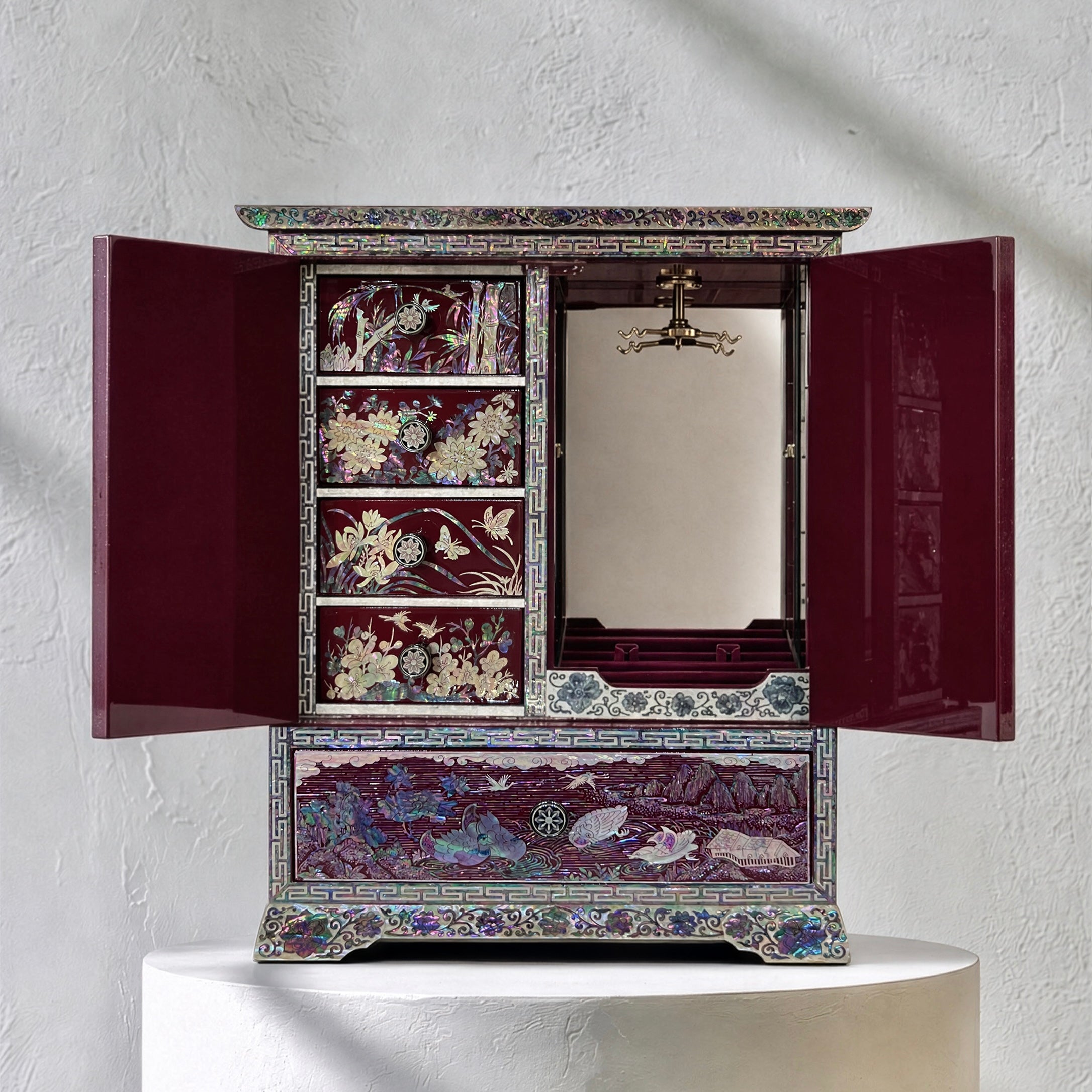
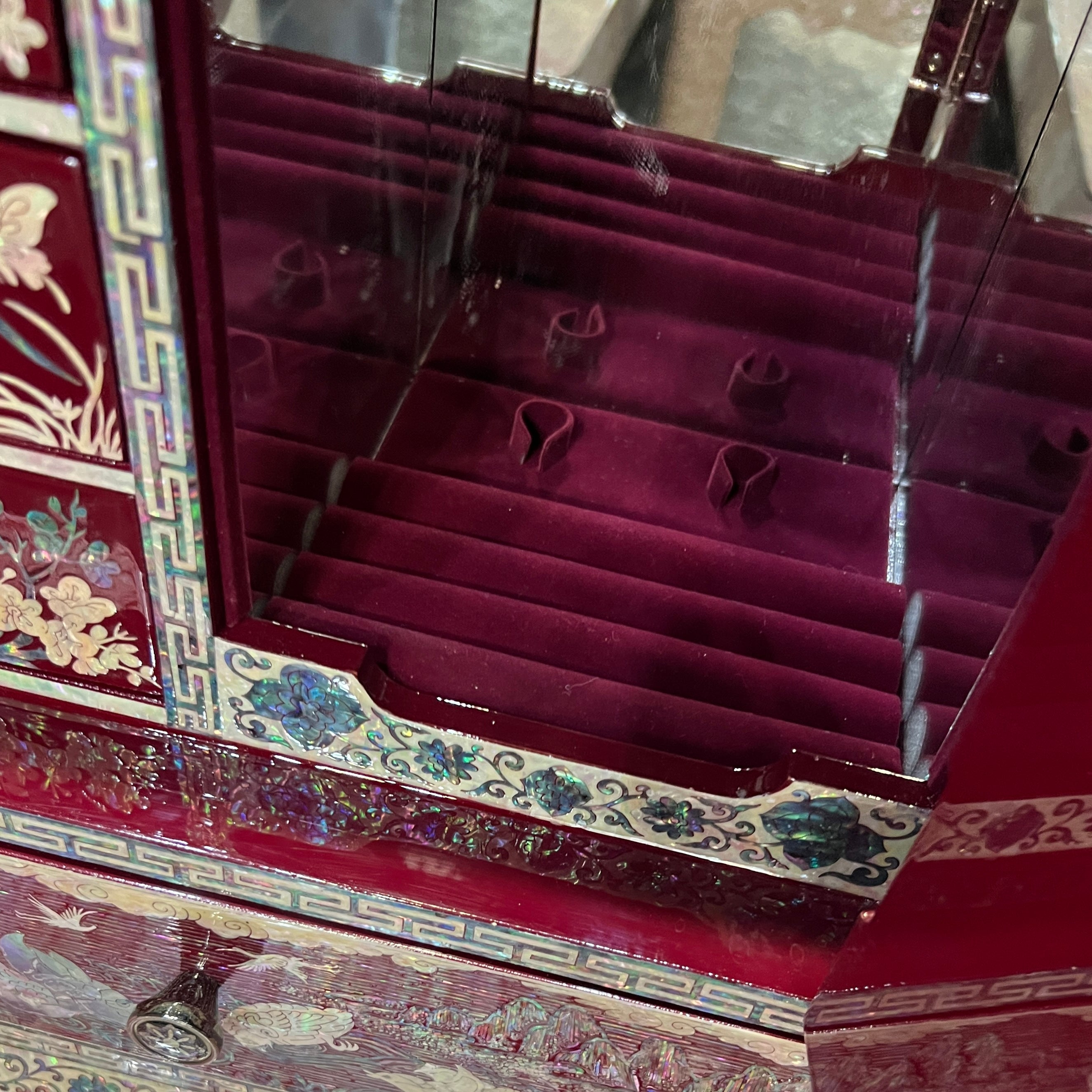
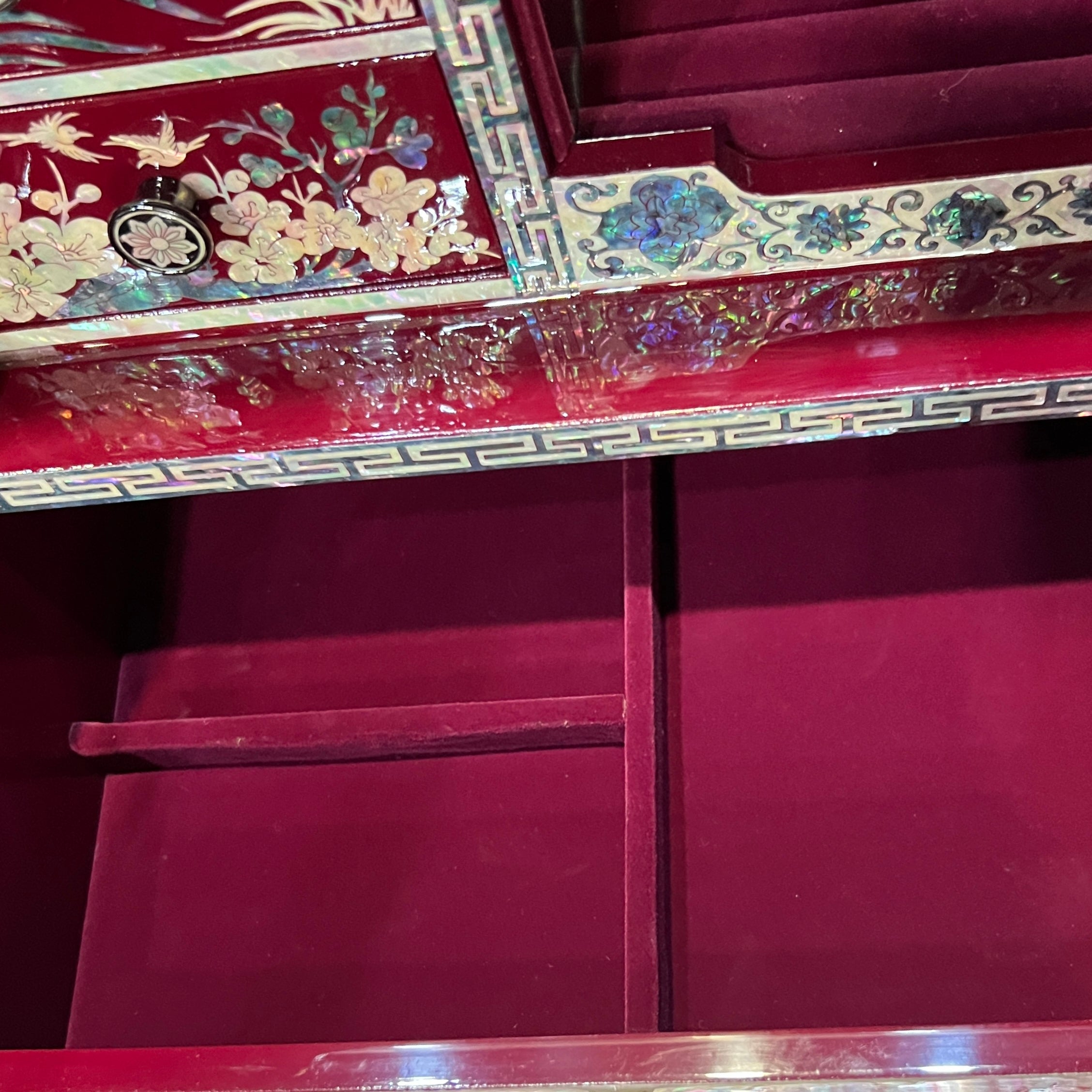
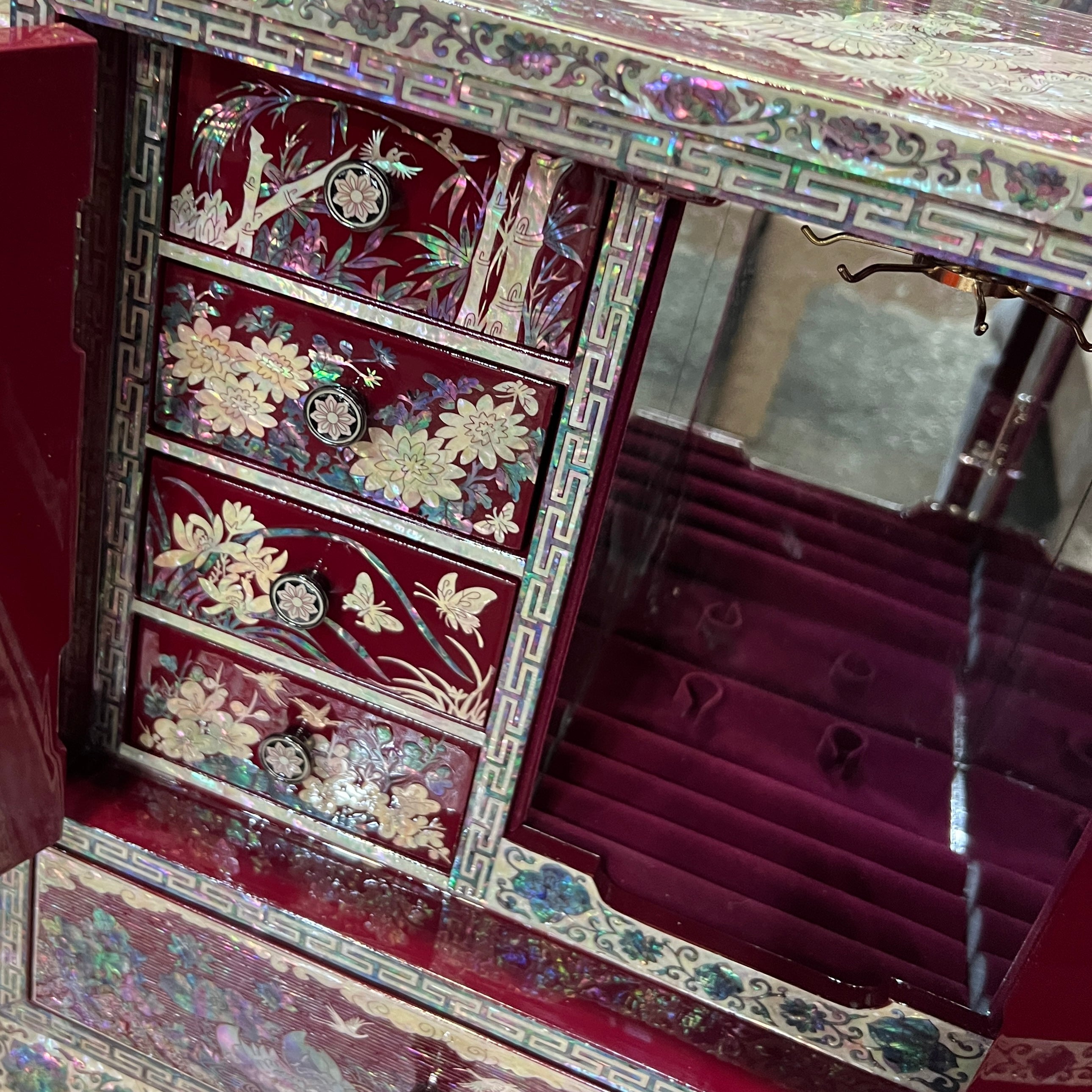
Opening the doors produces one of the most eloquent shifts in the piece. The richly peopled outer world of auspicious nature gives way to a measured interior of order and use. On the left, four drawers appear, each bearing one of the Four Gracious Plants: plum blossom, orchid, chrysanthemum, and bamboo. This is a particularly intelligent interior choice. The outside speaks in the language of abundance and blessing; the inside turns toward cultivation of character. Plum suggests renewal and endurance, orchid refinement, chrysanthemum restraint, and bamboo uprightness. Thus the chest moves from public symbolism to inward discipline.
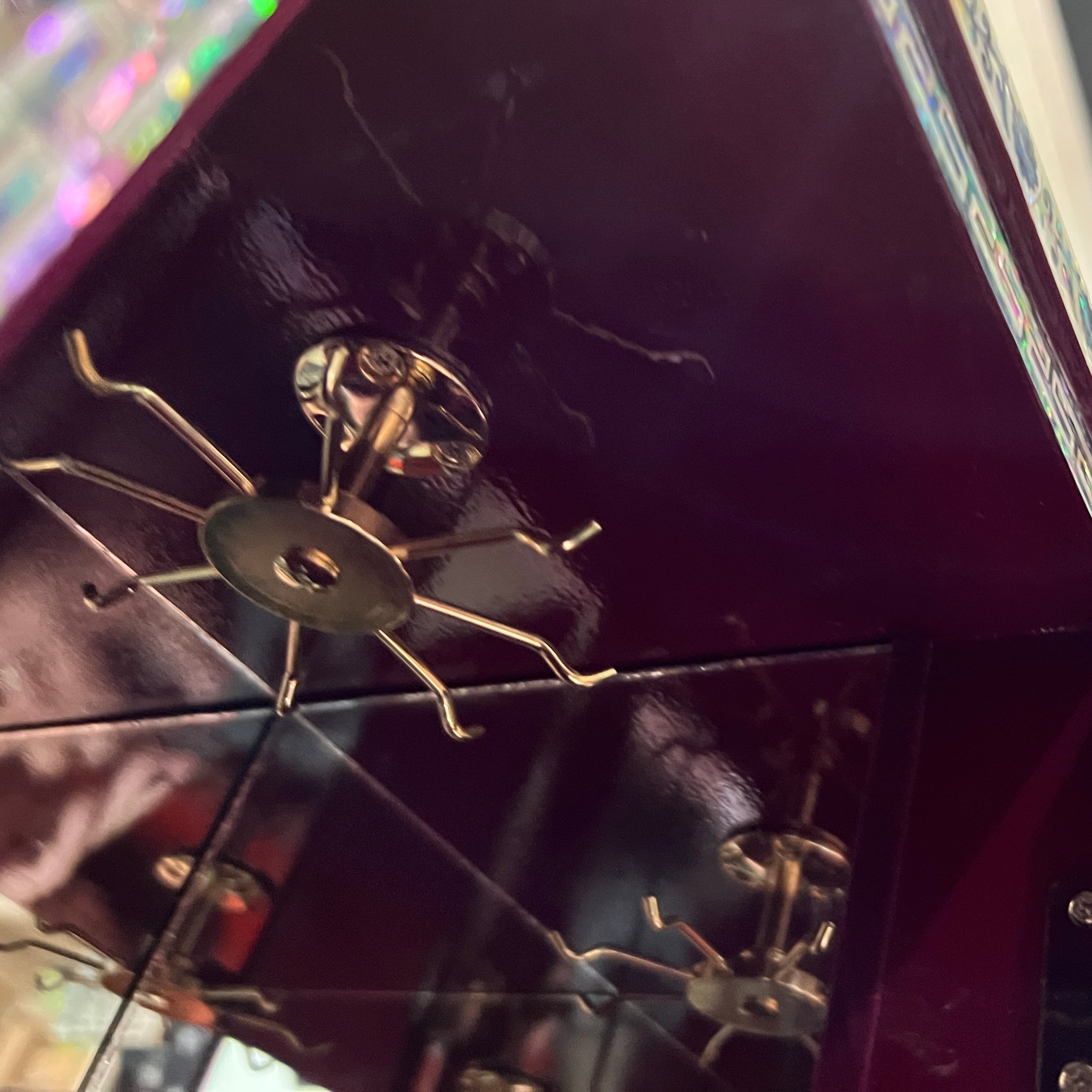
On the right, the cabinet becomes almost architectural in its clarity. A suspended hanging stand accommodates necklaces, while the lower section orders rings and smaller ornaments. Below, the wide drawer receives larger valuables without compression. The structure guides use gently. Longer pieces hang freely, smaller objects are sorted without crowding, and larger possessions are kept below in a separate register. This layered arrangement explains the necessity of the double-door format: it allows the chest to function as a miniature interior, not merely a box with compartments.
What is most moving is the contrast between the exterior and interior experiences. Closed, the cabinet is ceremonious, nearly processional in effect, its surfaces alive with motion and auspicious presences. Open, it becomes intimate, practical, and private. The owner passes from spectacle into order. That transition is the emotional logic of the work. It was made this way so that use itself becomes a movement from admiration to care, from radiant image to personal keeping.
In that sense, this chest is not simply luxurious. It is structured around a specifically Korean understanding that treasured things should be housed within meaning as well as craftsmanship. The landscape on the outside blesses the act of safekeeping; the disciplined interior sustains it. The result is a living cabinet whose beauty resides not only in what it shows, but in how completely it has been thought through.
Dimensions
- Width- 32cm (12.6 inch)
- Height- 40cm (15.75 inch)
- Depth- 18cm (7.08 inch)
Choisir les options