

Celadon Triple-Walled Openwork Vase: Blossoming Motifs
This piece is chosen by those who understand that the most demanding works often speak with the greatest restraint.
“The vessel opens like a quiet garden, yet its deepest labour remains hidden between its walls.”
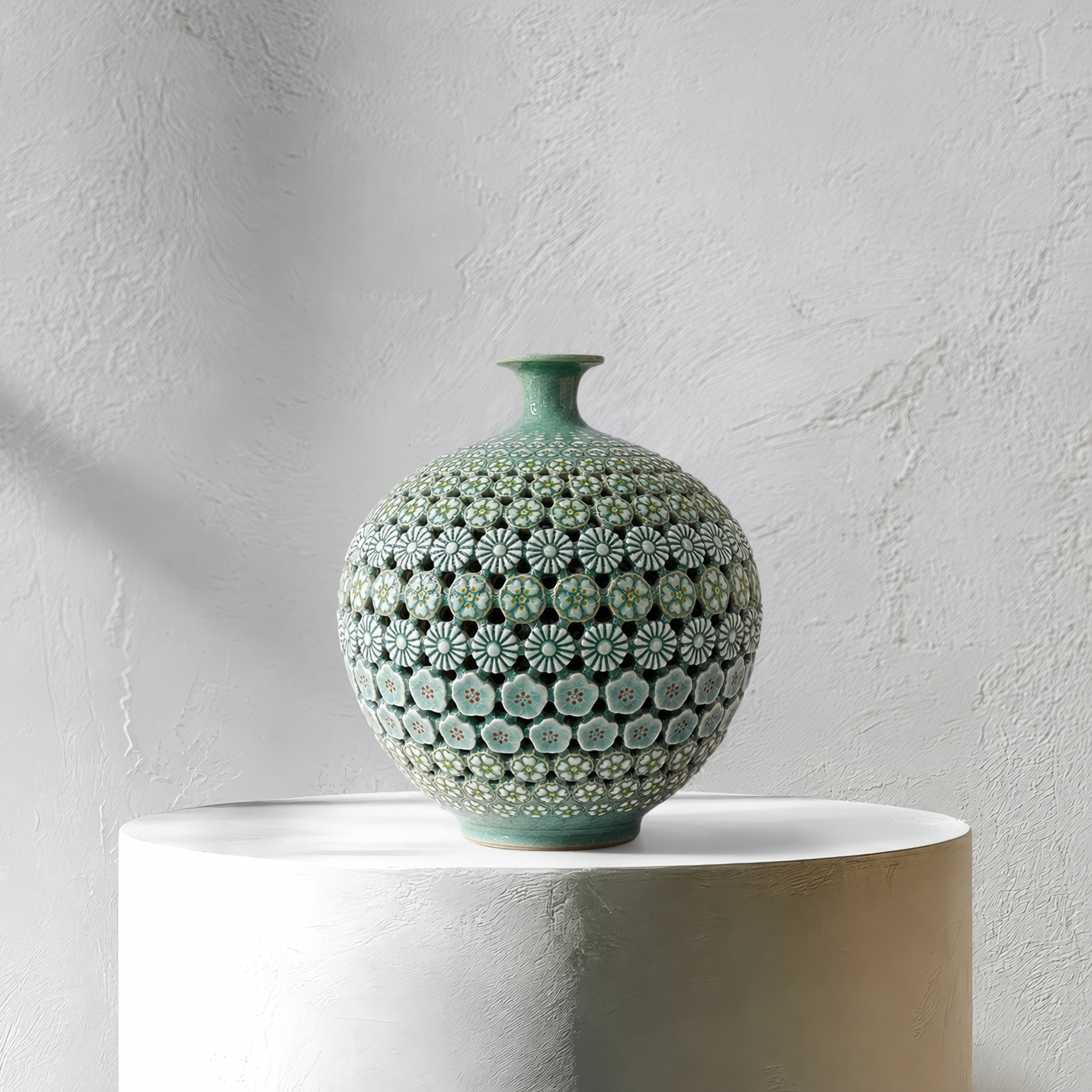
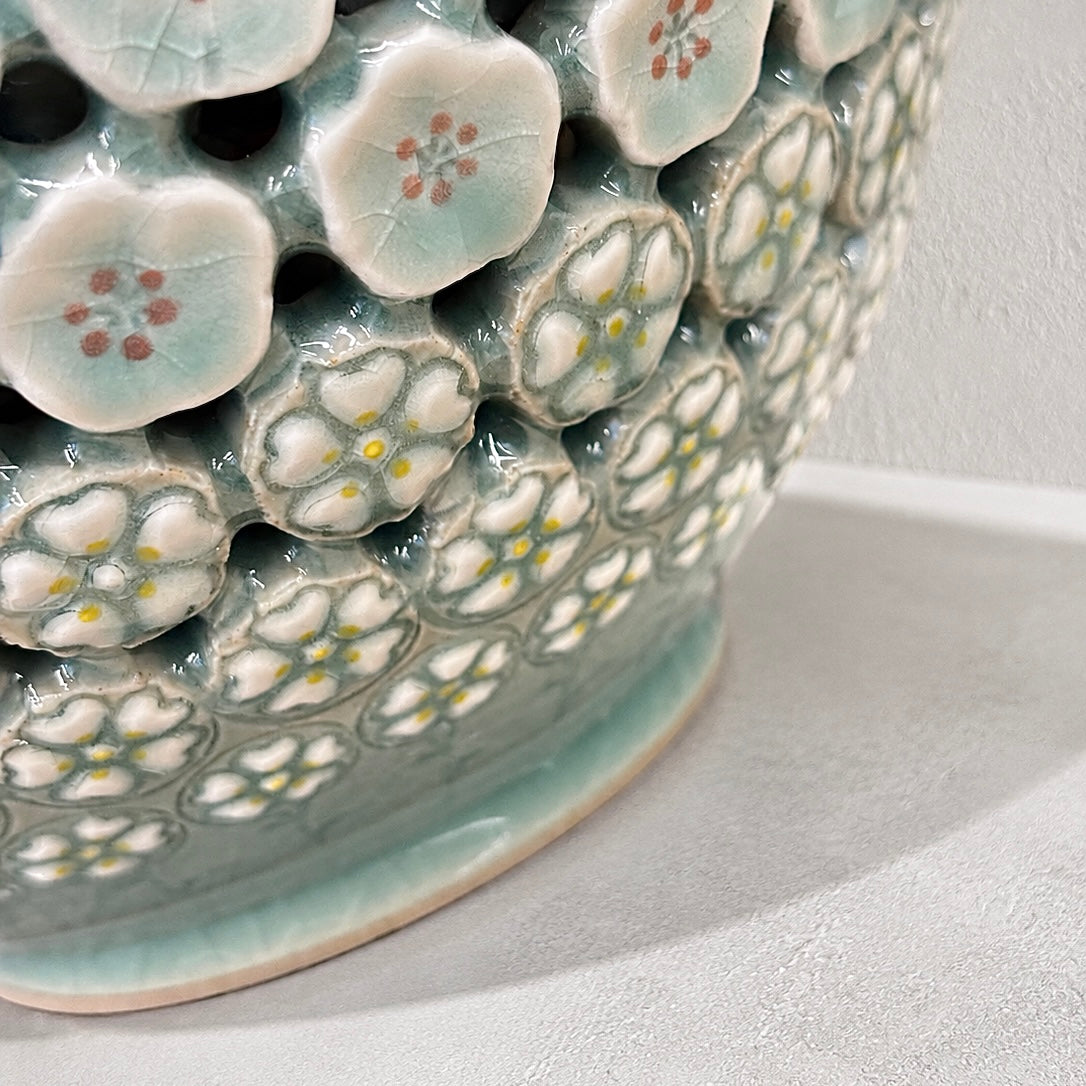
Created by the Icheon ceramic master Young-soo Kim in 2020, this celadon vase belongs to the rare and technically exacting field of triple-walled openwork ceramics. Its significance lies not simply in the piercing of clay, but in the creation of a layered ceramic body in which three walls must remain structurally separate, visually connected, and materially stable through drying, glazing, and firing.
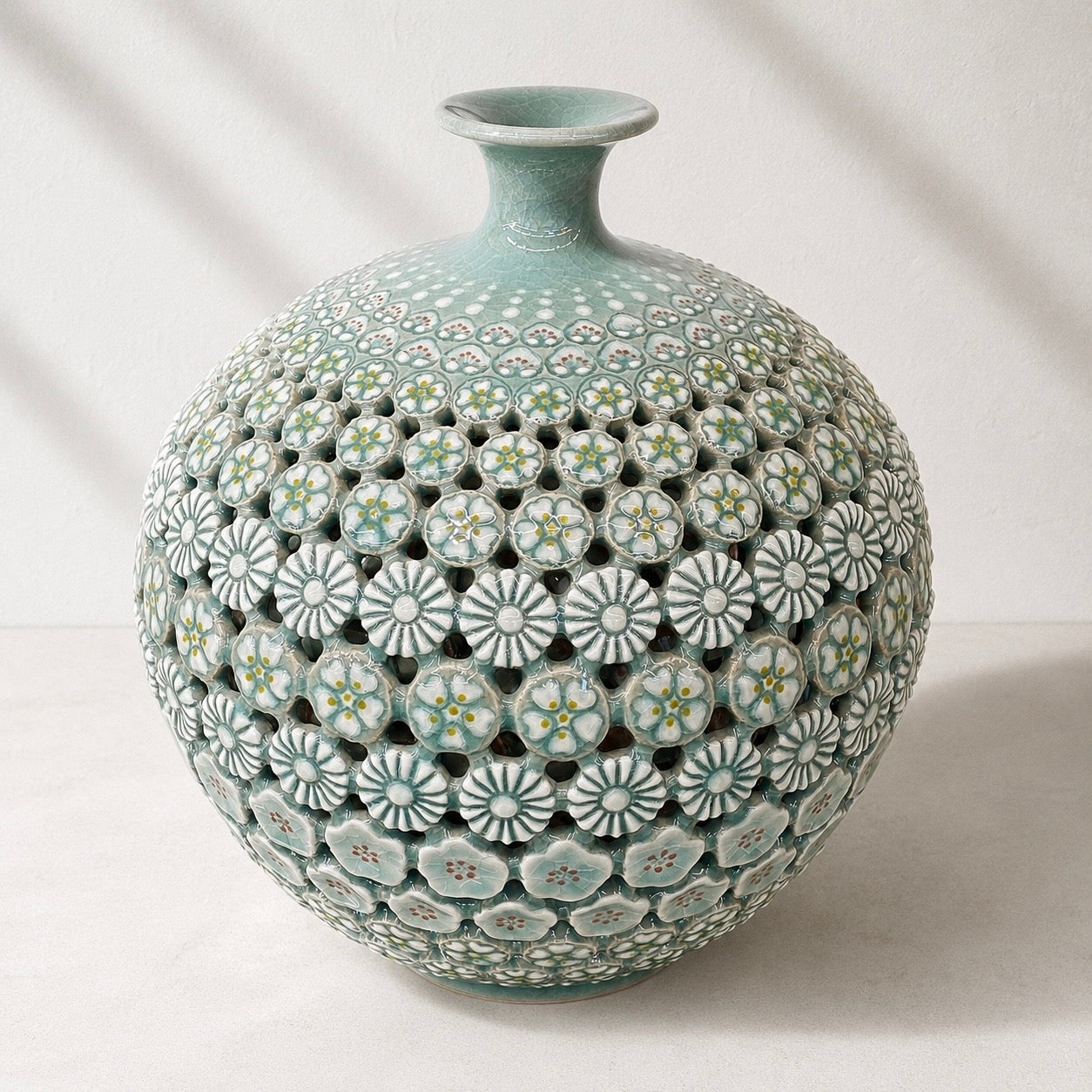
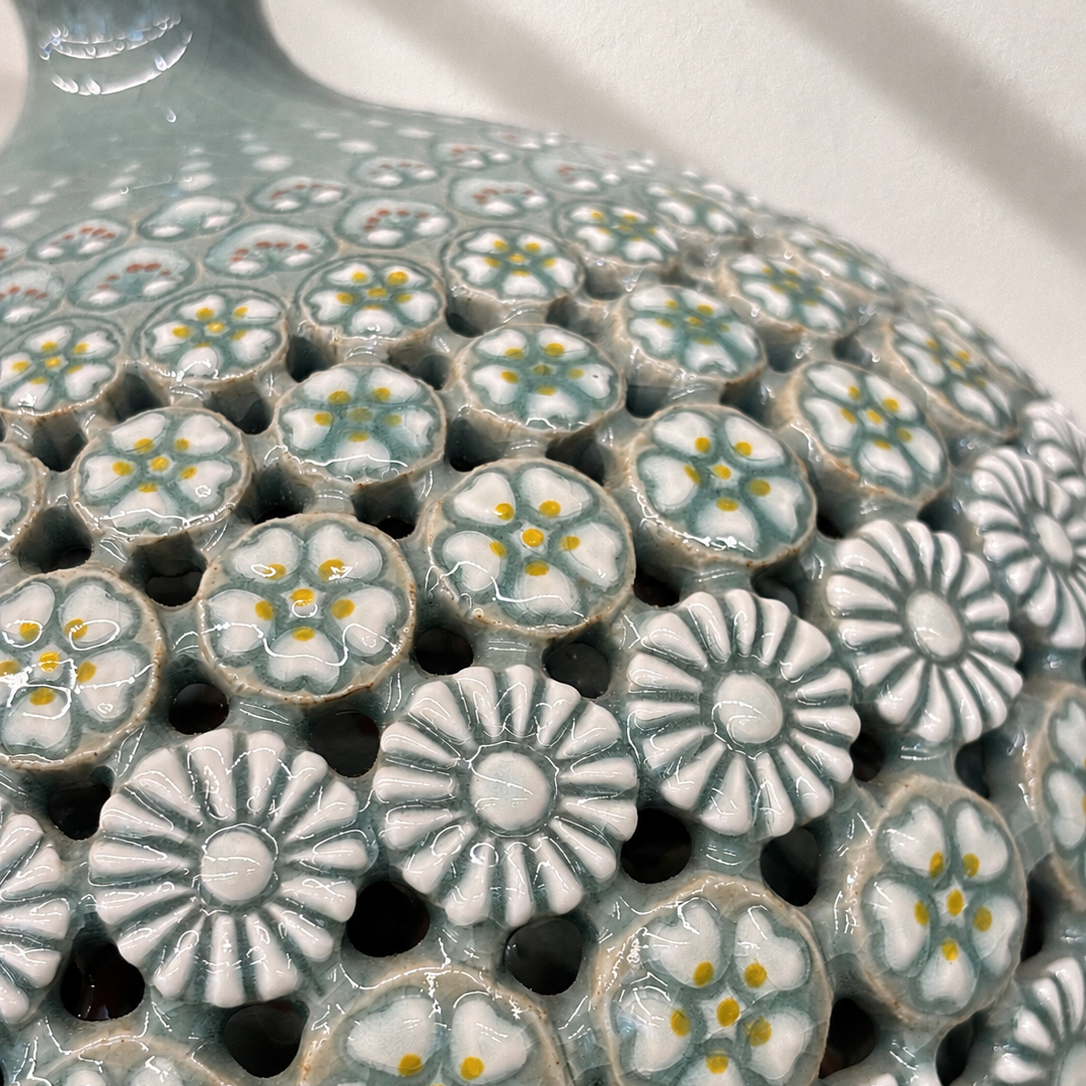
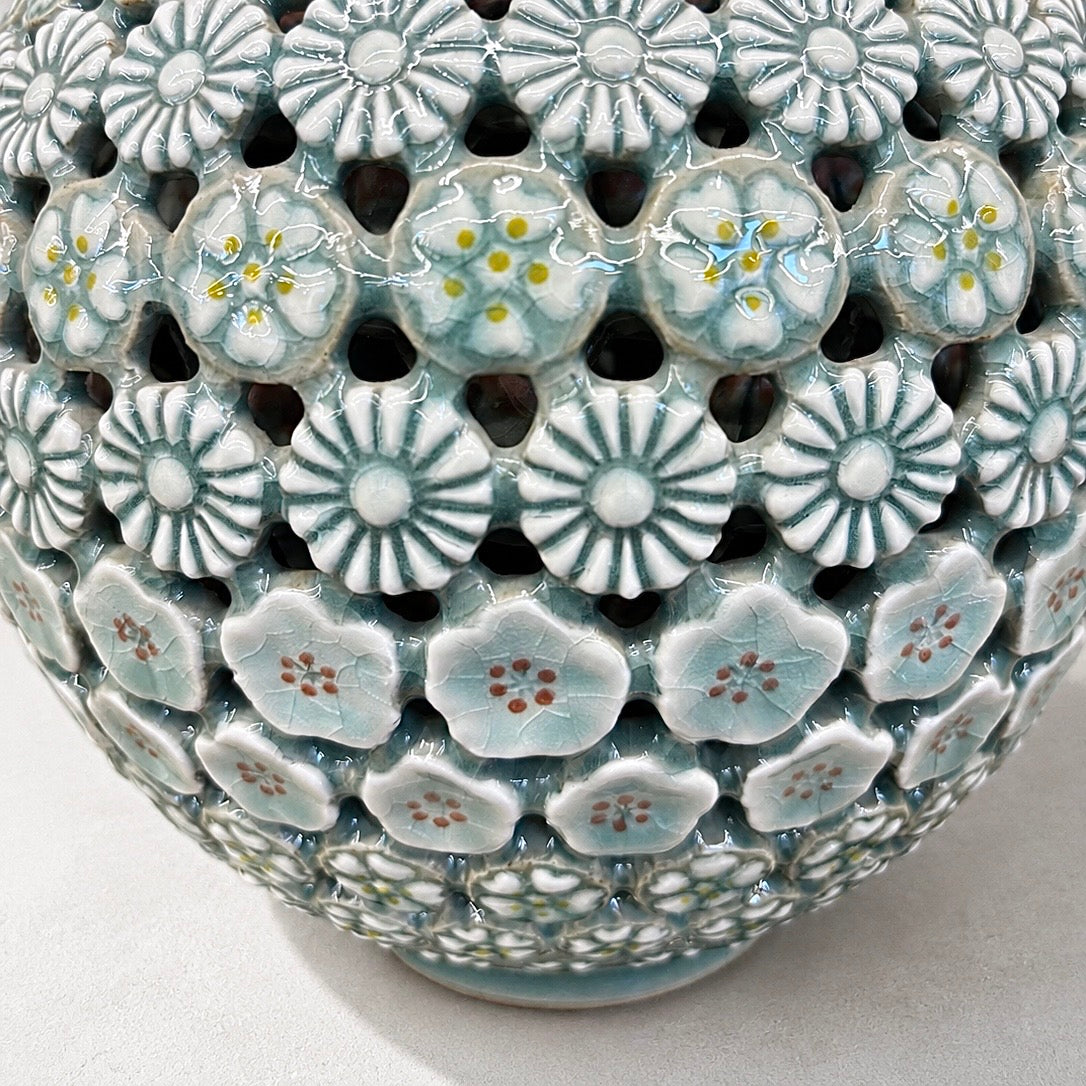
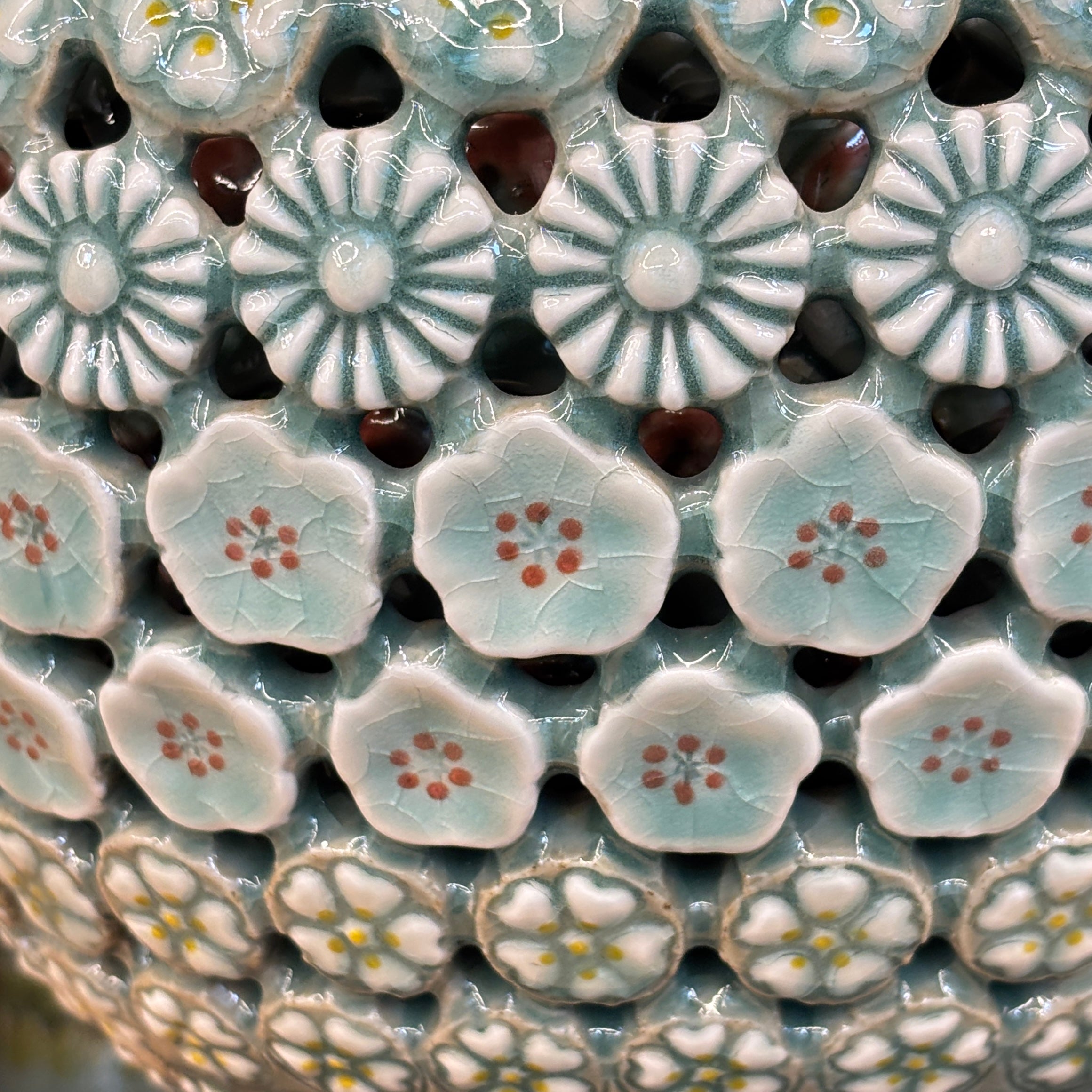
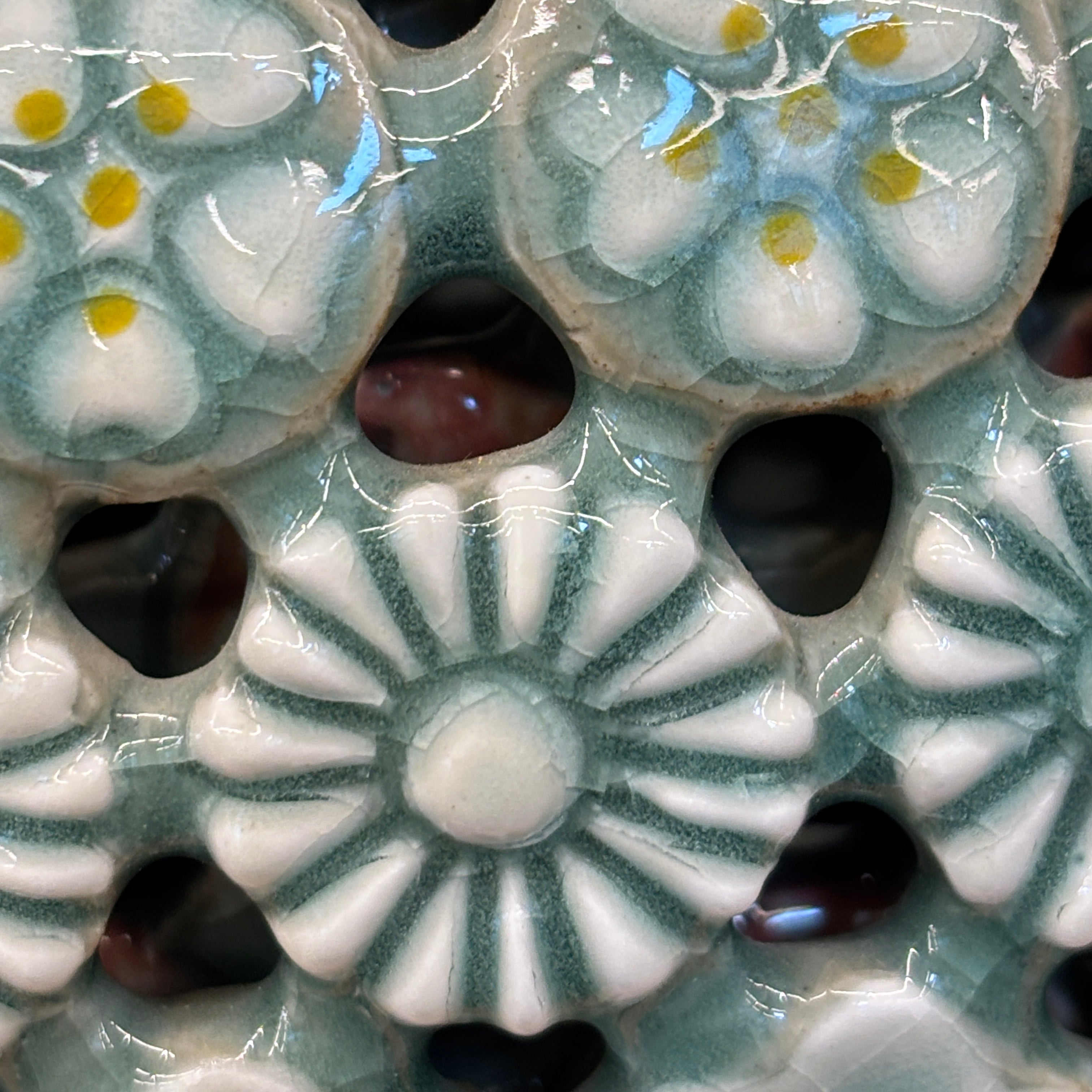
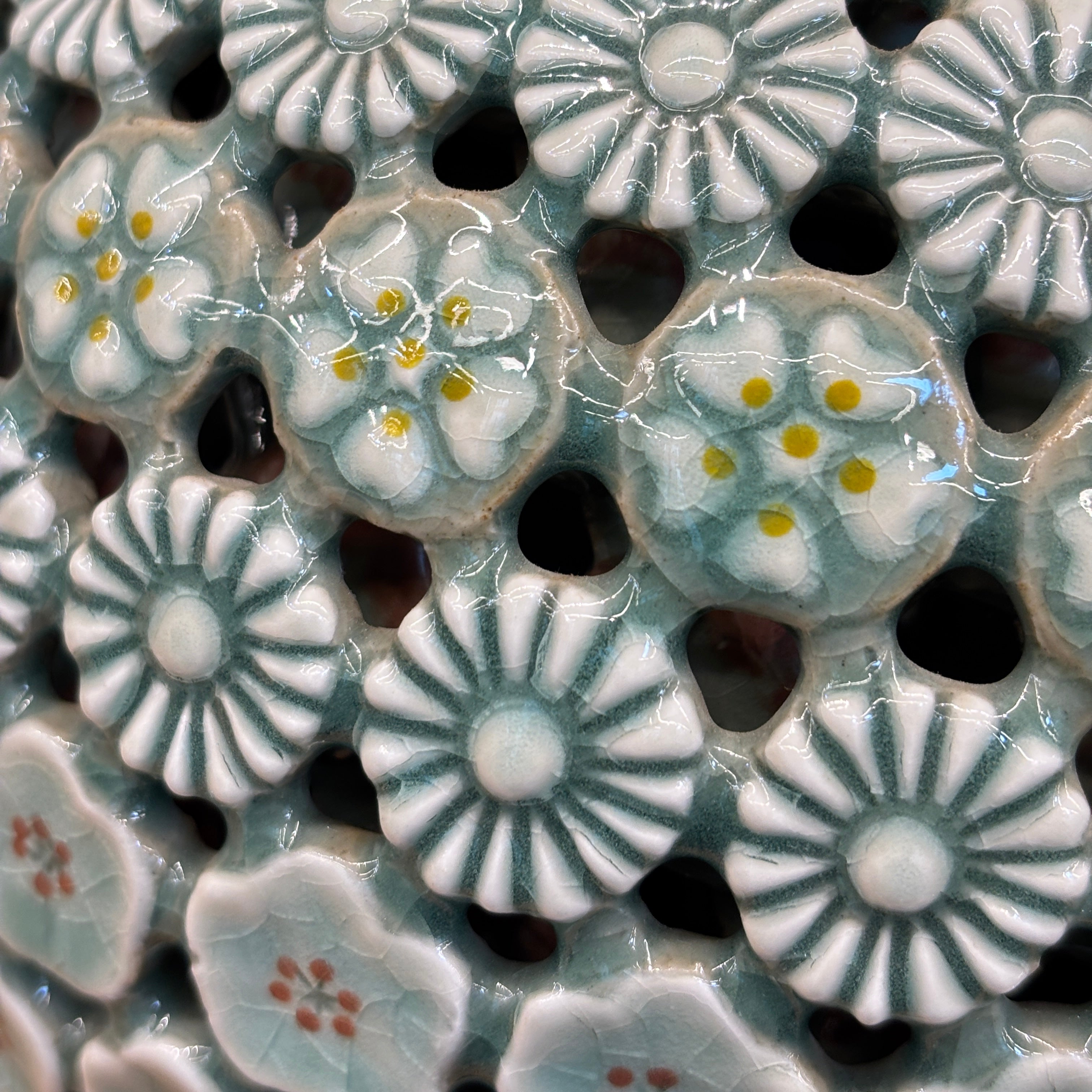
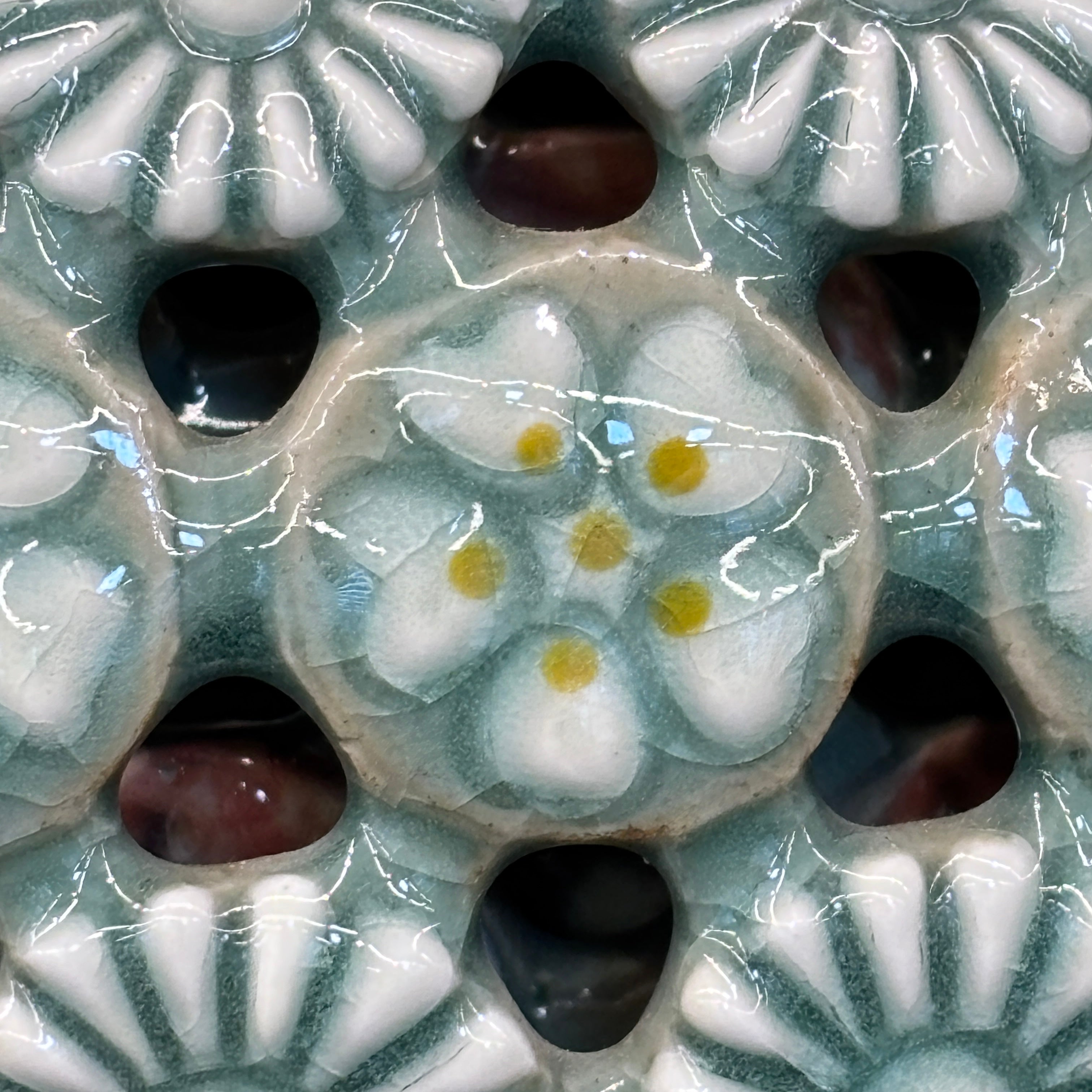
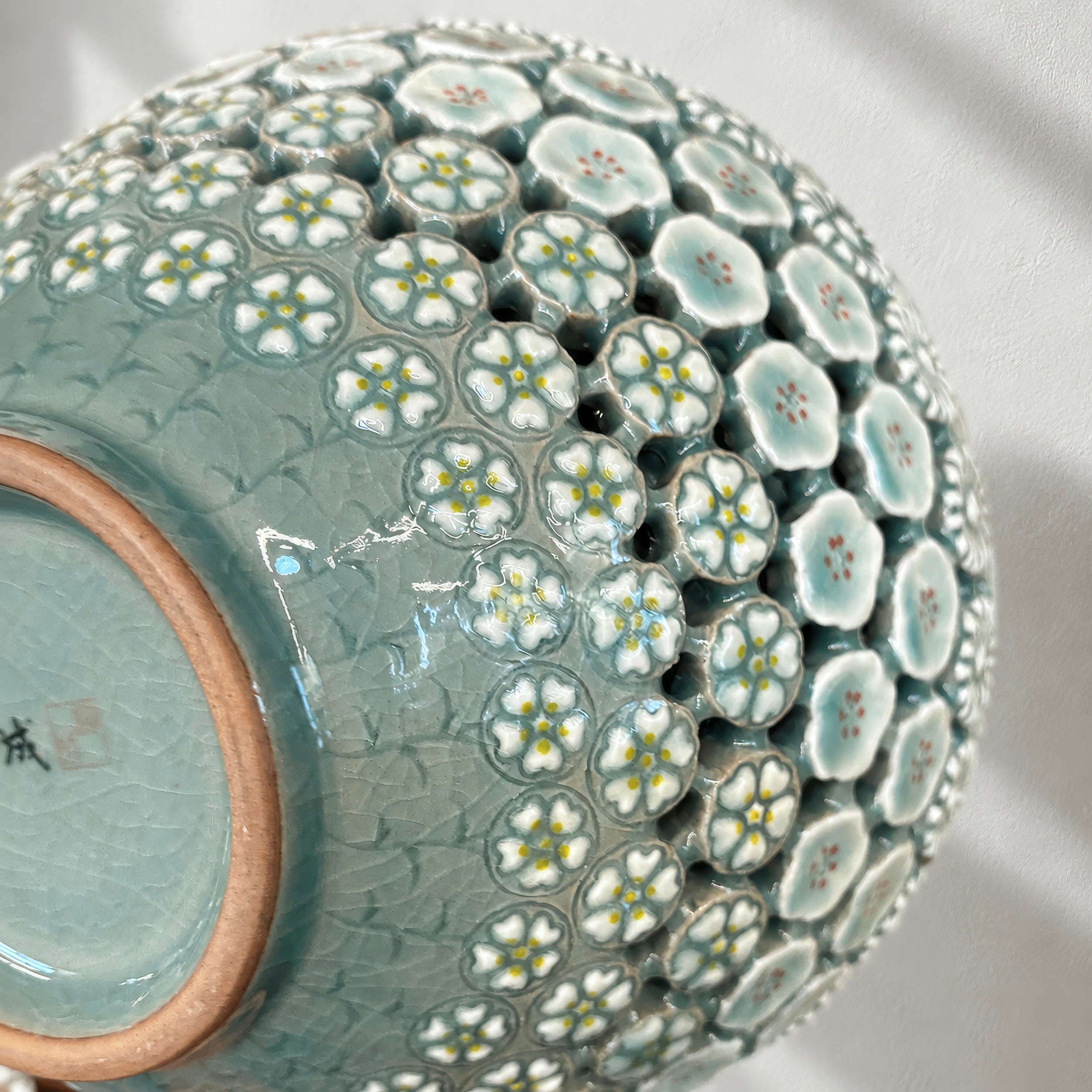
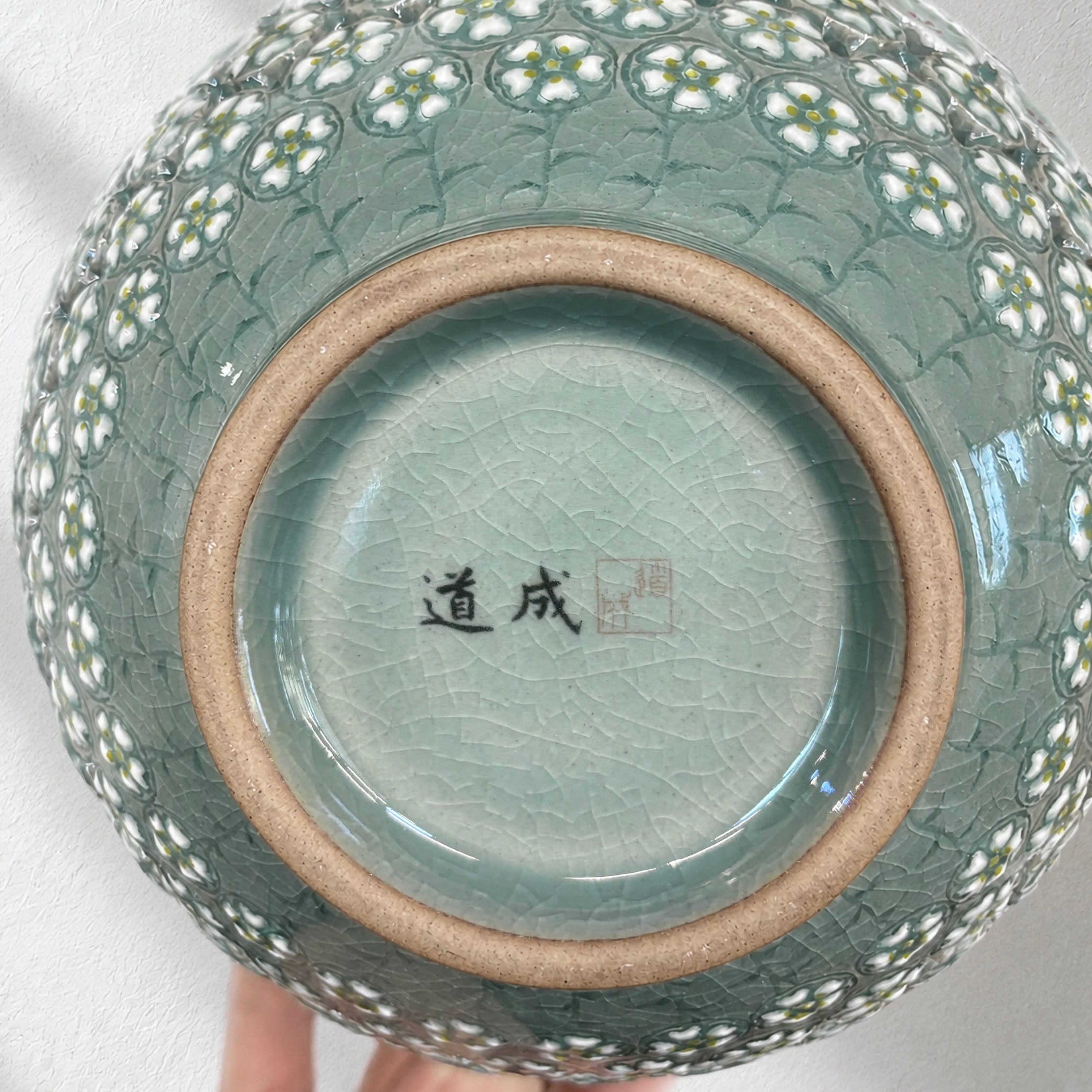
This is why the work cannot be read as surface decoration alone. The blossoms are not placed upon an ordinary vessel; they are organised across a body whose depth has been engineered from within. The outer layer carries the floral rhythm, the pierced openings reveal intervals of shadow, and the hidden inner layers give the object a sense of inward space. The vase therefore holds two kinds of beauty at once: the visible beauty of flowers, and the concealed beauty of construction.
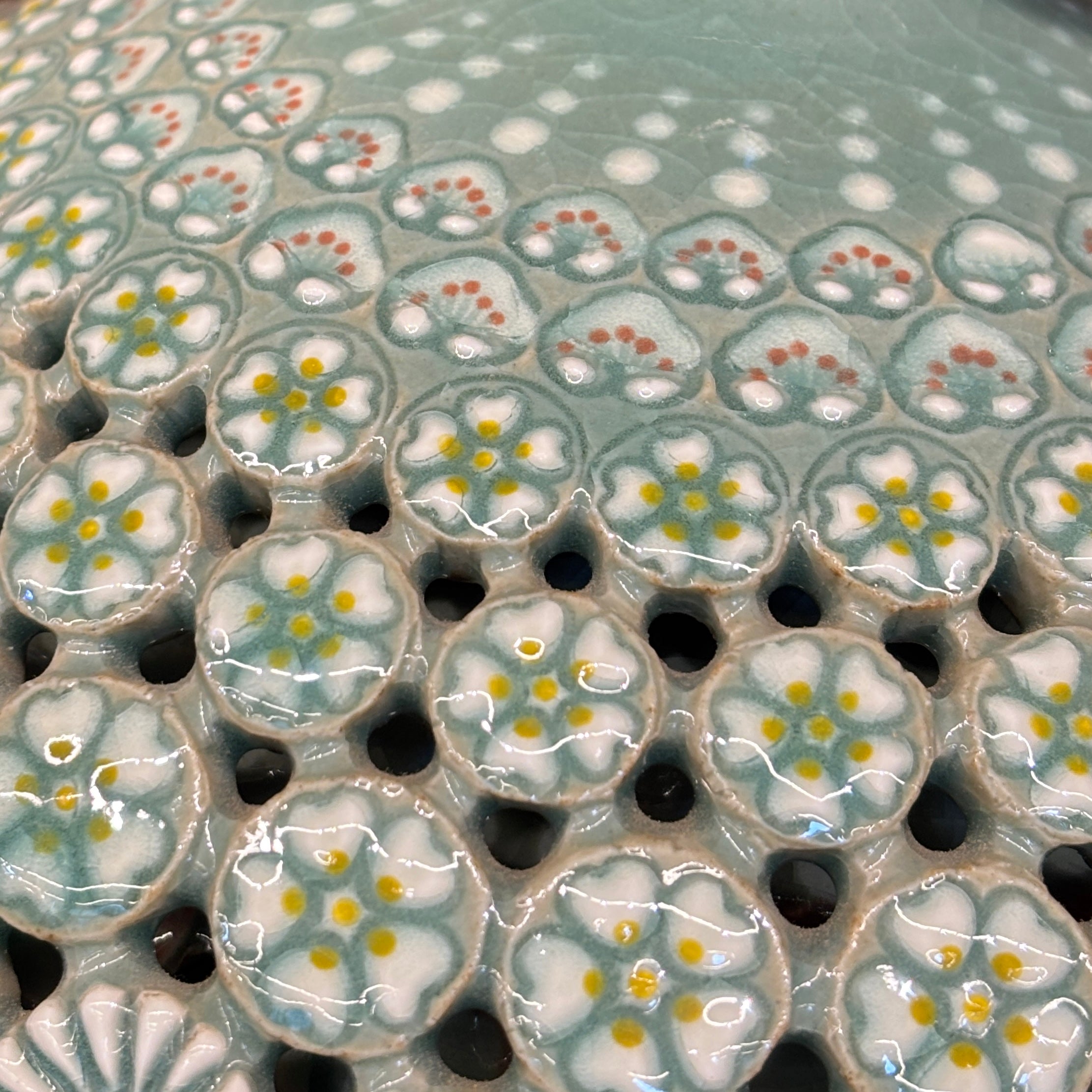
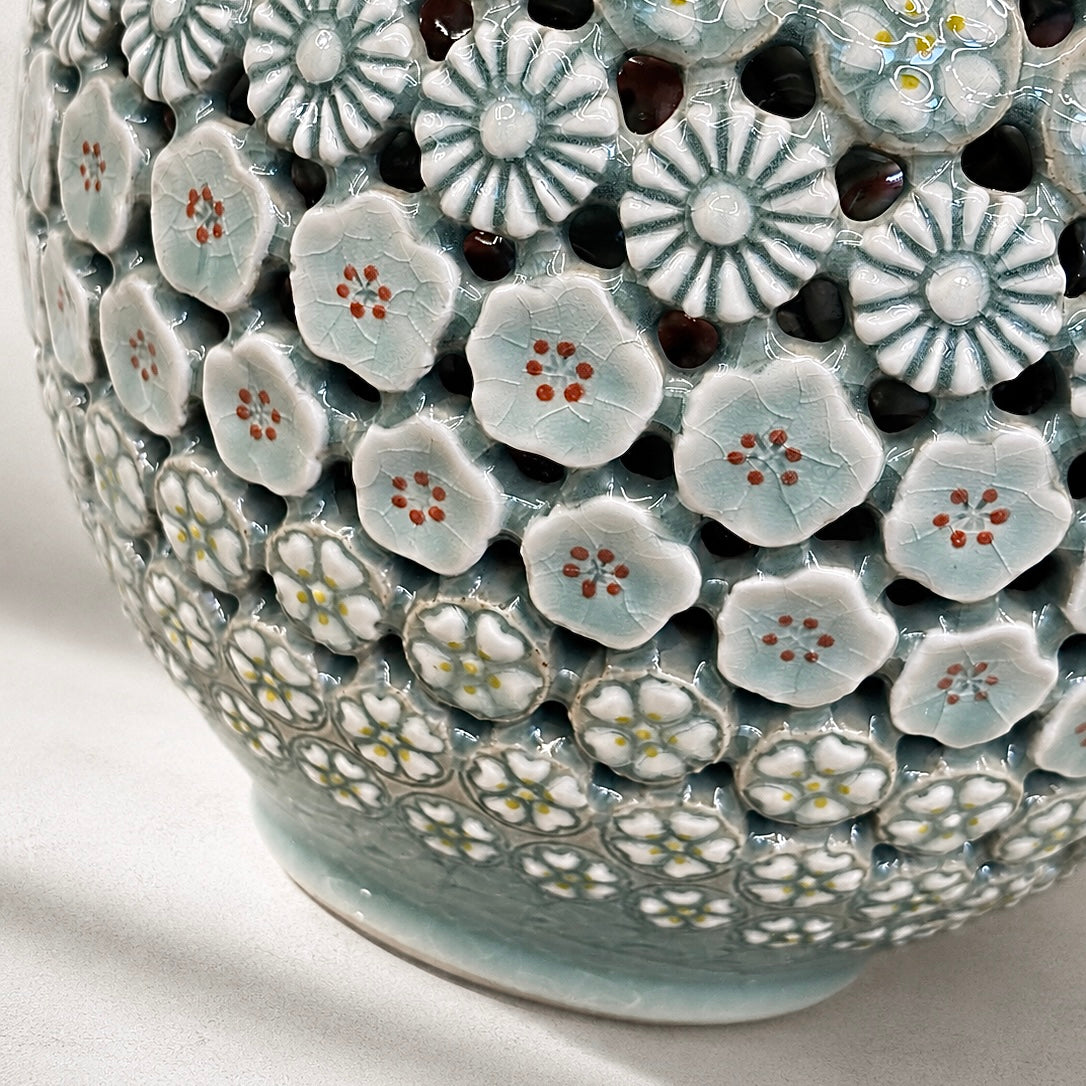
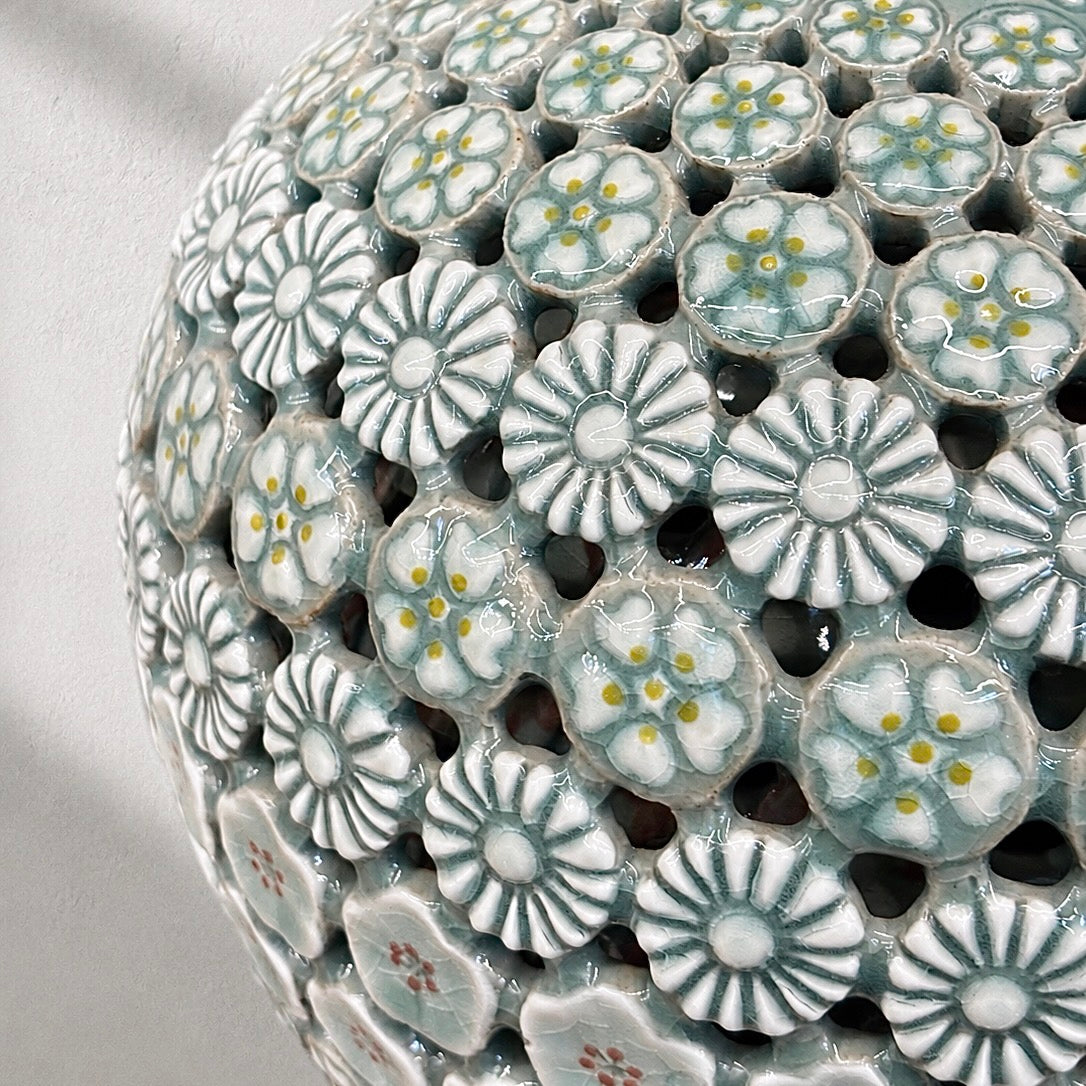
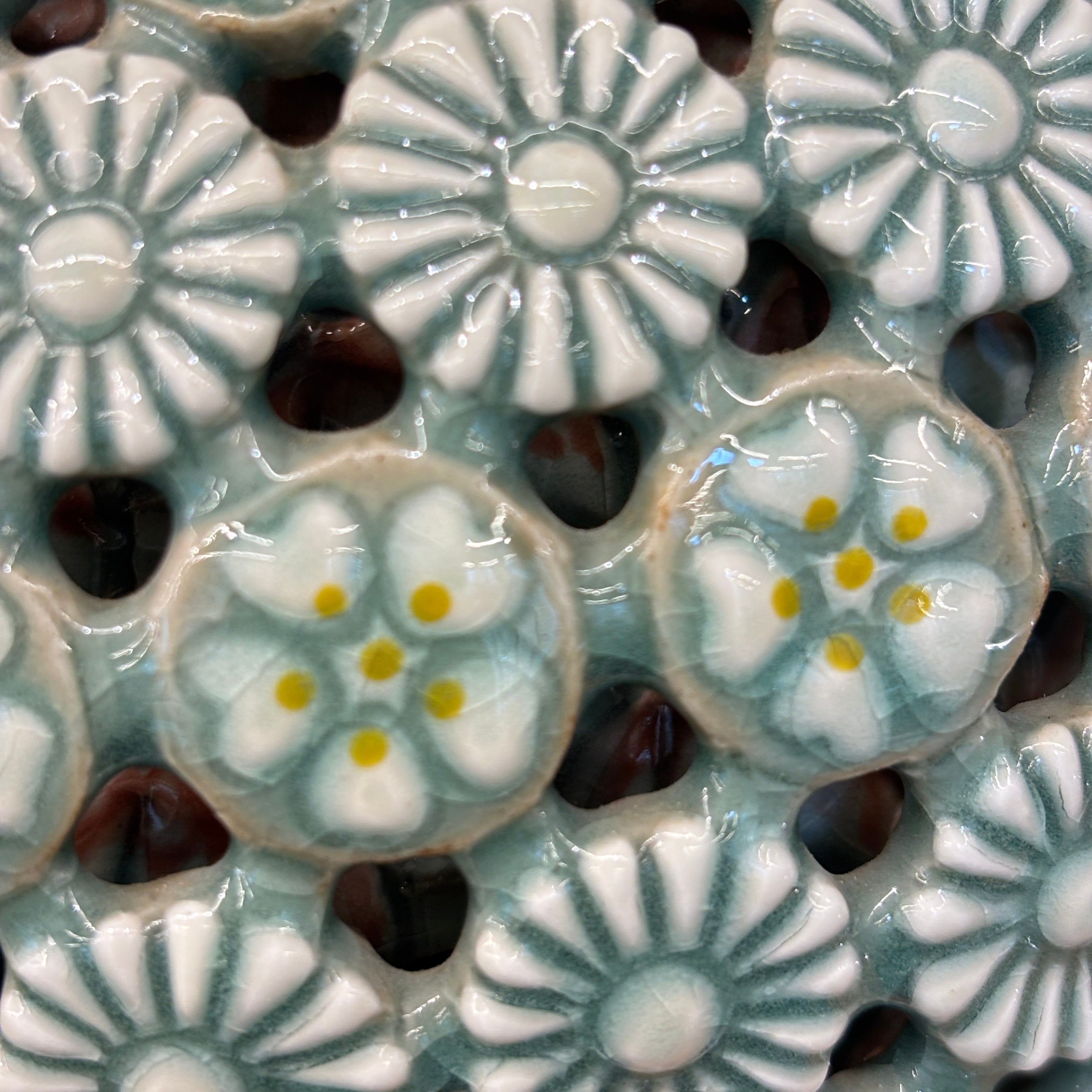
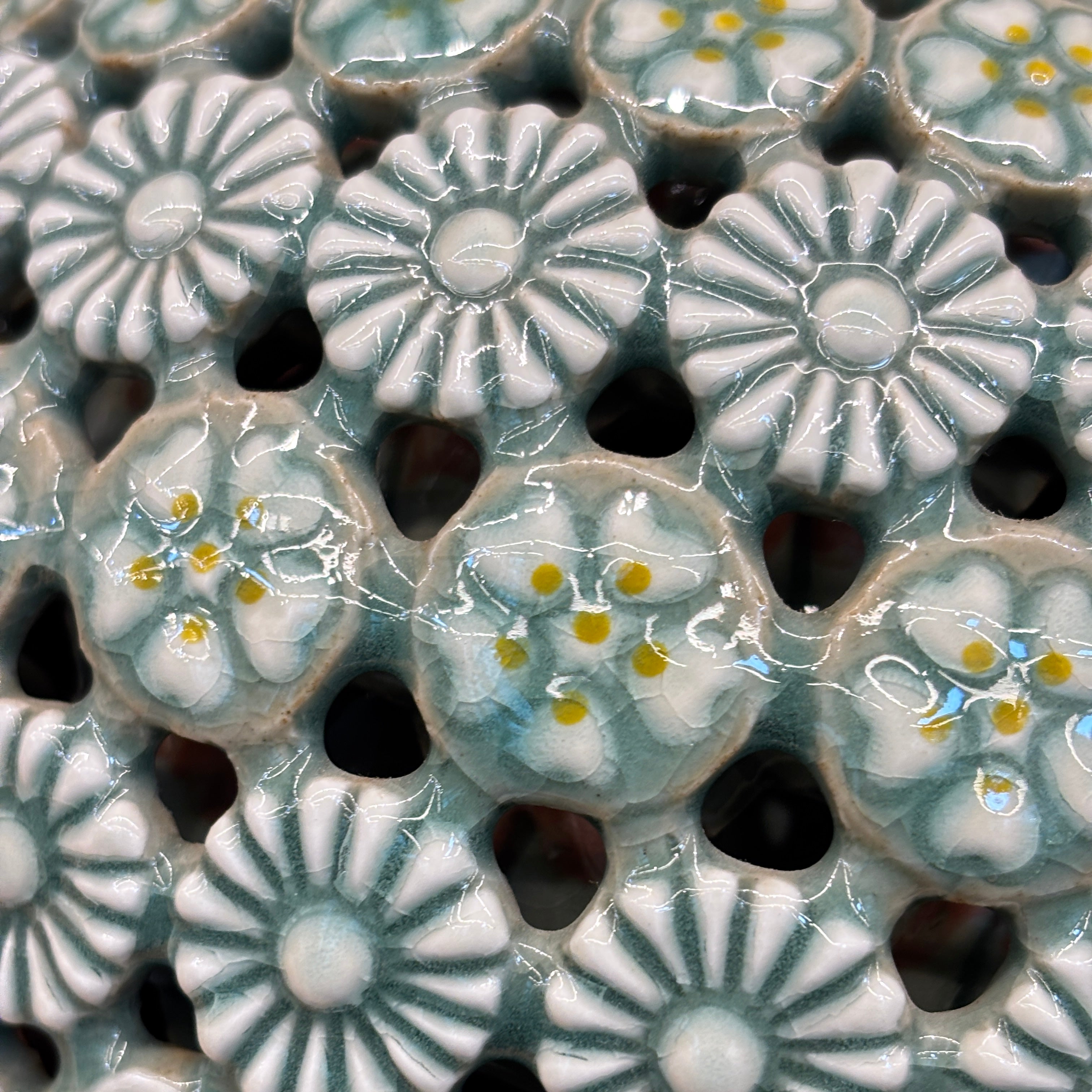
The floral programme is arranged in repeated bands around the rounded form. Chrysanthemum, plum blossom, and pear blossom are not scattered casually, but gathered into a continuous field of seasonal life. Their repetition suits the spherical body, allowing the viewer’s eye to travel around the vessel without a single fixed beginning or end. This circular reading is important. It gives the vase the feeling of a world enclosed, a complete cycle of blossoming held in ceramic form.
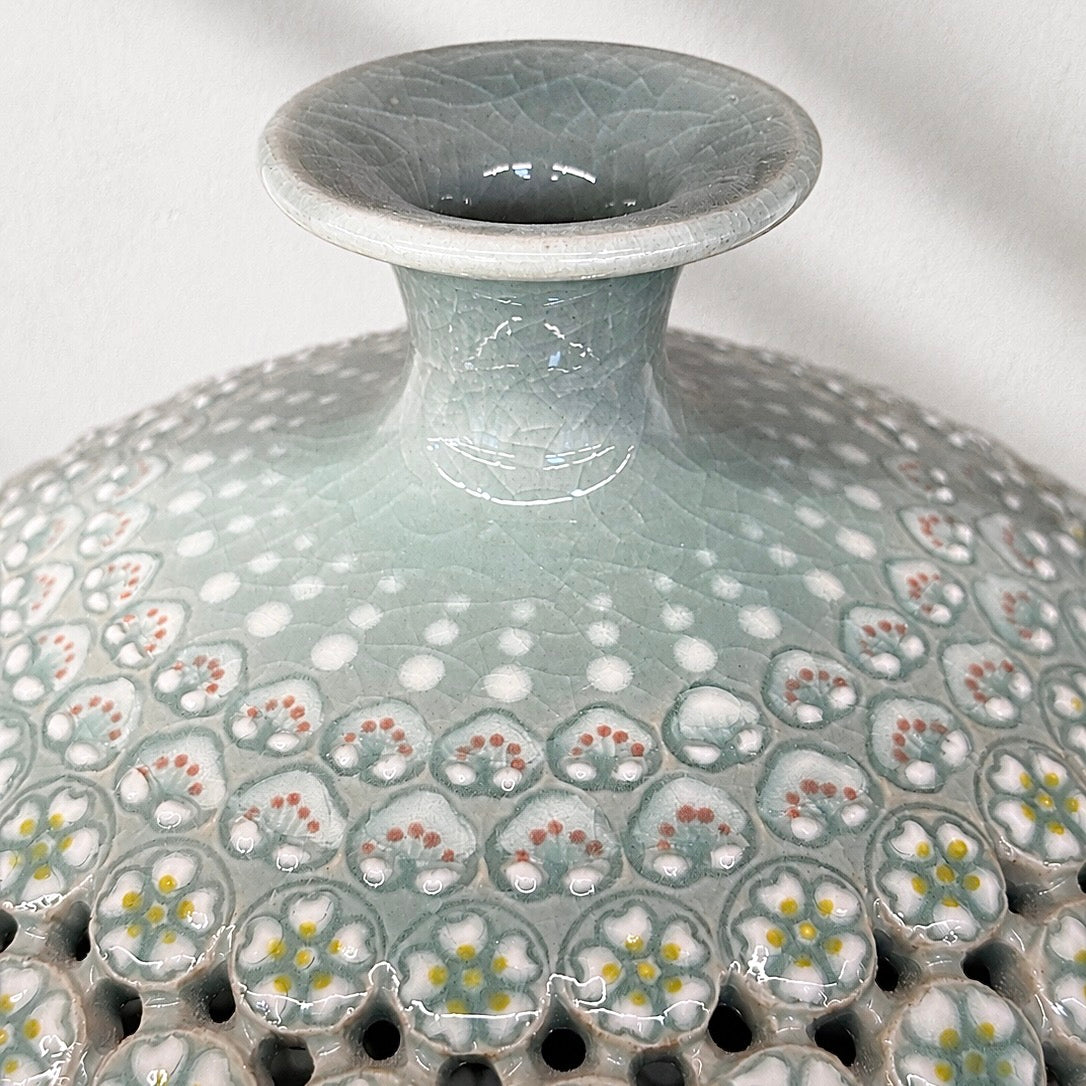
The choice of flowers also gives the work a Korean symbolic depth. The chrysanthemum suggests endurance and cultivated dignity, long associated with autumn and the life of quiet refinement. The plum blossom introduces a different energy: early flowering, resilience, and the capacity to endure cold before renewal appears. The pear blossom, pale and delicate, brings softness and clarity, extending the seasonal register into a gentler spring atmosphere. Together, these motifs do not simply beautify the vase. They create an image of continuity: strength, renewal, and clarity held in balance.
The triple-walled structure intensifies this reading. A double-walled vessel already requires considerable precision, but a triple-walled work multiplies the risk. Each layer must be shaped, aligned, and controlled so that the openings remain meaningful rather than chaotic. The clay must dry without pulling itself apart; the walls must survive the kiln without warping; the glaze must settle without closing or overwhelming the pierced spaces. The artist’s own remark that this work was so difficult he came to regret beginning it is revealing, because it places the finished calm of the vase against the severity of its making.
That contrast is central to the work’s emotional logic. Nothing in the finished piece appears strained. The flowers repeat with composure, the celadon glaze rests softly over the relief, and the openings create a measured play of light and shadow. Yet behind this composure lies a process of exceptional labour. The vase does not announce difficulty loudly. It absorbs it into poise.
The celadon surface also matters. Its green tone gives the blossoms a quiet atmosphere rather than sharp contrast. The glaze gathers around the raised petals and along the pierced edges, clarifying the relief while softening the transition between form and void. In this way, the glaze becomes part of the structure of looking. It leads the eye from surface to opening, from opening to shadow, and from shadow to the unseen interior.
The vessel’s rounded body gives the work a sense of containment, while the short neck gathers that fullness into a composed upper point. The form feels closed and complete, yet the openwork prevents it from becoming static. Air enters the surface. Light moves through the spaces. The viewer is made aware that the vase has an interior life, even when nothing is placed inside it.
This is why the piece feels more architectural than floral at its deepest level. The blossoms provide the visible language, but the true subject is layered space. The work asks how much can be revealed without exposing everything, how delicacy can remain strong, and how a vessel can hold not only volume, but time, labour, and hidden structure.
In the end, this celadon vase is not a celebration of technical virtuosity for its own sake. It is a study in what technical mastery makes possible: stillness with depth, ornament with structure, and floral beauty shaped by extraordinary discipline. It is a work that becomes fuller the longer one looks, because its most difficult achievement is also its quietest one.
Dimensions
- Height- 23 cm (9.05 inch)
- Diameter- 20 cm (7.87 inch)
Choose options