

Celadon Double-Walled Openwork Vase: Phoenix Motif, 2025
This work is chosen by those who recognise that true magnificence in ceramics lies in control, not display.
“The phoenix does not simply appear on the vessel; it seems to rise through it, as though air and clay had been persuaded to move together.”
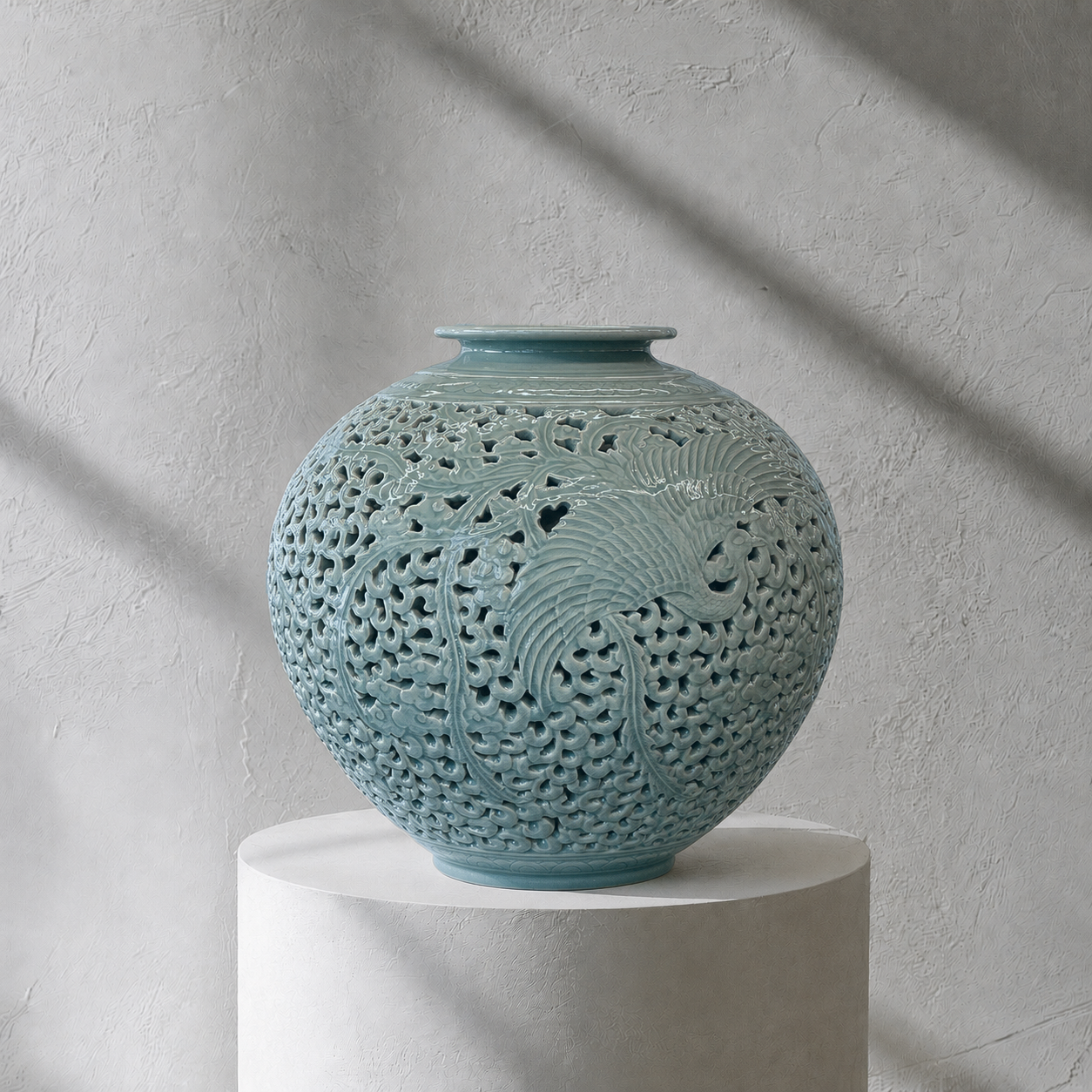
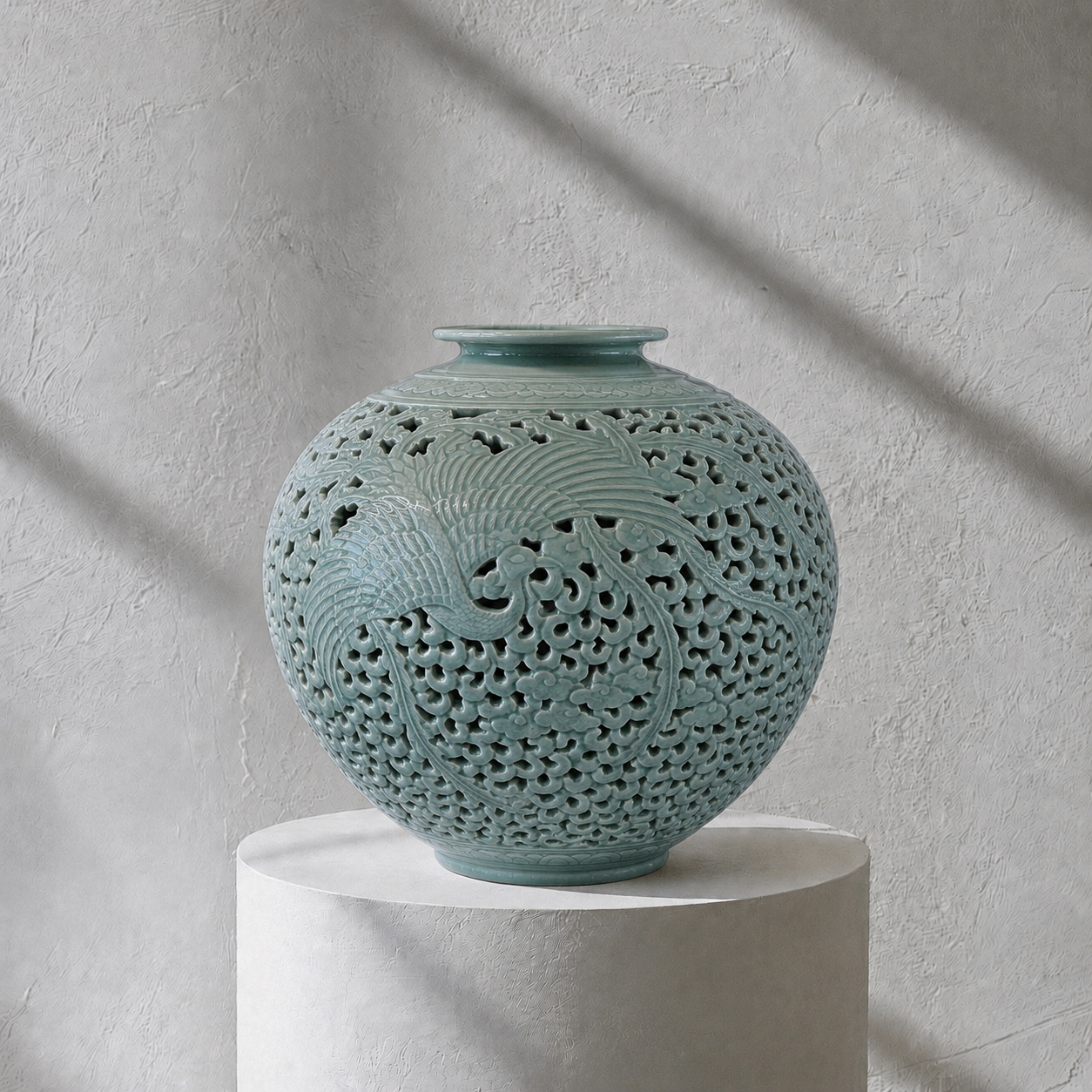
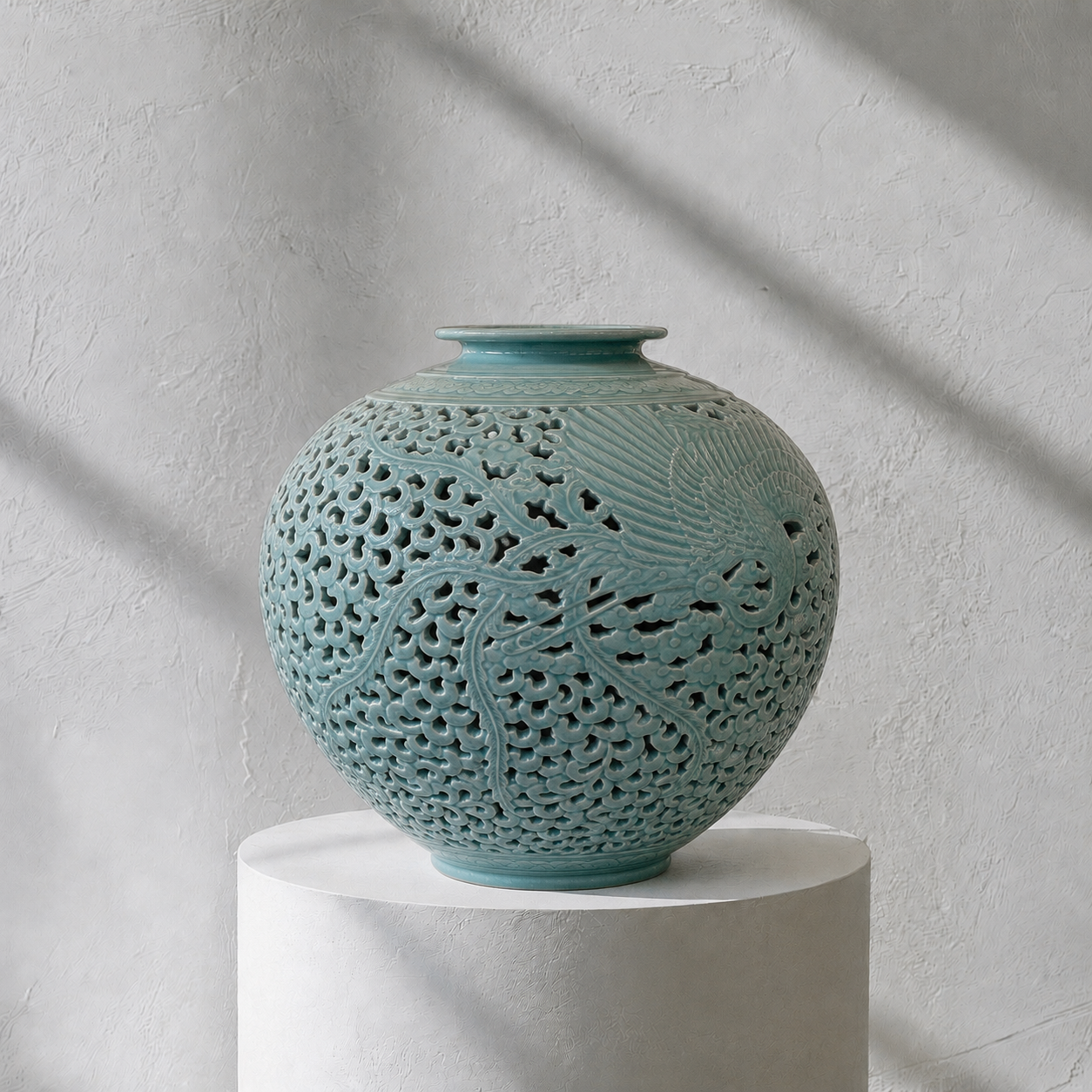
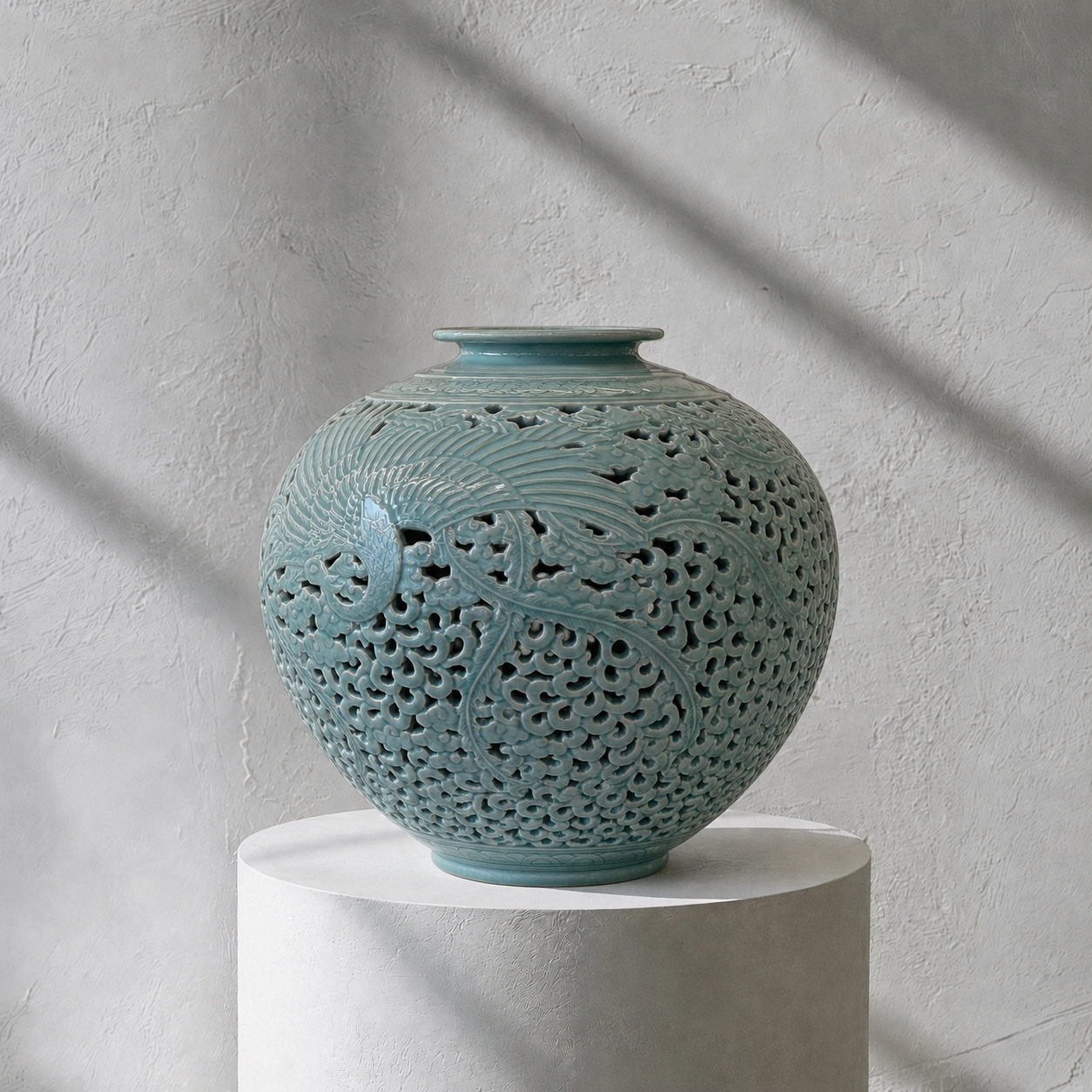
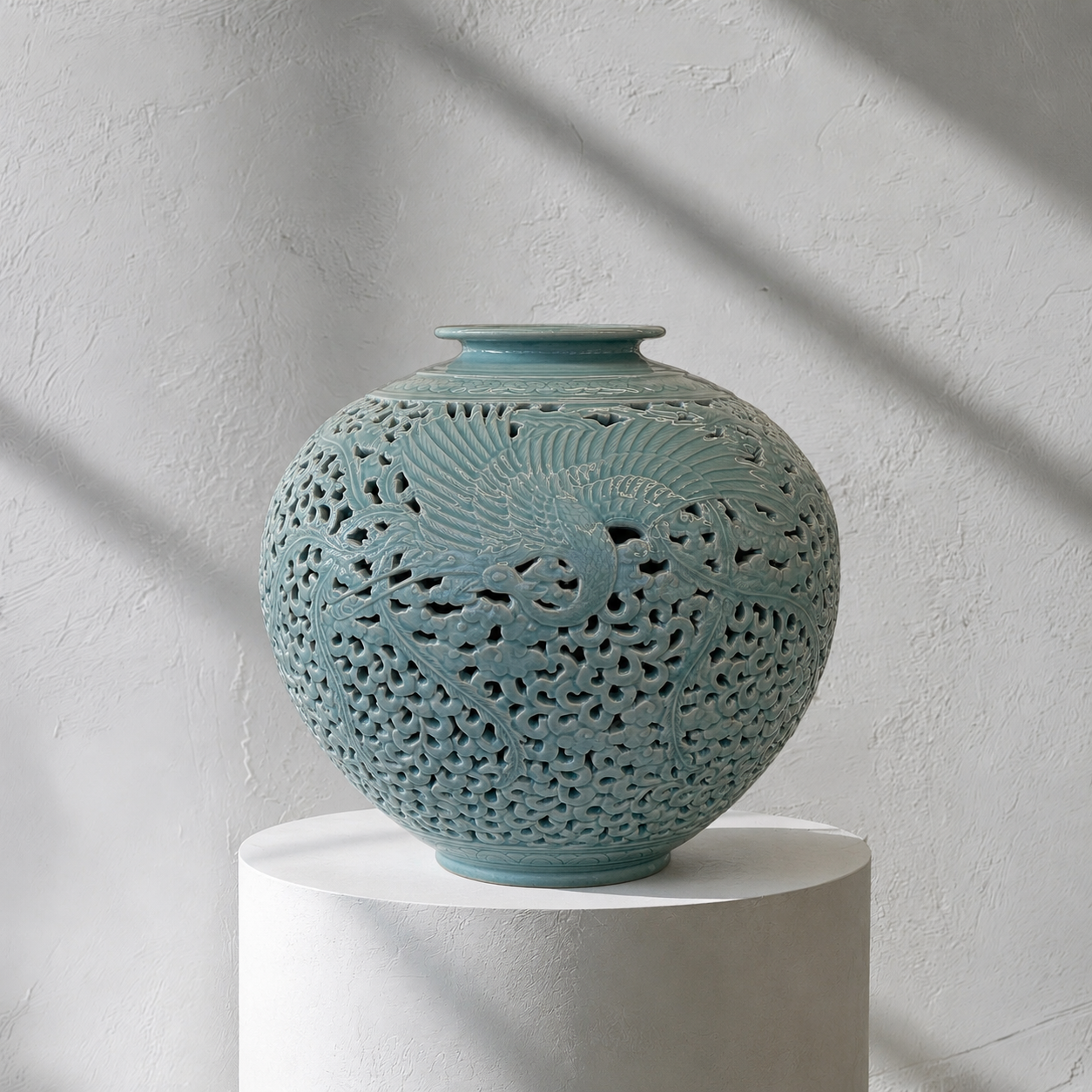
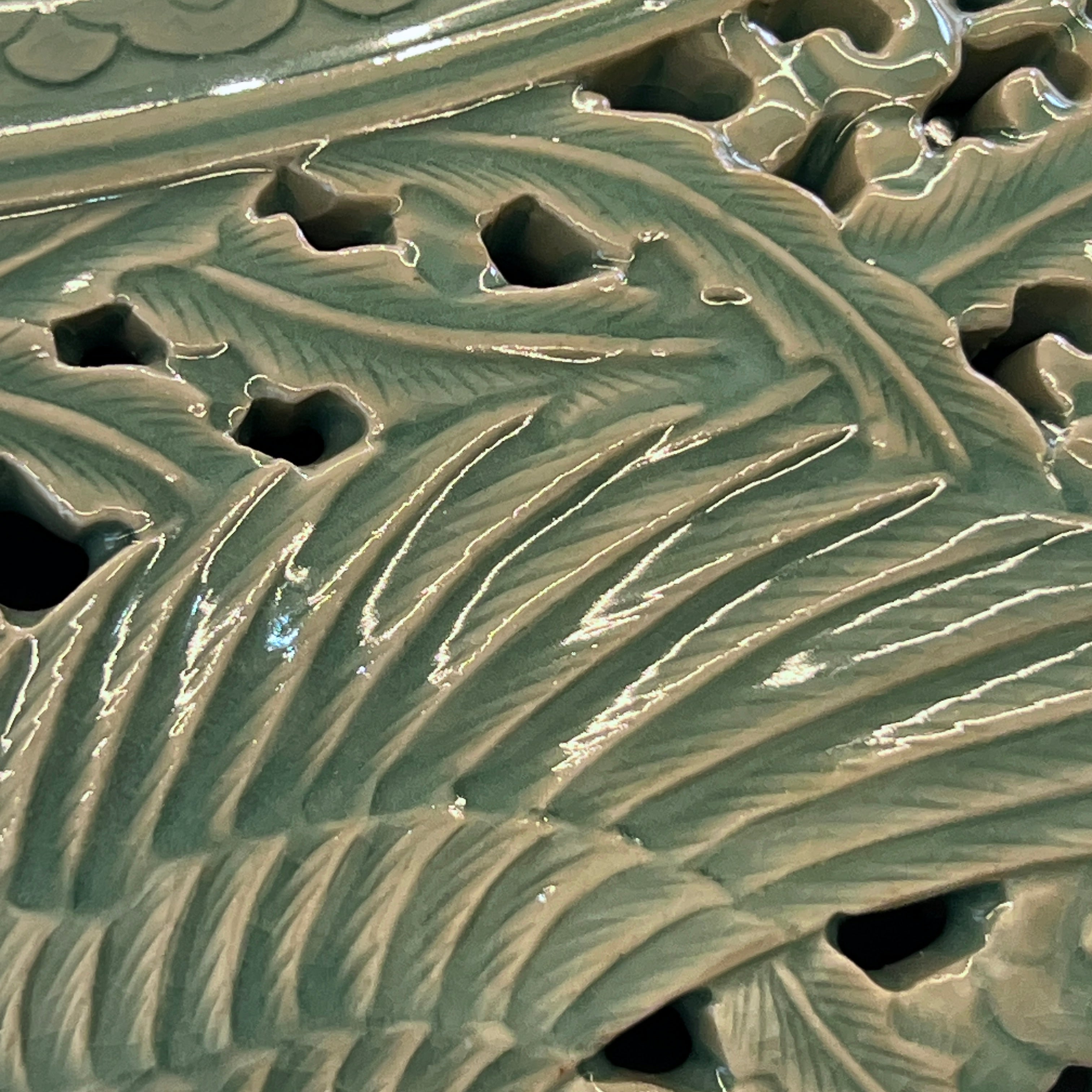
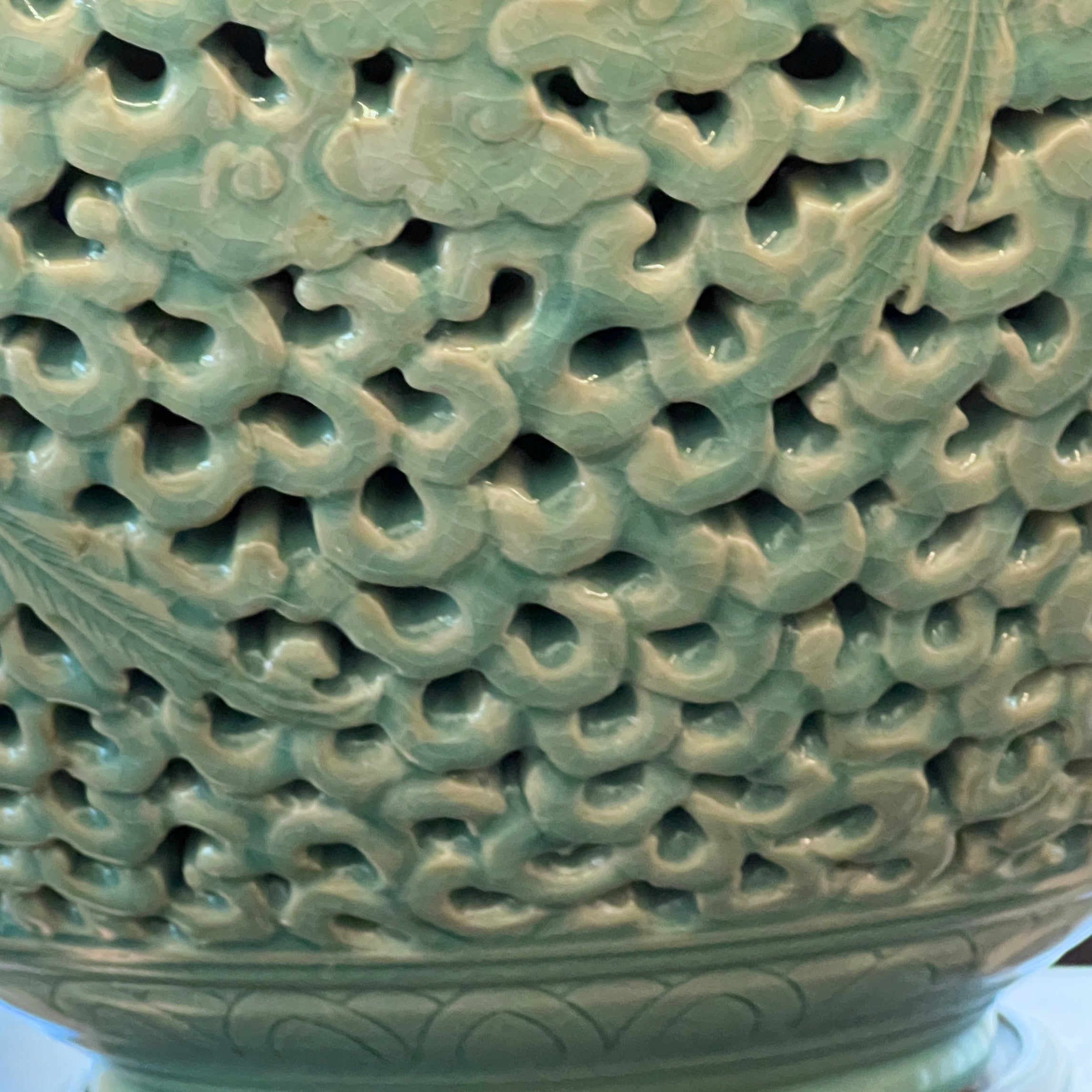
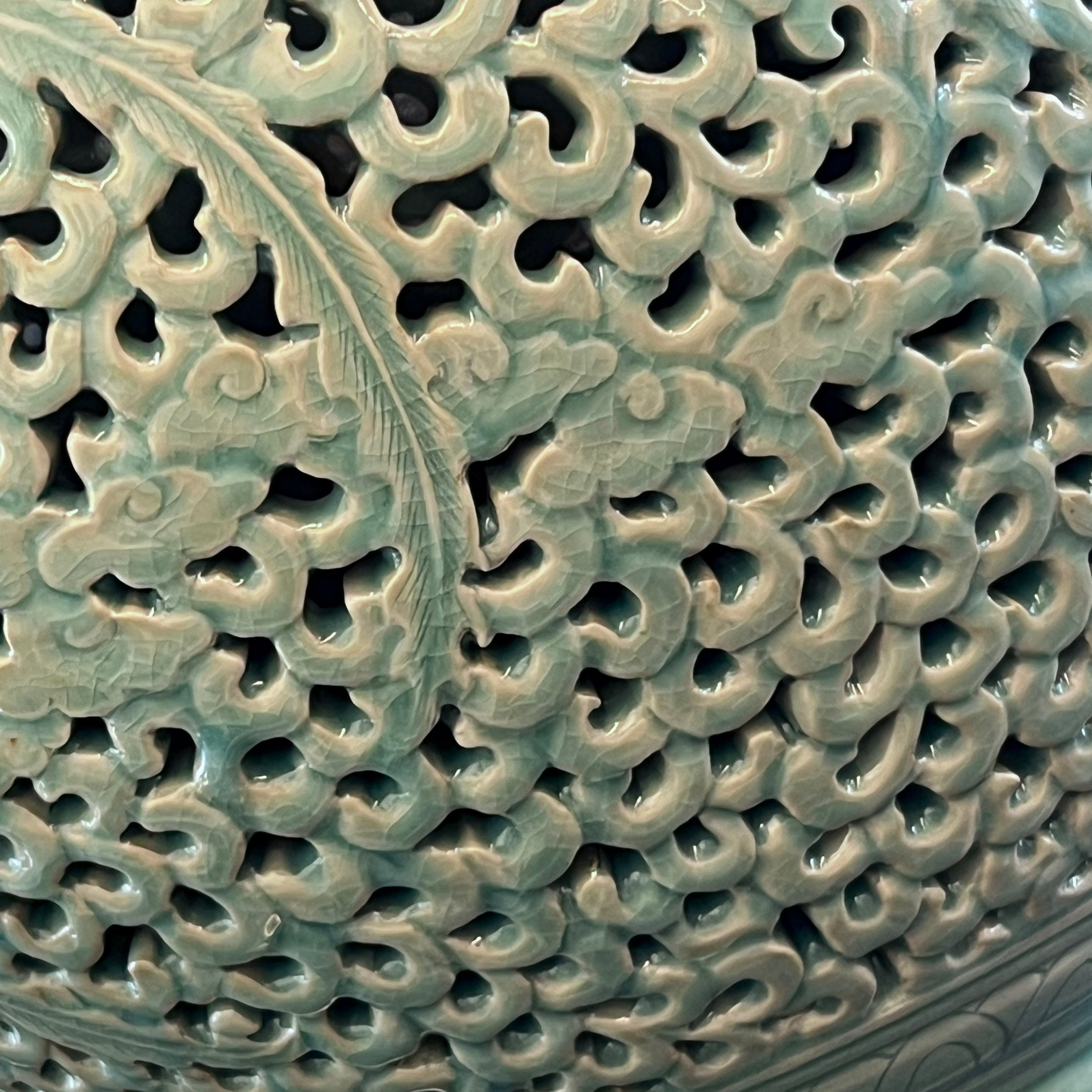
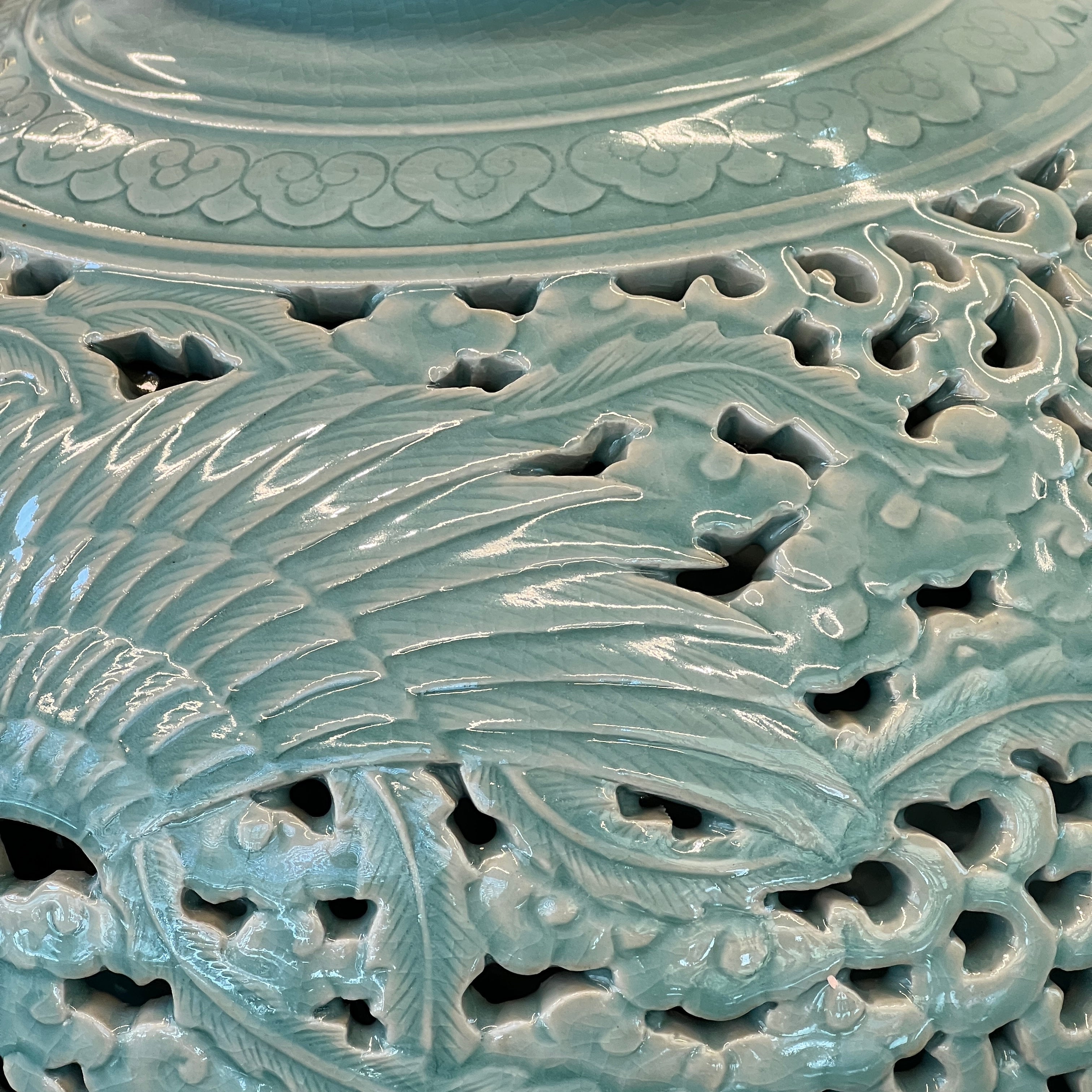
Created in 2025 by the Icheon ceramic master Young-soo Kim, this celadon vase is built through the exceptionally demanding double-walled openwork technique, a method in which an inner vessel and an outer pierced shell must be made separately and then brought into precise relation. It was made this way not only to achieve visual intricacy, but to create a work in which depth, shadow, and enclosed space become part of the image itself. The phoenix is therefore not placed on a surface in any ordinary sense. It emerges across a skin of openings and relief, held between solidity and void.
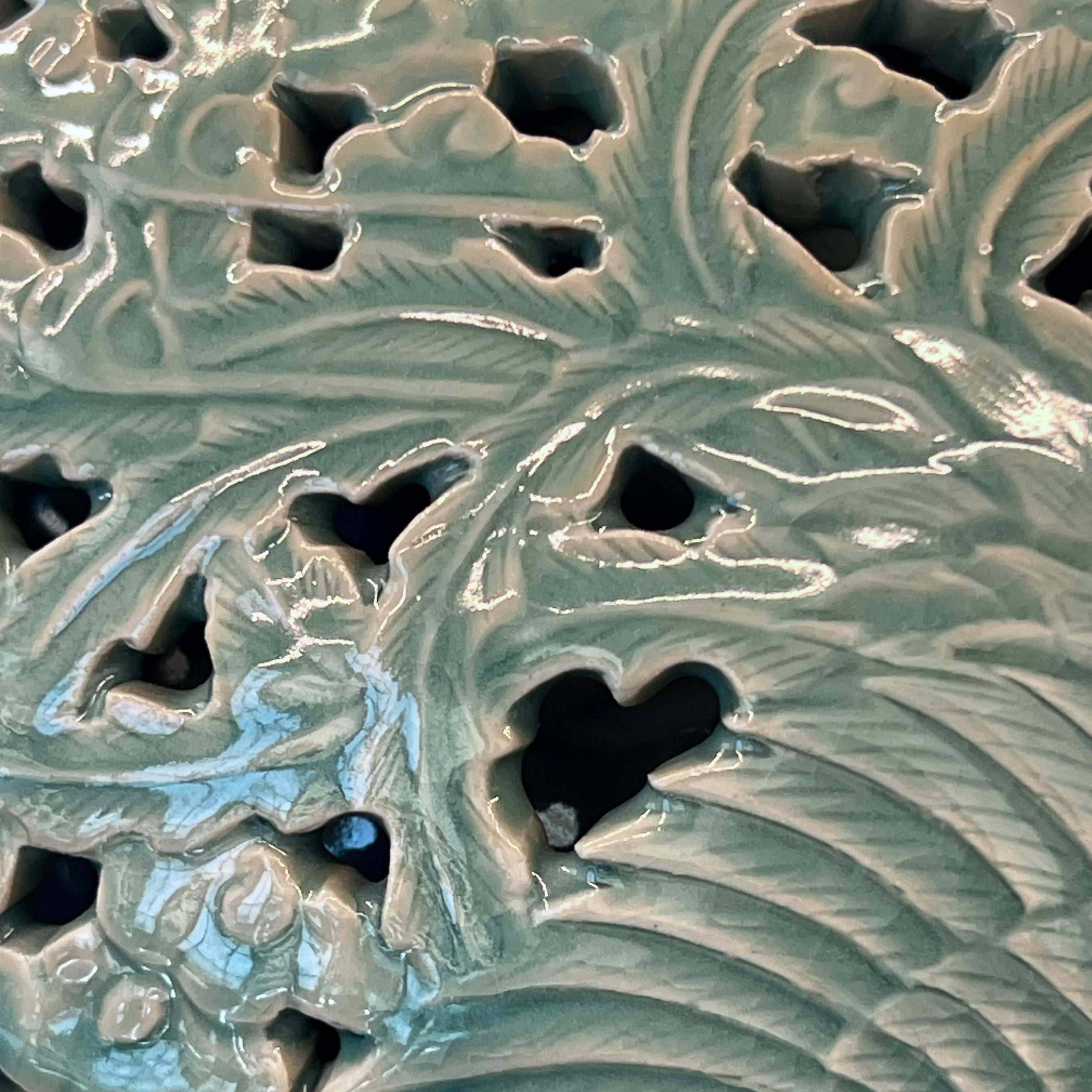
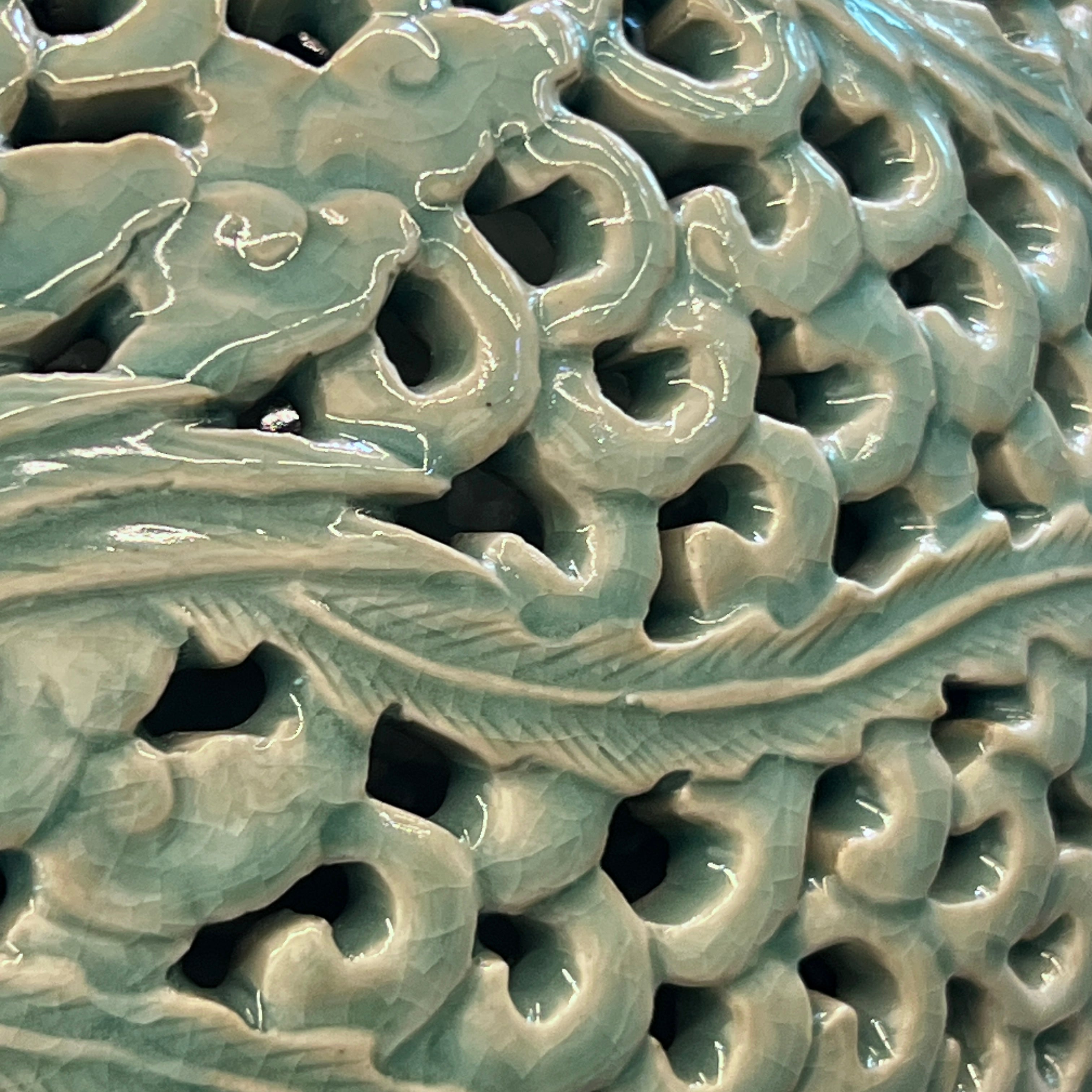
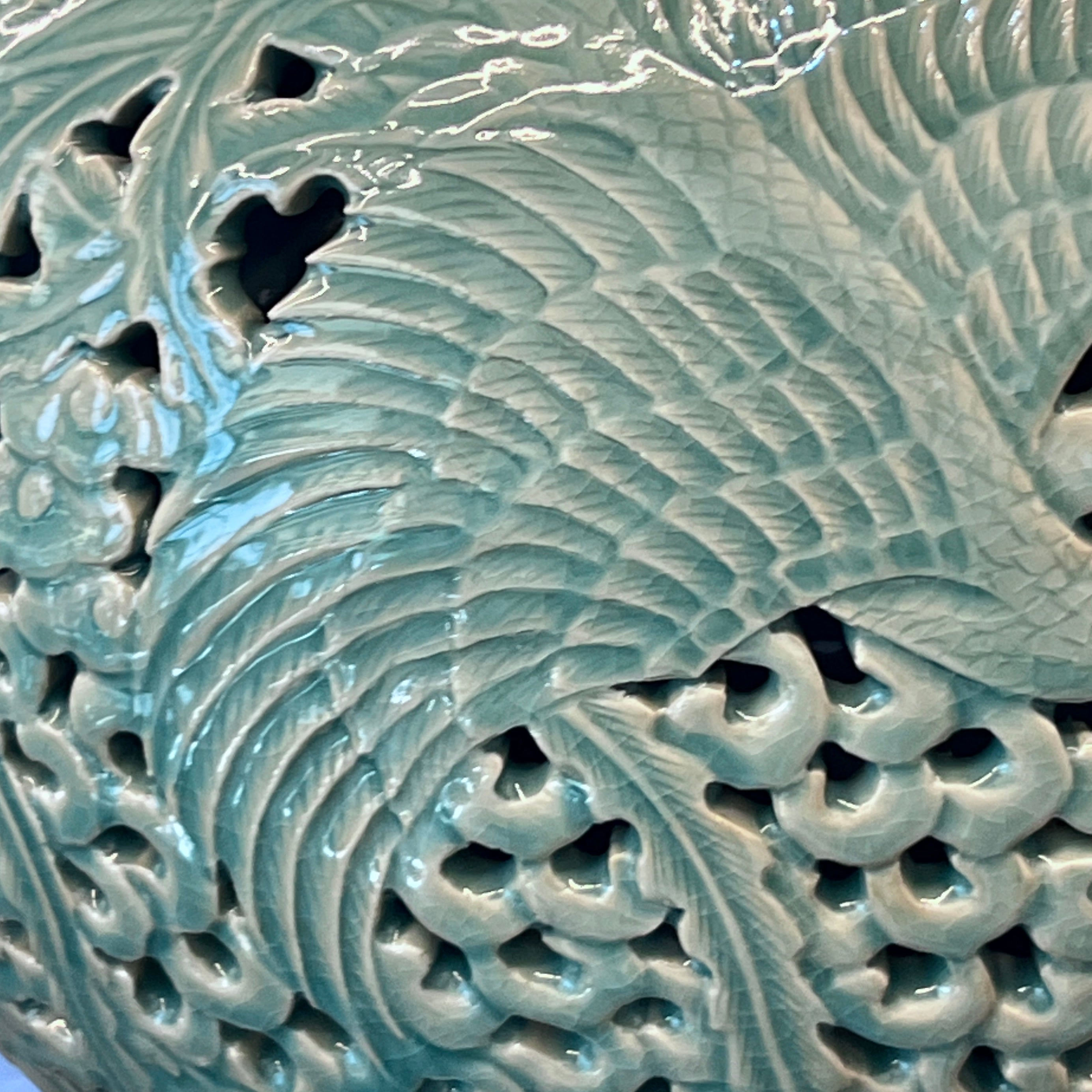
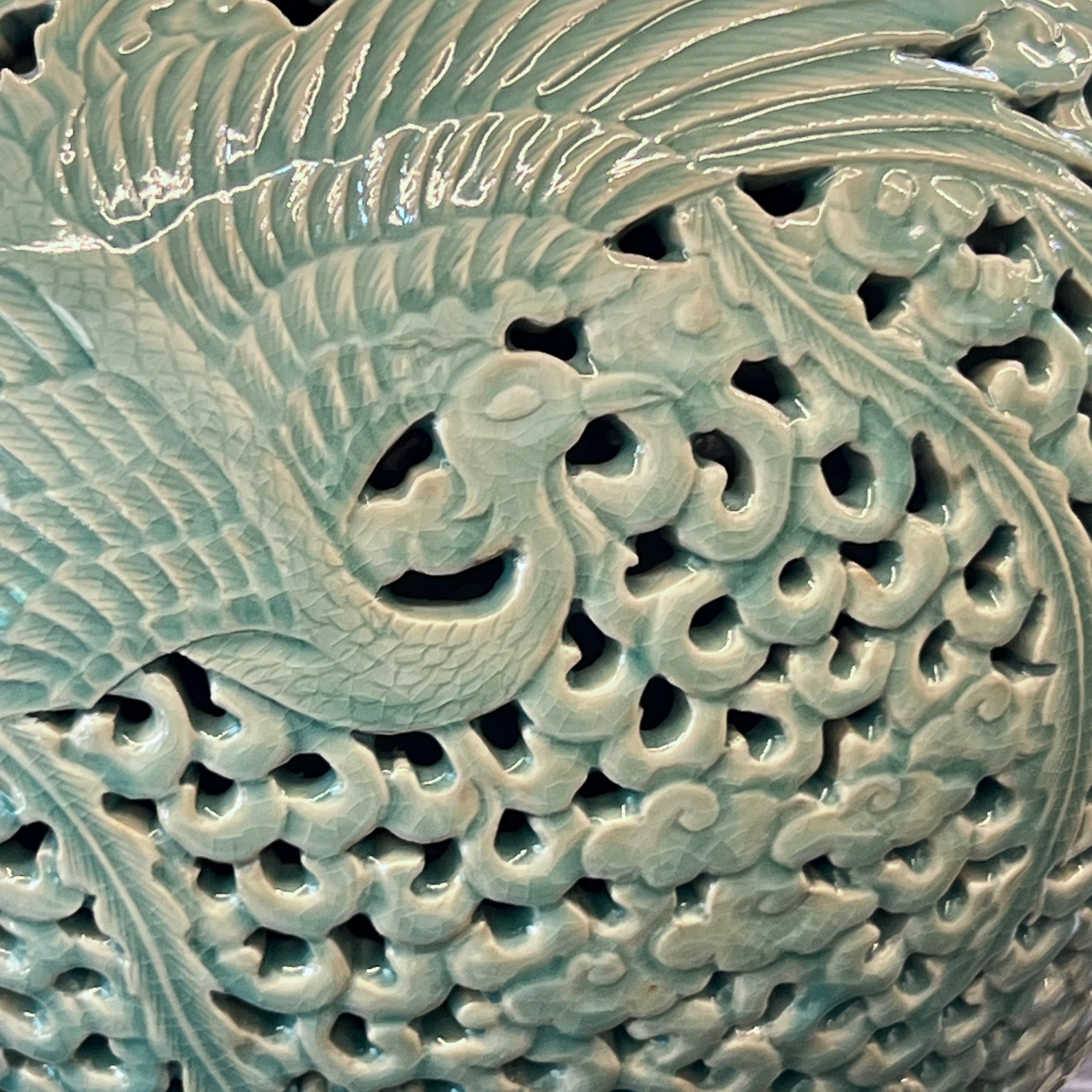
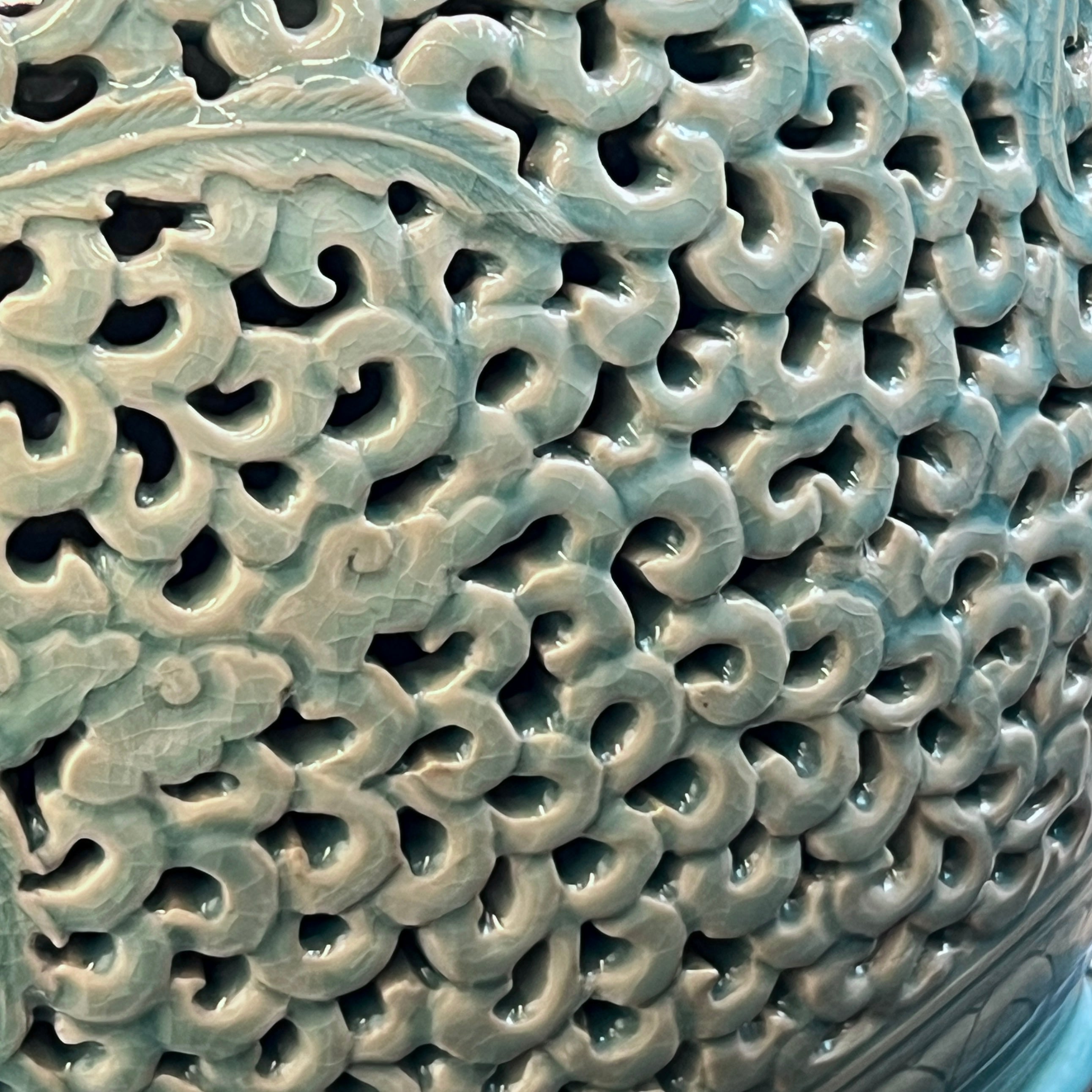
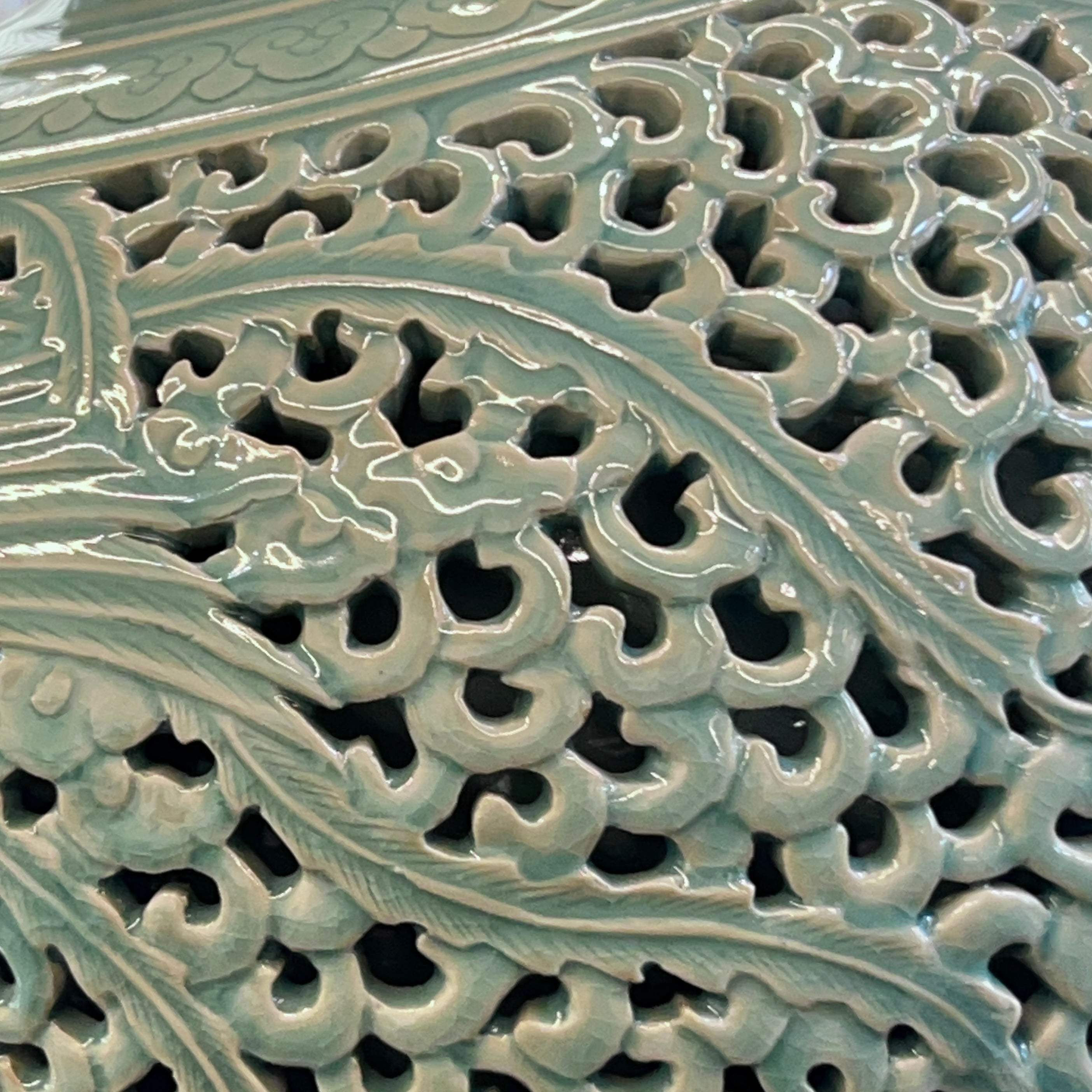
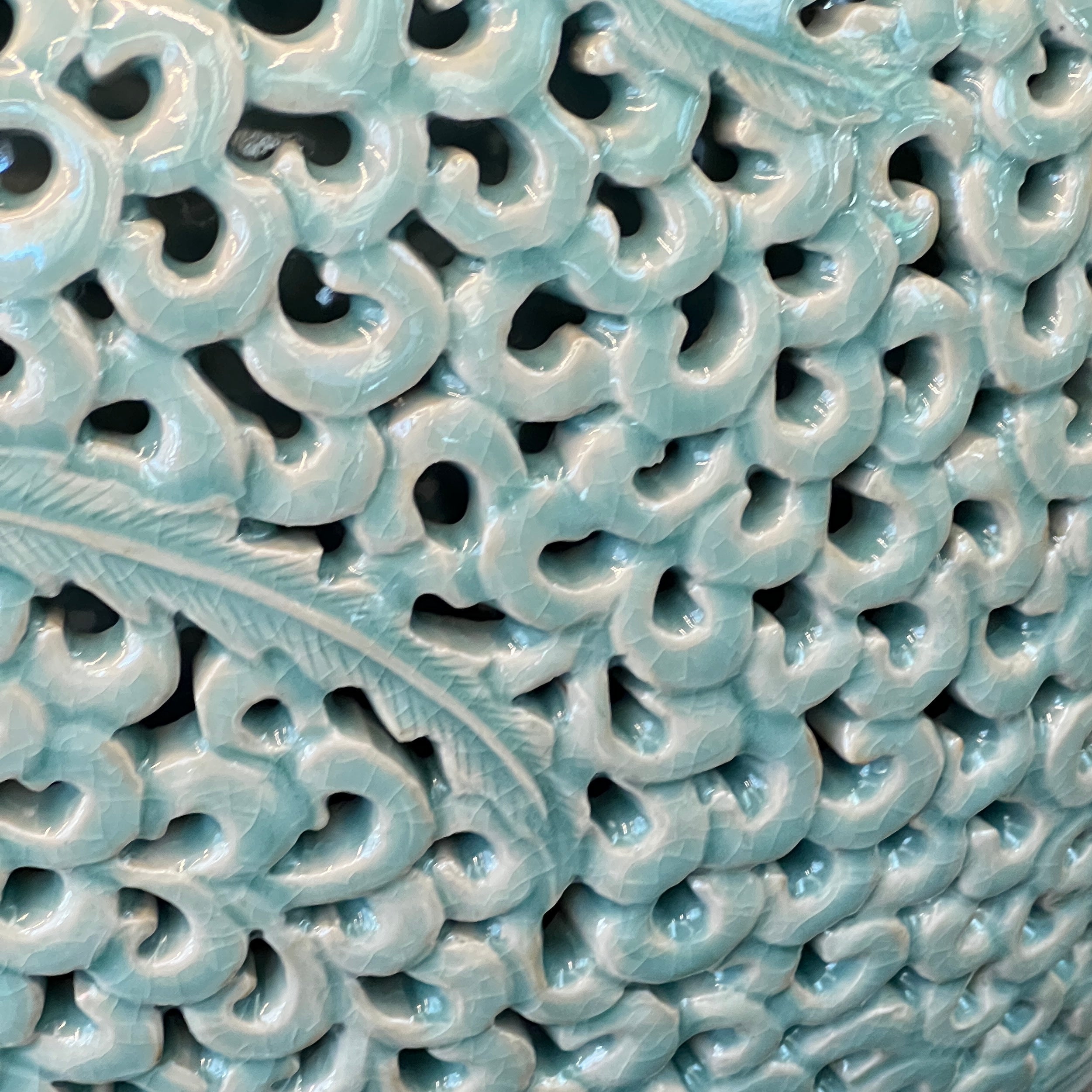
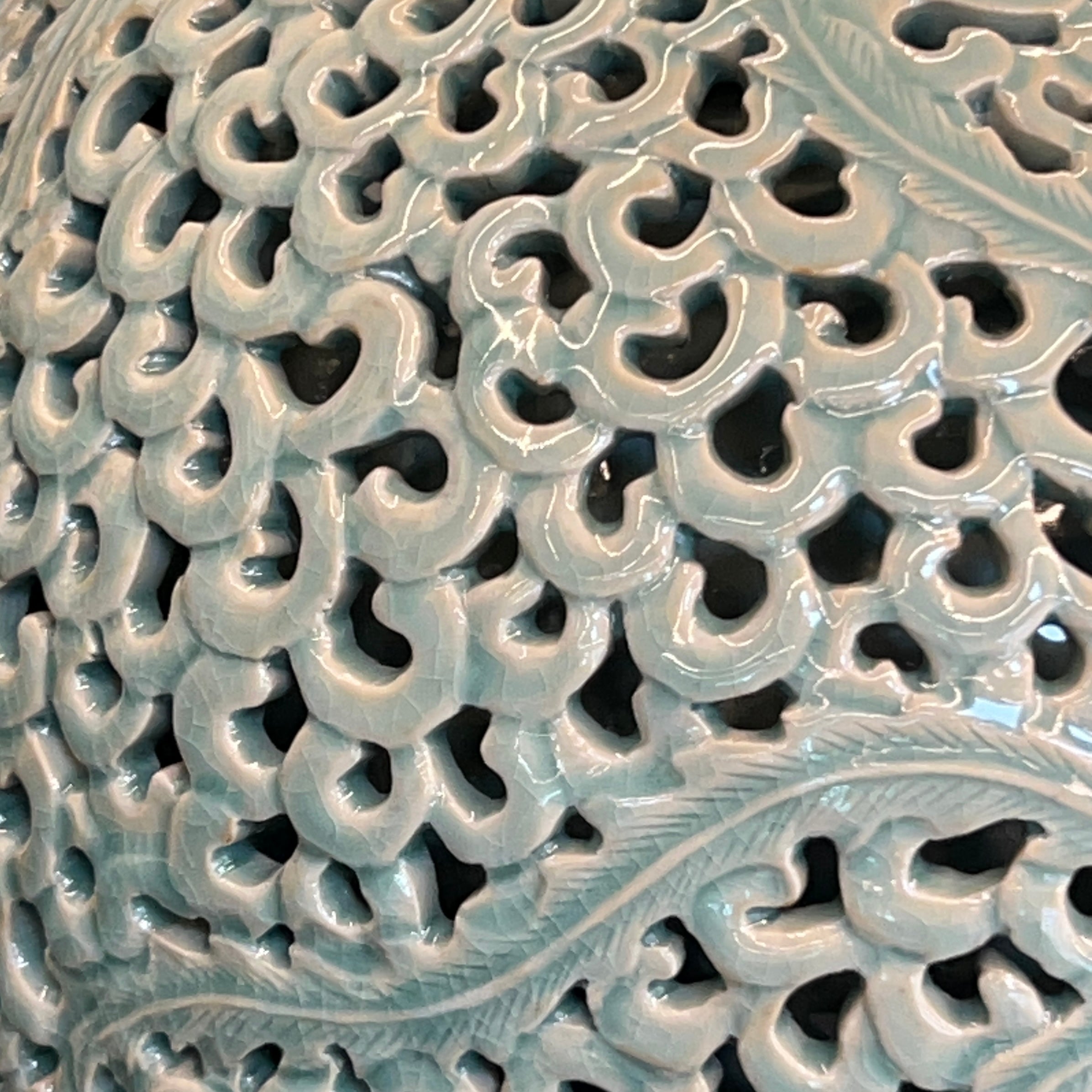
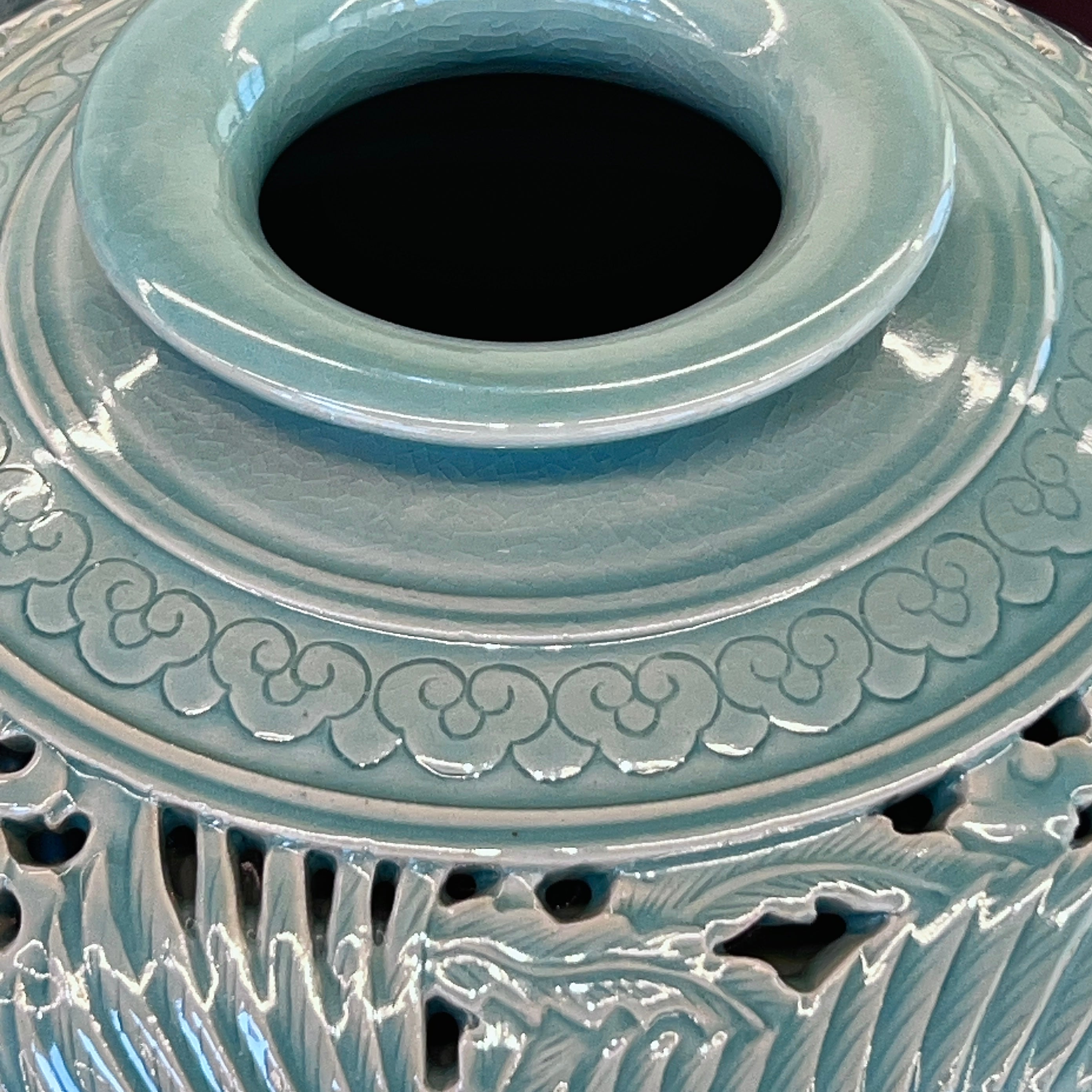
That structural choice determines how the vase is seen. From a distance, the body appears almost perfectly composed: round, calm, and balanced beneath its restrained mouth and foot. Yet as one comes closer, the surface begins to dissolve into layers. The outer wall is pierced with an intricate network of rounded openings, while the phoenix spreads across it in high relief. This contrast is central to the work’s meaning. The vessel is simultaneously full and open, sheltered and permeable. Its form remains whole, but light is allowed to enter it. In that sense, the vase is not only a container but an architecture of air.
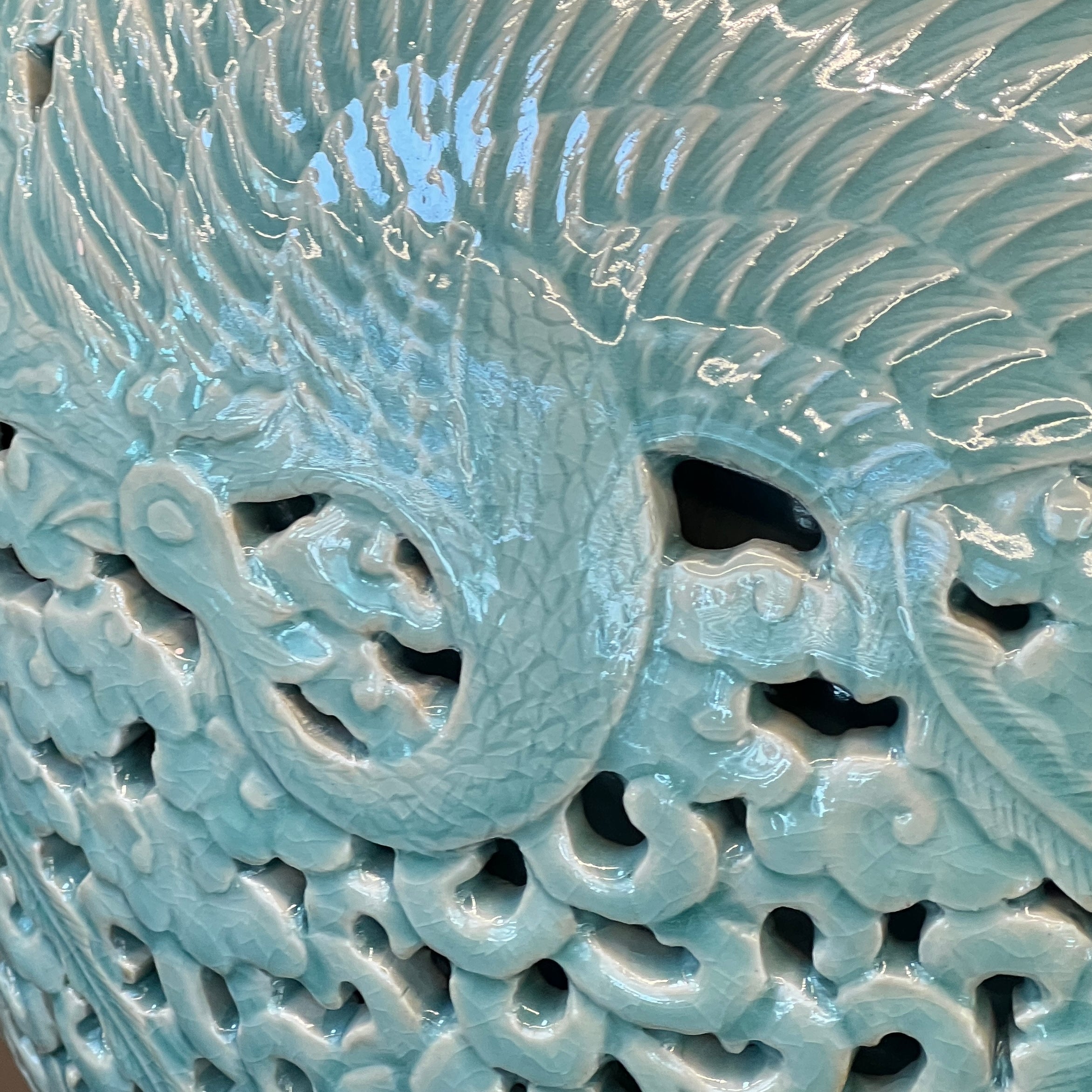
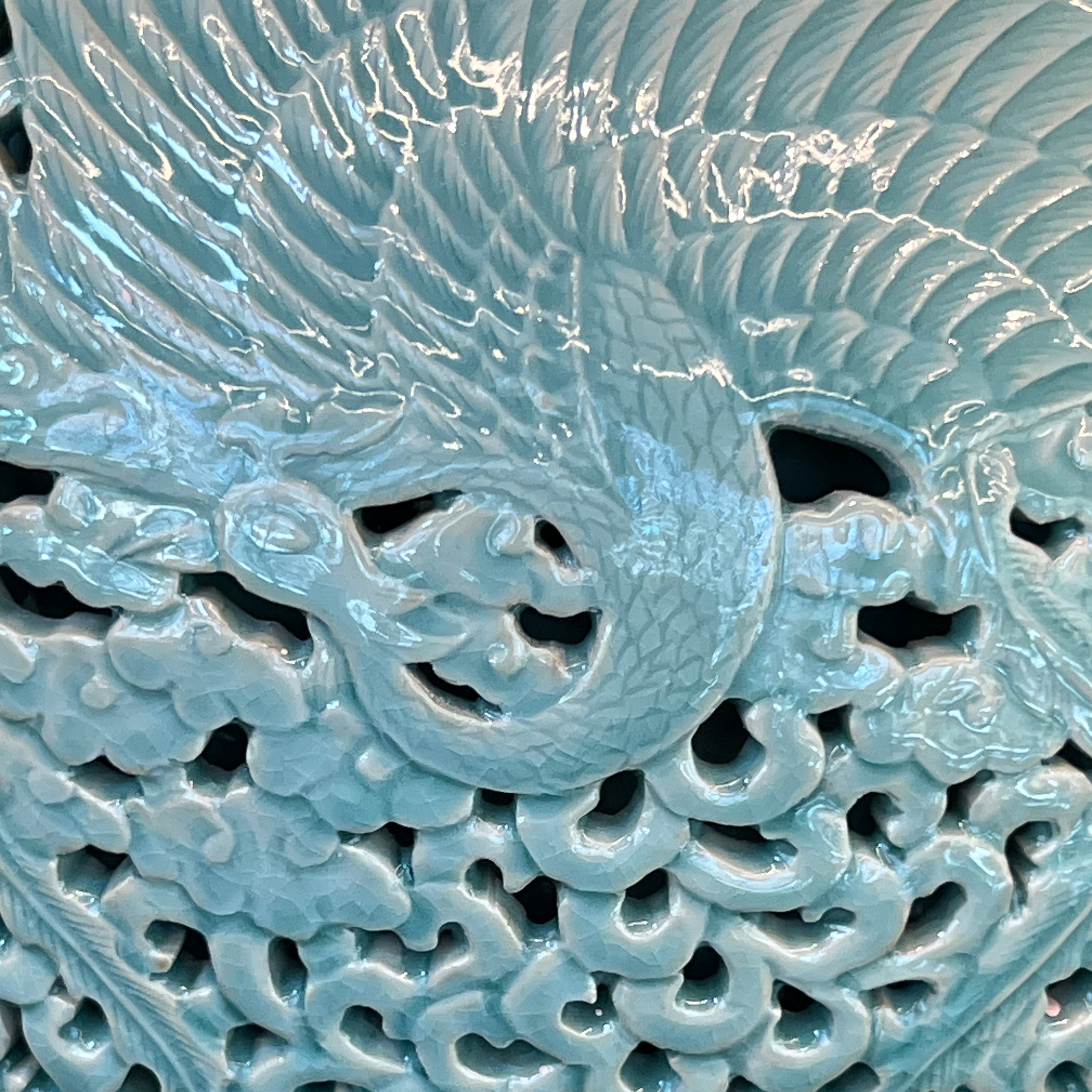
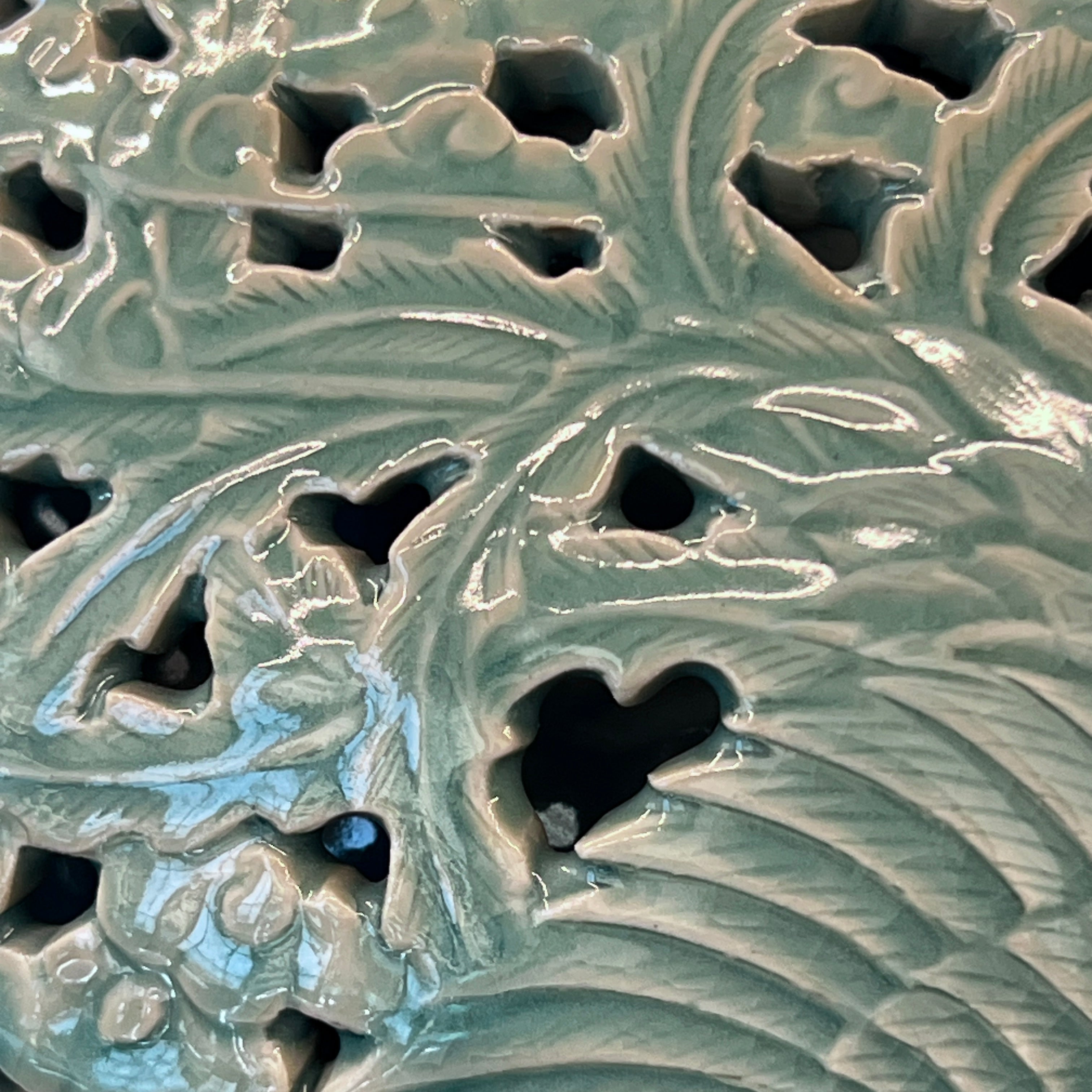
The phoenix motif gives that architecture its rhythm. One bird appears with greater poise and breadth, its wings opening in a stately, almost ceremonial manner. The other is more supple and animated, introducing movement and asymmetry into the whole. This distinction matters. The two sides are not duplicates, because repetition would have lessened the sense of life. Instead, the work unfolds through opposition: one phoenix stabilises, the other releases. One gathers the eye; the other sends it onward. Together they create a circulating movement around the vessel, so that viewing becomes gradual and rotational rather than frontal.
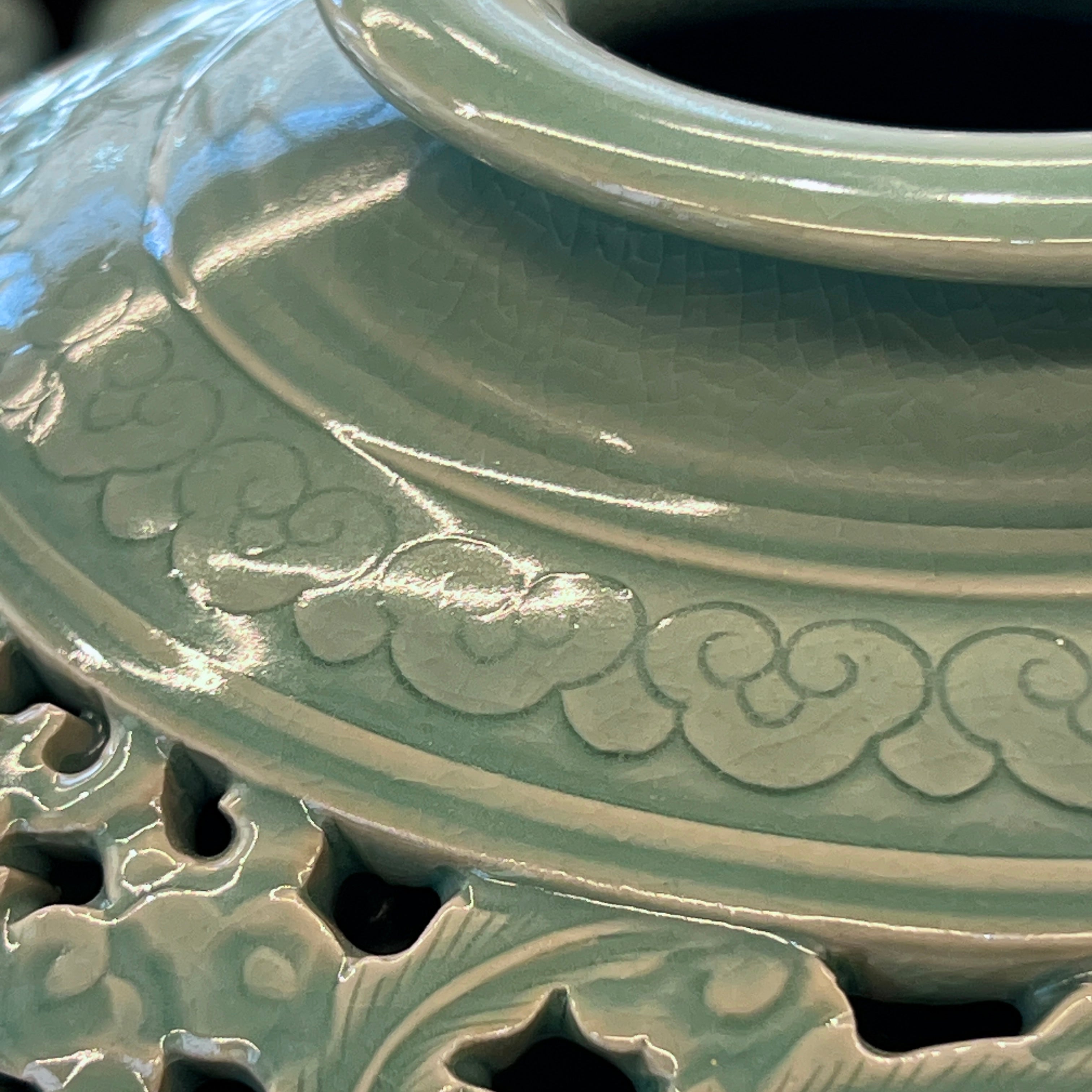
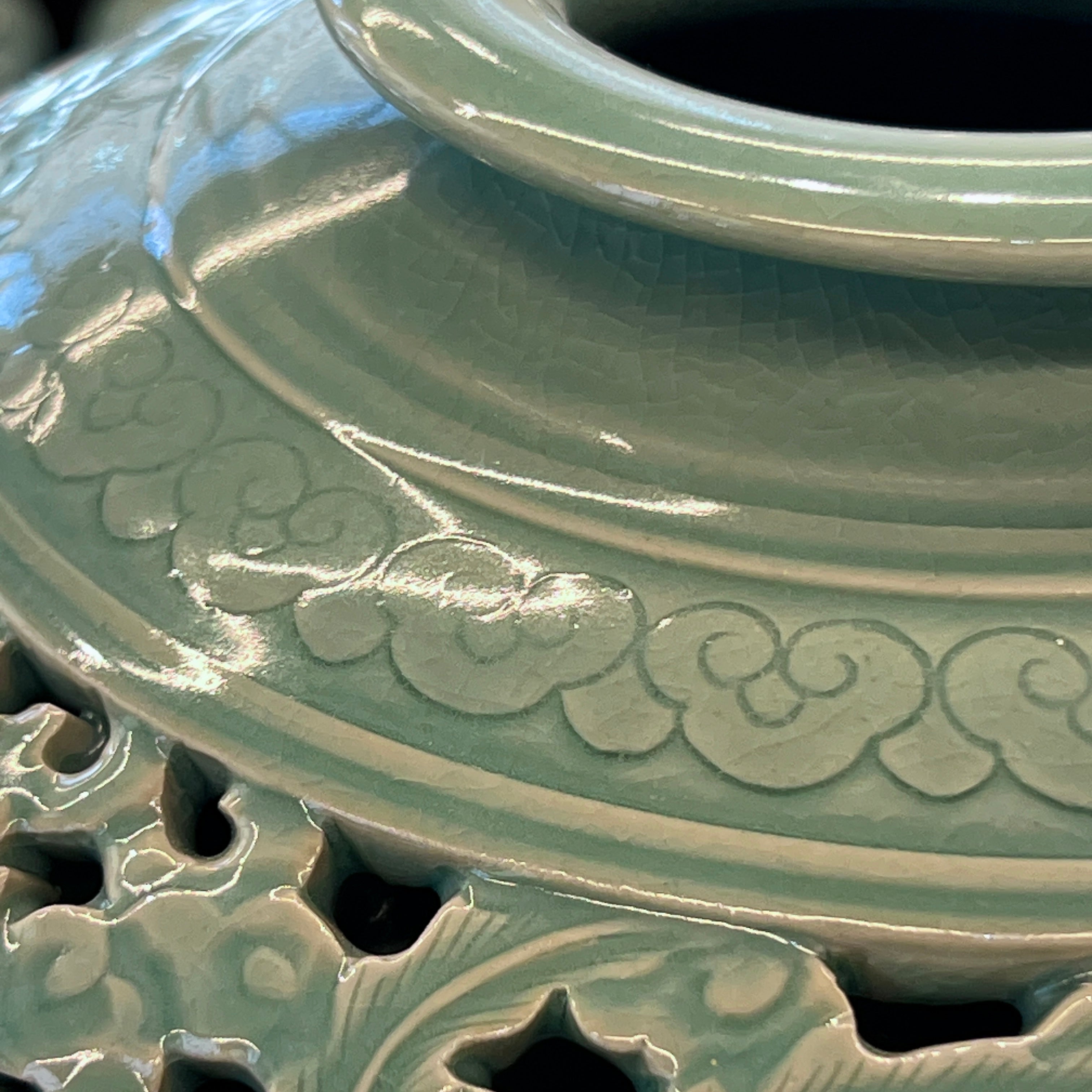
The surrounding cloud-like forms deepen this reading. Their softly rounded pierced shapes prevent the surface from feeling rigid or mechanical, despite the enormous labour involved. They also explain why the phoenix can appear so natural within such technical density. Rather than isolating the bird against a plain ground, the master has embedded it within an auspicious atmosphere. The phoenix seems to move through cloud, light, and breath, not through decorative pattern alone. This is why the relief feels vivid rather than fixed.
The making process is inseparable from this effect. As Master Kim has explained, one vessel must first be formed, then another, with a narrow interval maintained between them before the outer wall is cut, joined, pierced, and finished by hand. At every stage, the risk of failure remains high. Drying may distort the relationship between the two walls; glaze may gather unevenly; areas of openwork may collapse if the thickness is not judged exactly. In large works, drying alone can take months, and the entire process may extend beyond a year. It is important that he completes these openwork pieces himself, without delegating the crucial stages, because the finished calm of the vessel is only possible through that singular continuity of judgement.
The celadon glaze resolves the structure with remarkable intelligence. Its blue-green tone settles gently into the carving and along the pierced edges, clarifying the relief without hardening it. This is especially important in a work of such density. A harsher or more opaque surface would flatten the complexity; here, the glaze instead lends unity. Feather, cloud, opening, neck, and shoulder all remain distinguishable, yet belong to one continuous atmosphere. The glaze allows the technique to be admired without becoming the whole subject.
What is most compelling, however, is the way this vase changes with prolonged looking. At first one sees virtuosity: the openwork, the scale, the finesse of the carving. Then the work begins to shift. The phoenixes no longer read as ornament alone, but as agents of movement within a form otherwise defined by stillness. The voids begin to matter as much as the clay. The rounded body starts to feel less like a mass than like a held field of breath and light. In this sense, the vase achieves something distinctly rare: it turns technical labour into visual ease.
This is why the work carries such authority. It was made this way because only a double-walled, pierced structure could give the phoenix both monumentality and flight, and only a master willing to accept time, risk, and repeated correction could bring that vision into being. The result is not simply a celadon vase with a phoenix motif, but a vessel in which auspicious image, sculptural depth, and disciplined making have become inseparable.
Dimensions
- Height- 36 cm (14.17 inch)
- Diameter- 35 cm (13.78 inch)
Choose options