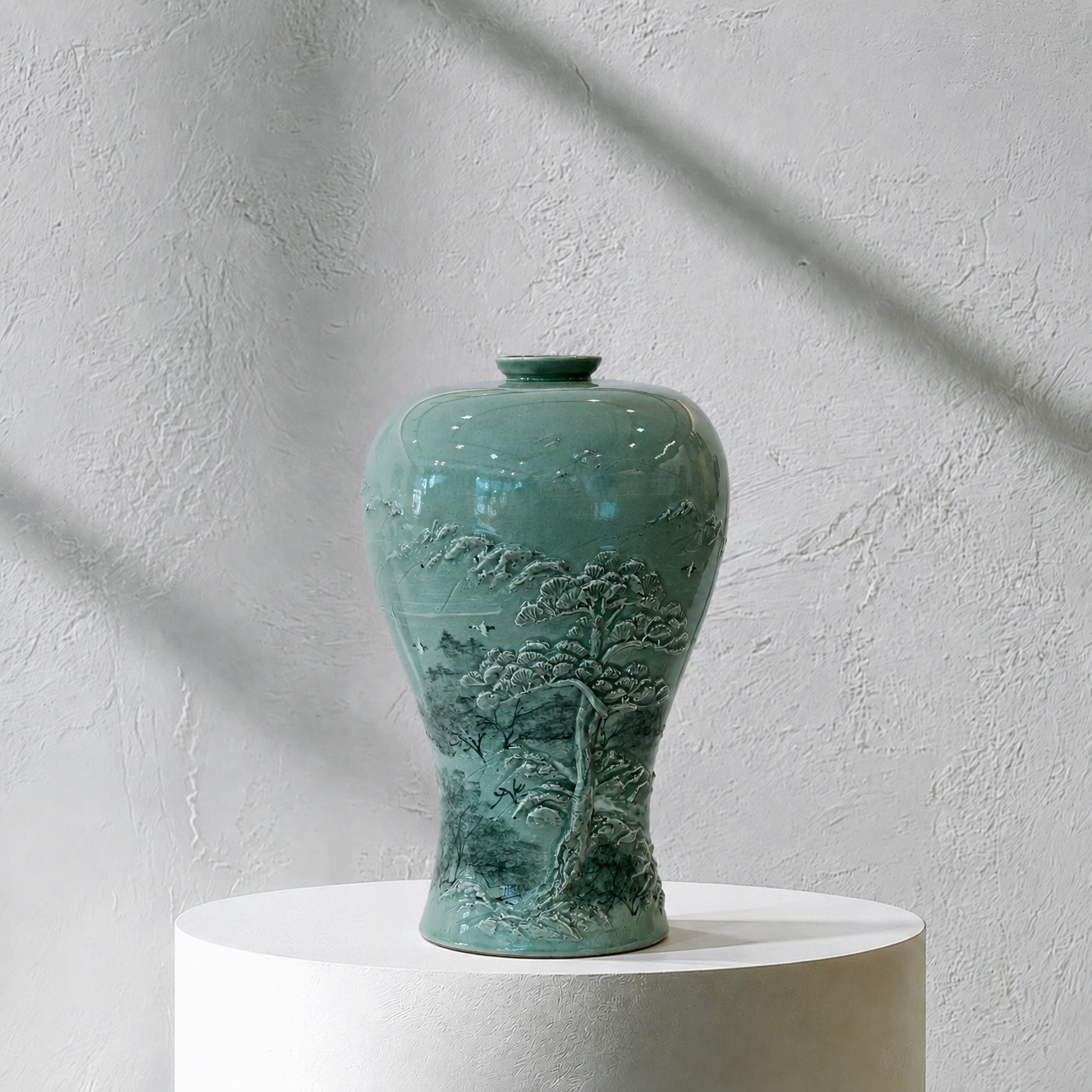
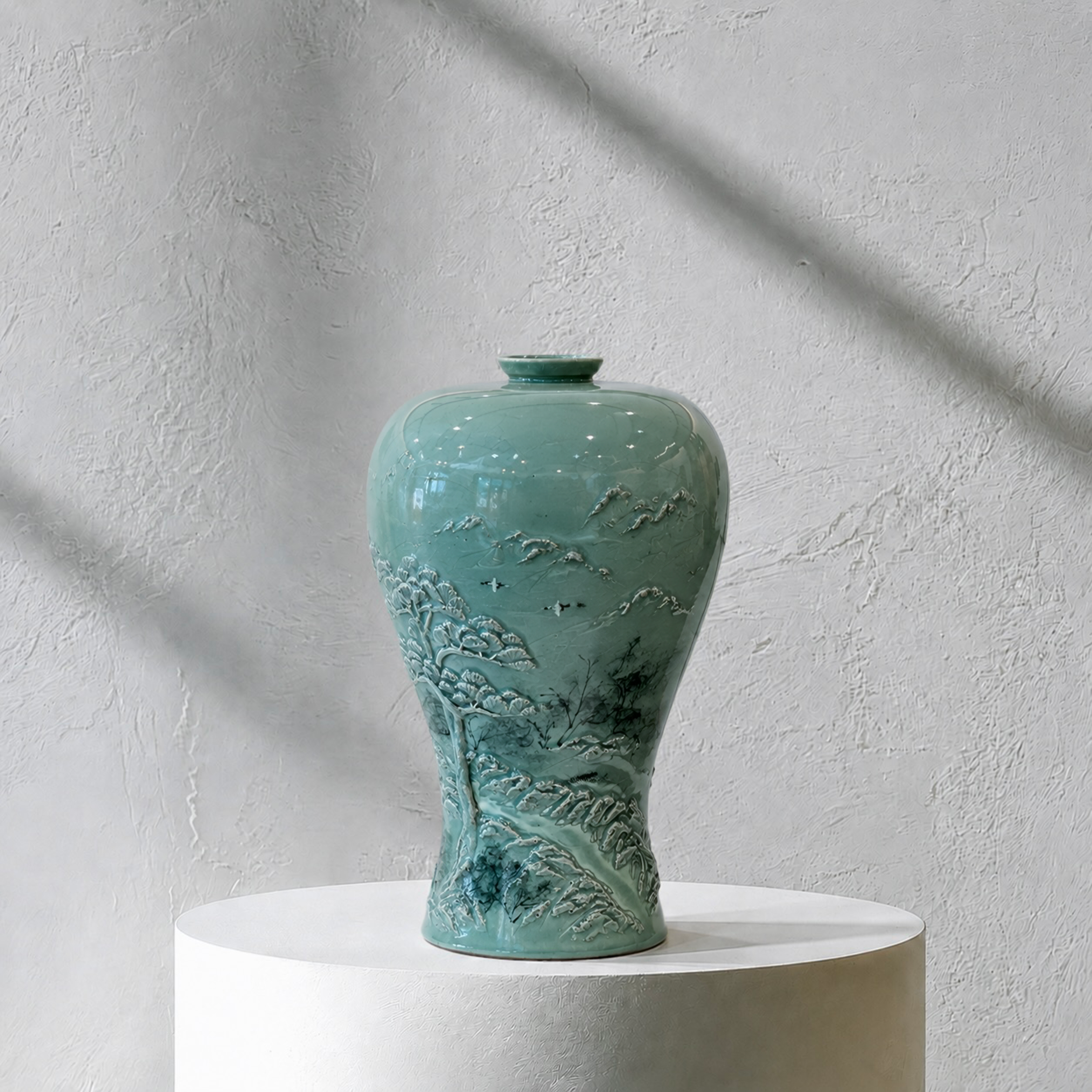
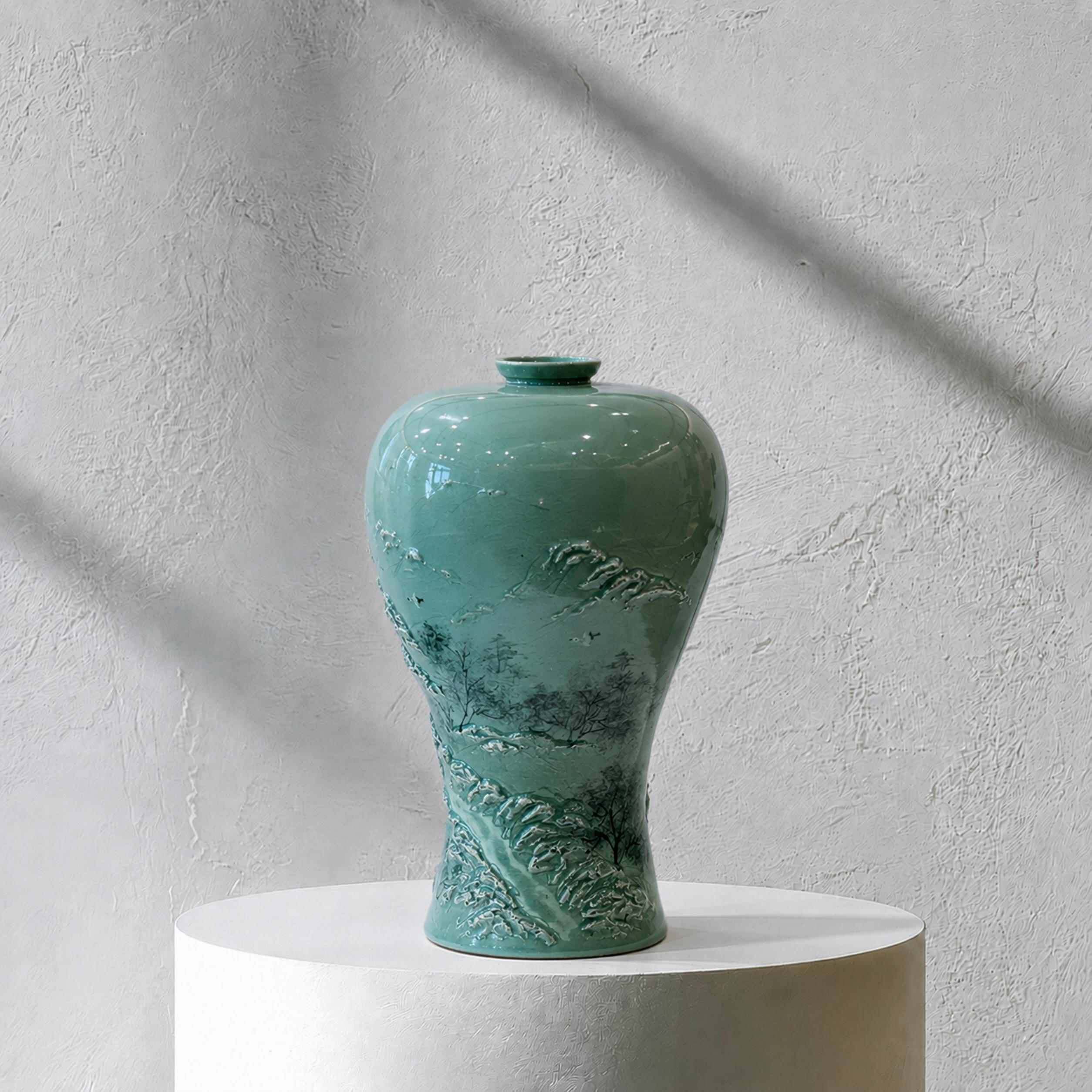


Celadon Maebyeong Vase: Applied Relief Pine-and-Crane Motif, 2024
This work is chosen by those who understand that auspicious beauty becomes most persuasive when it is inseparable from structure, atmosphere, and restraint.
“The landscape does not sit upon the vase as ornament; it rises from the clay like a vision emerging through spring mist.”
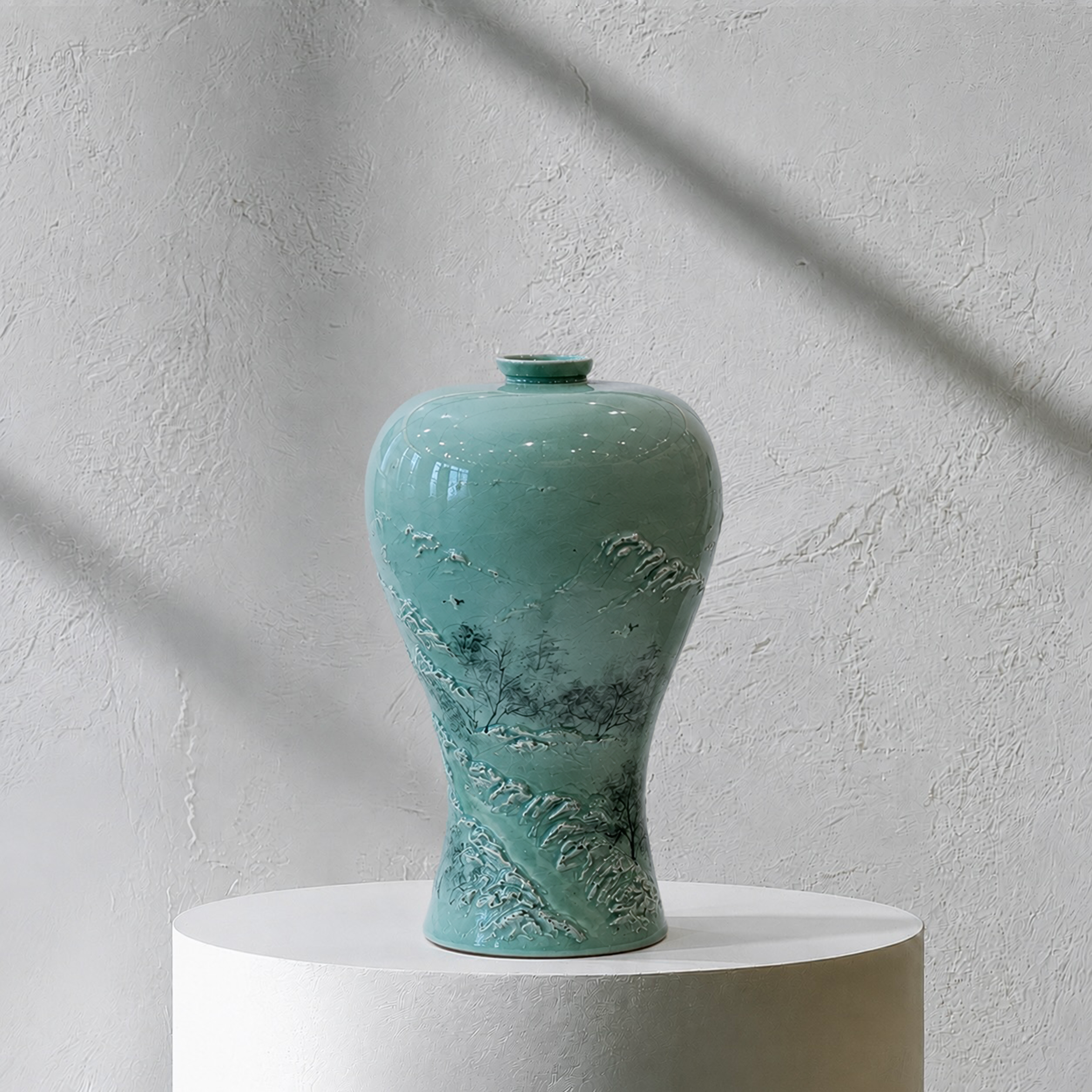
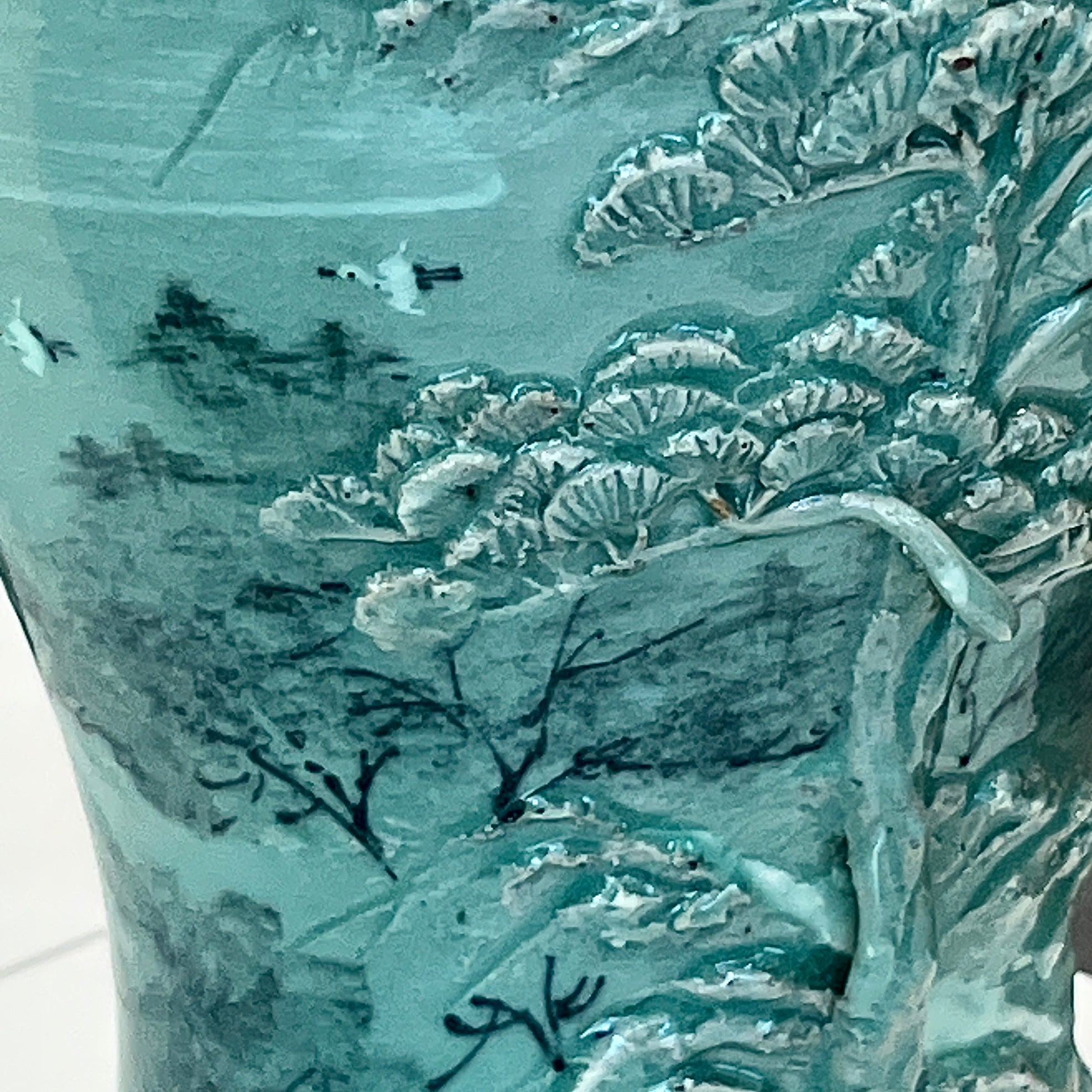
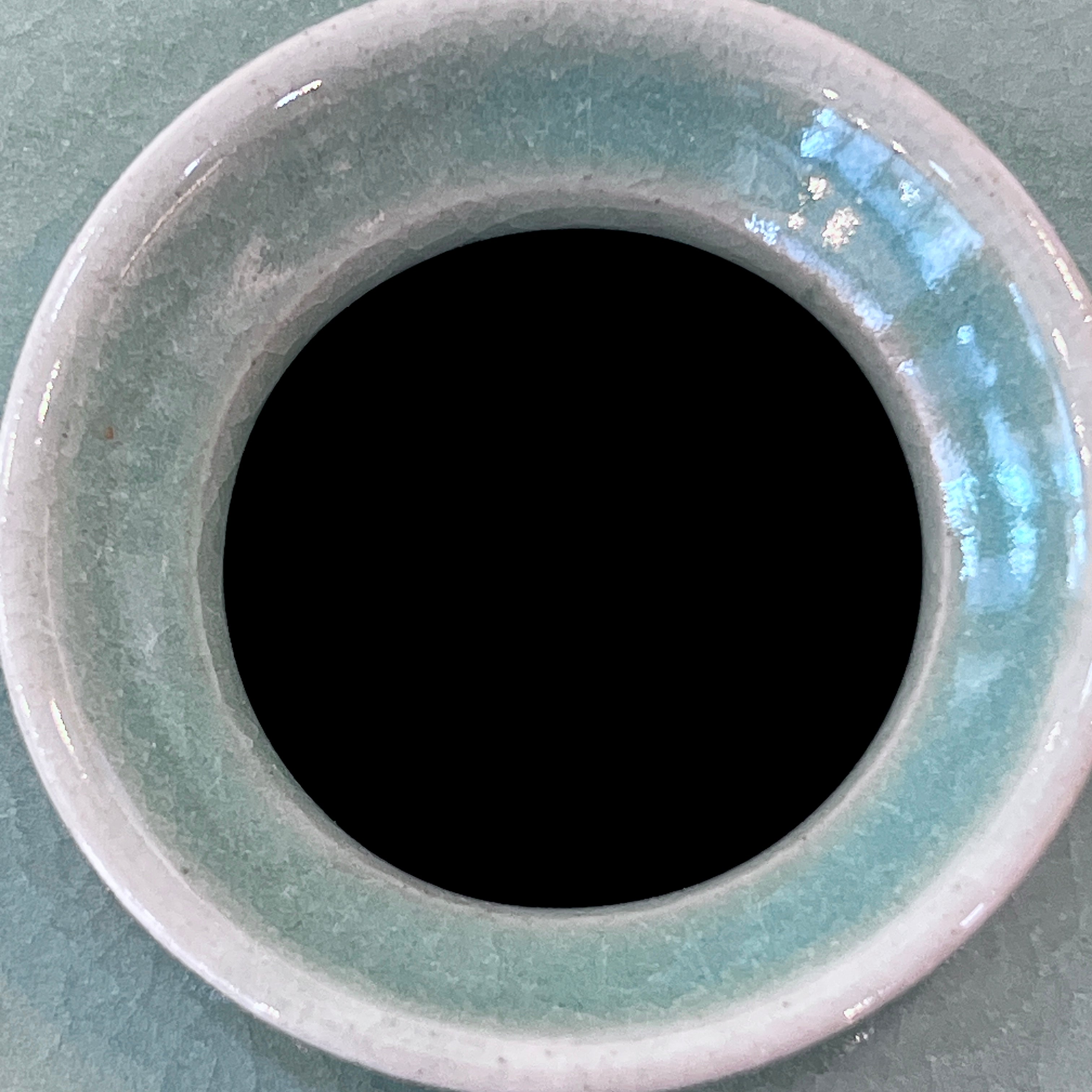
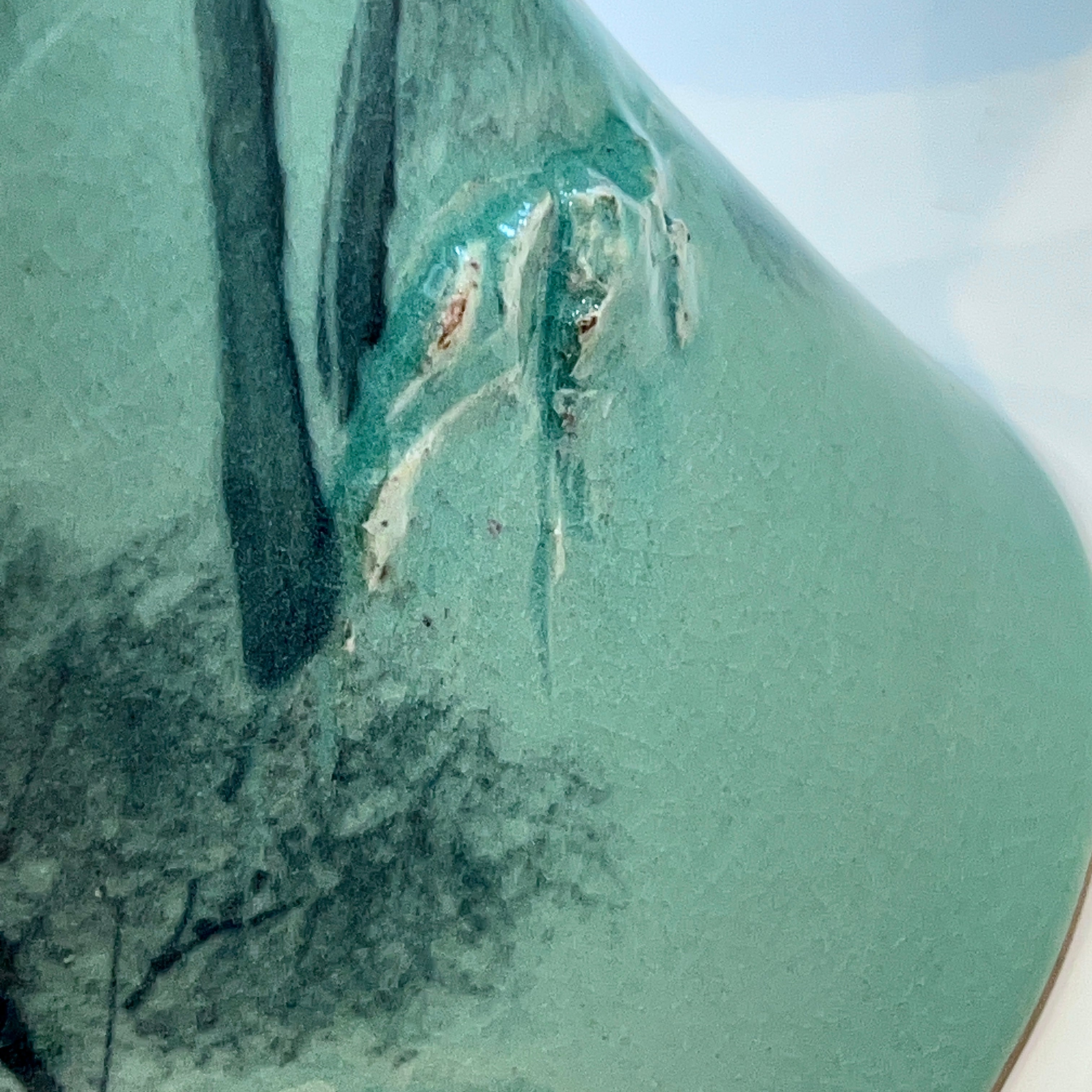
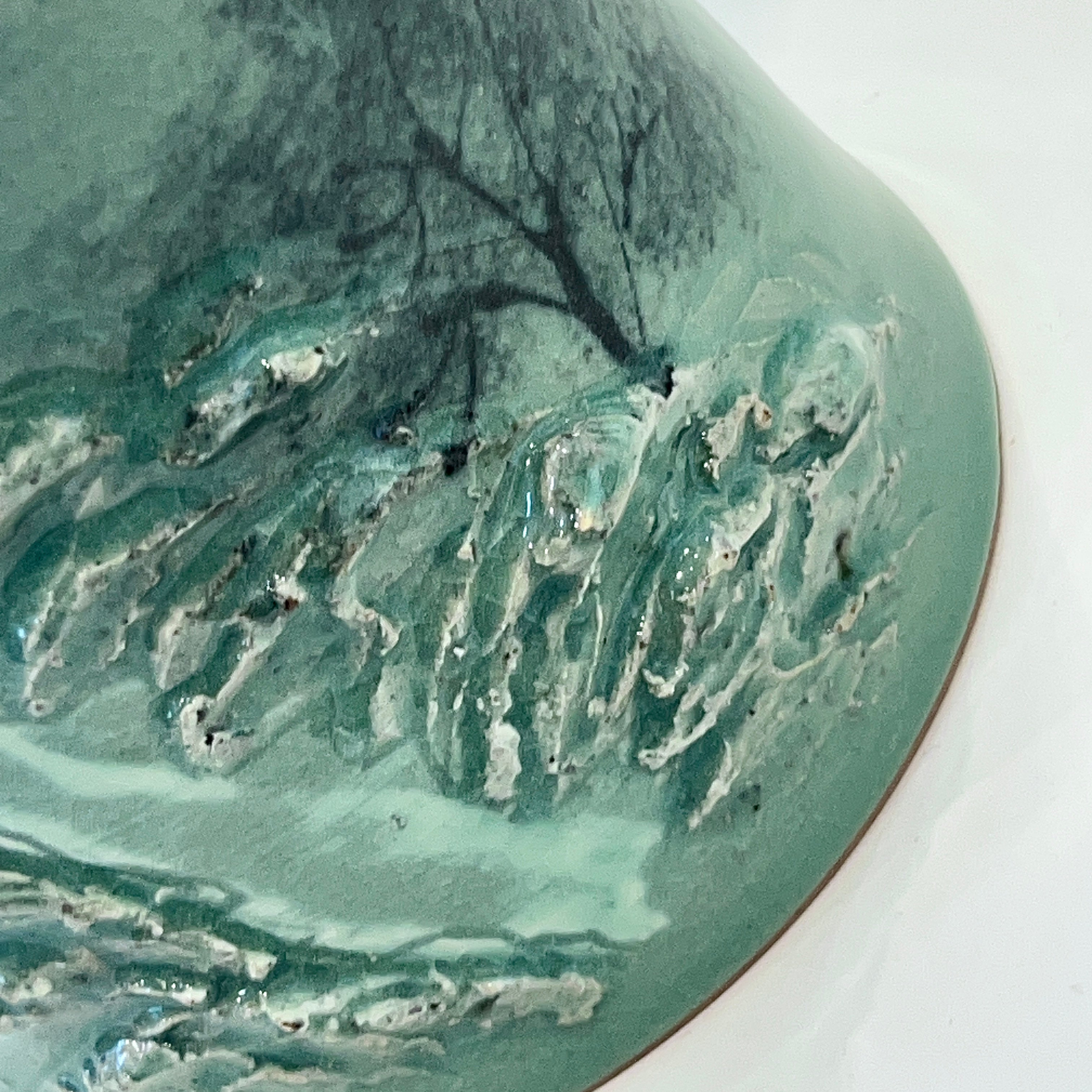
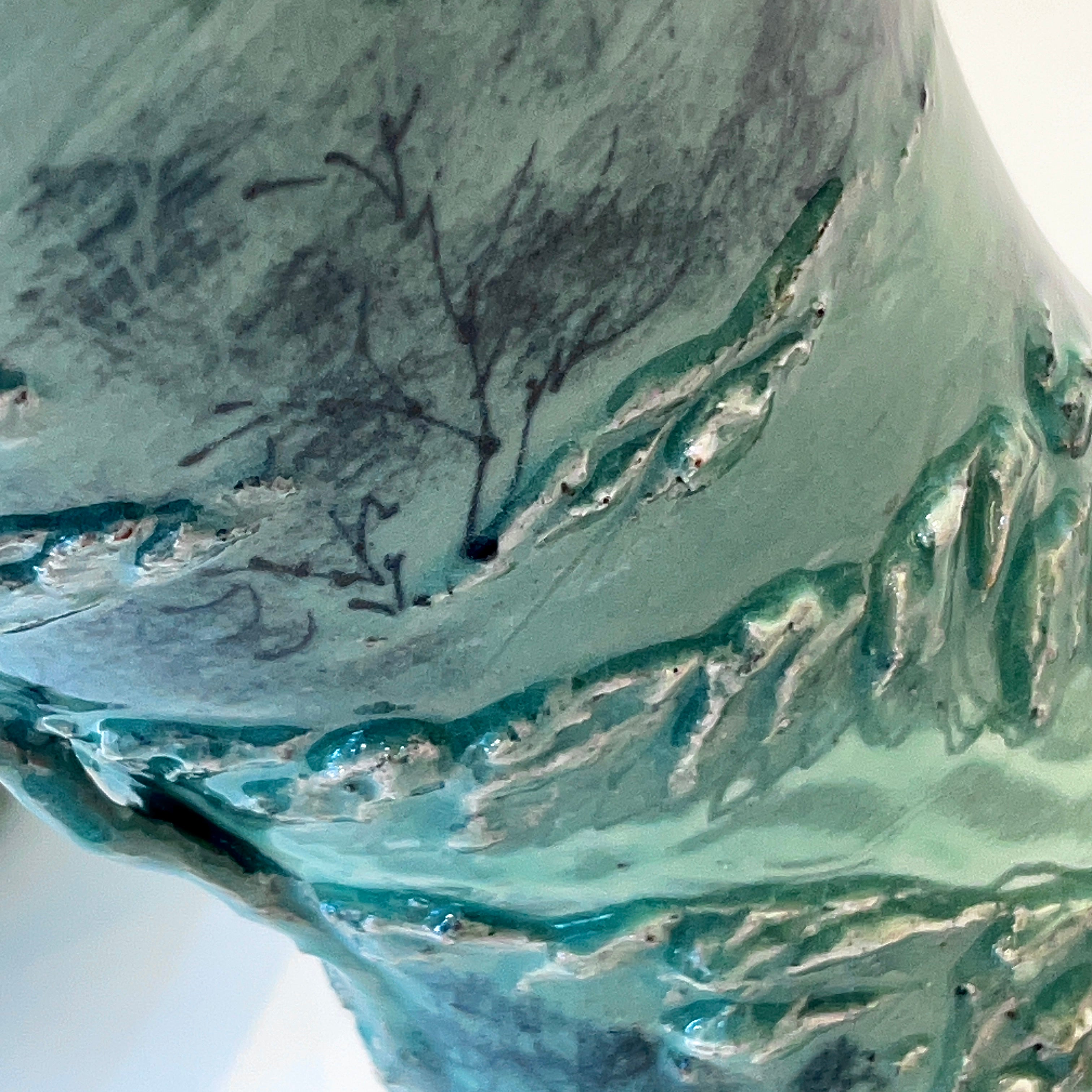
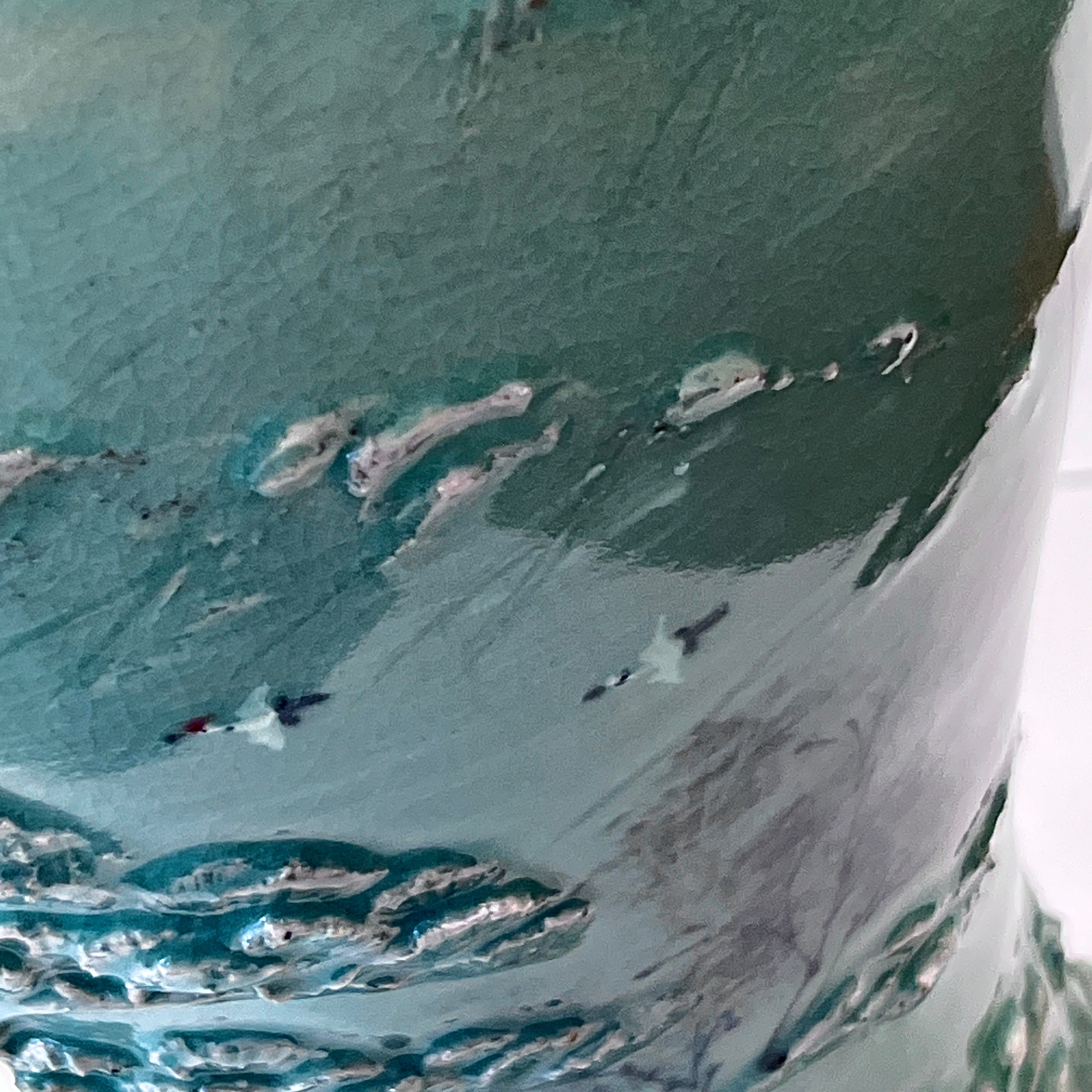
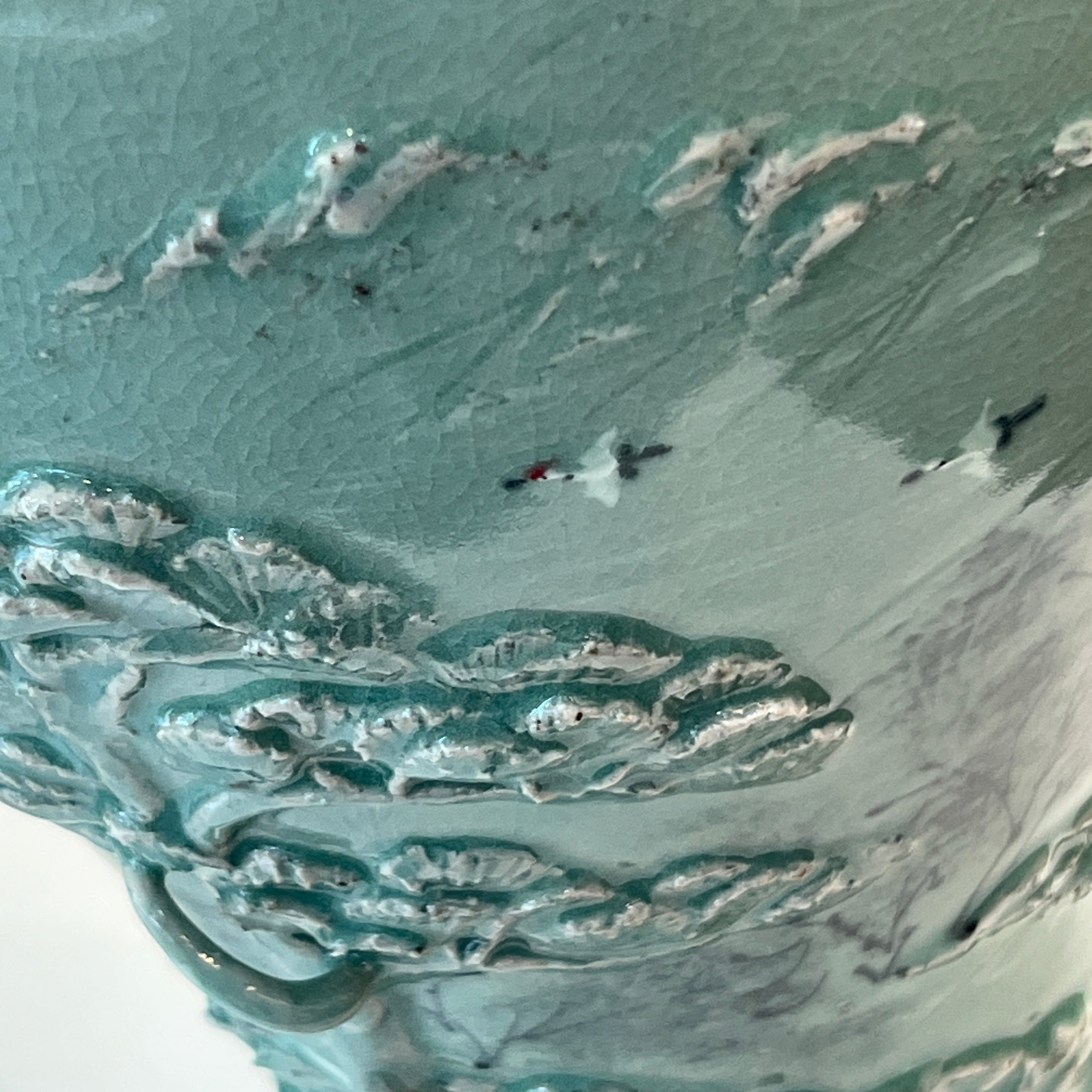
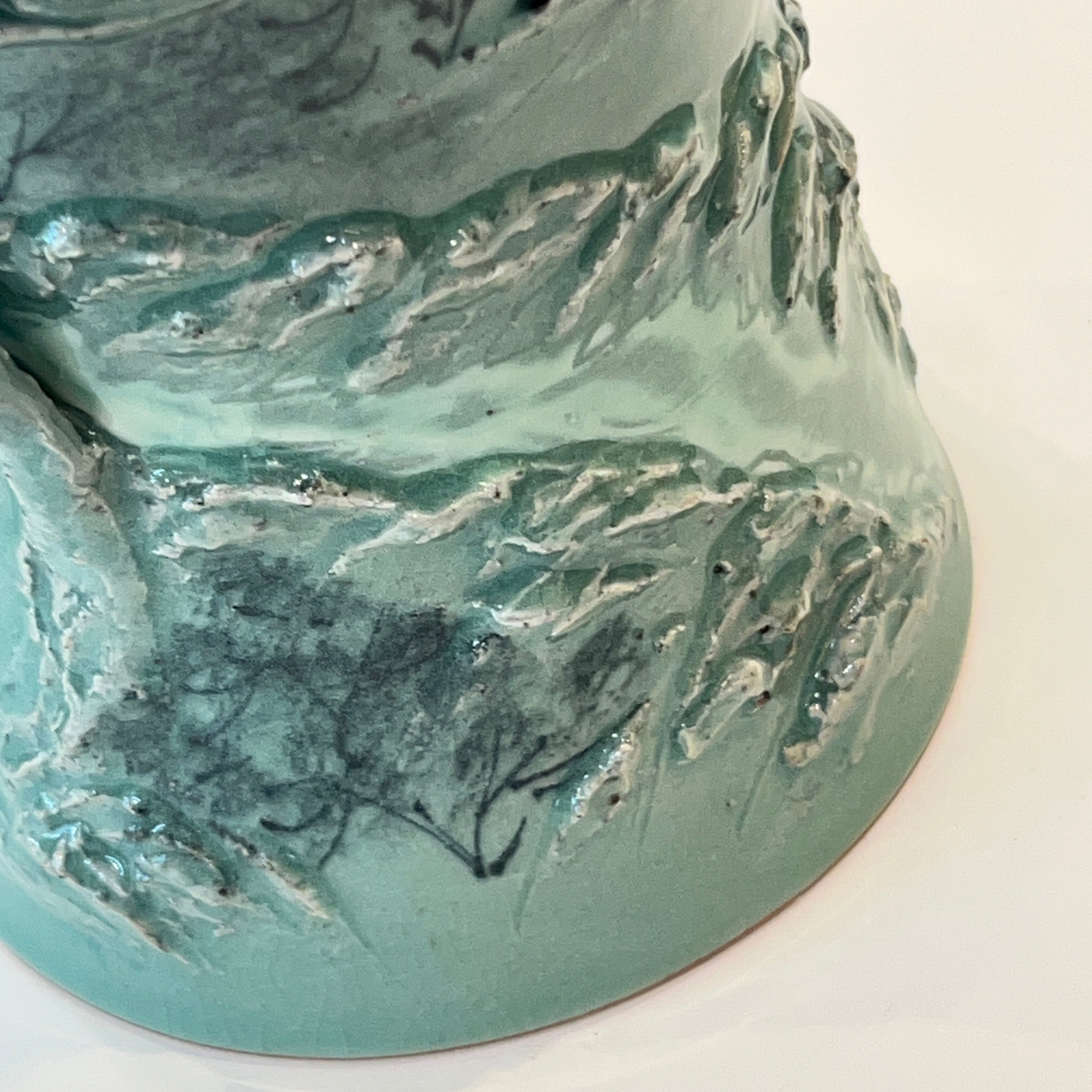
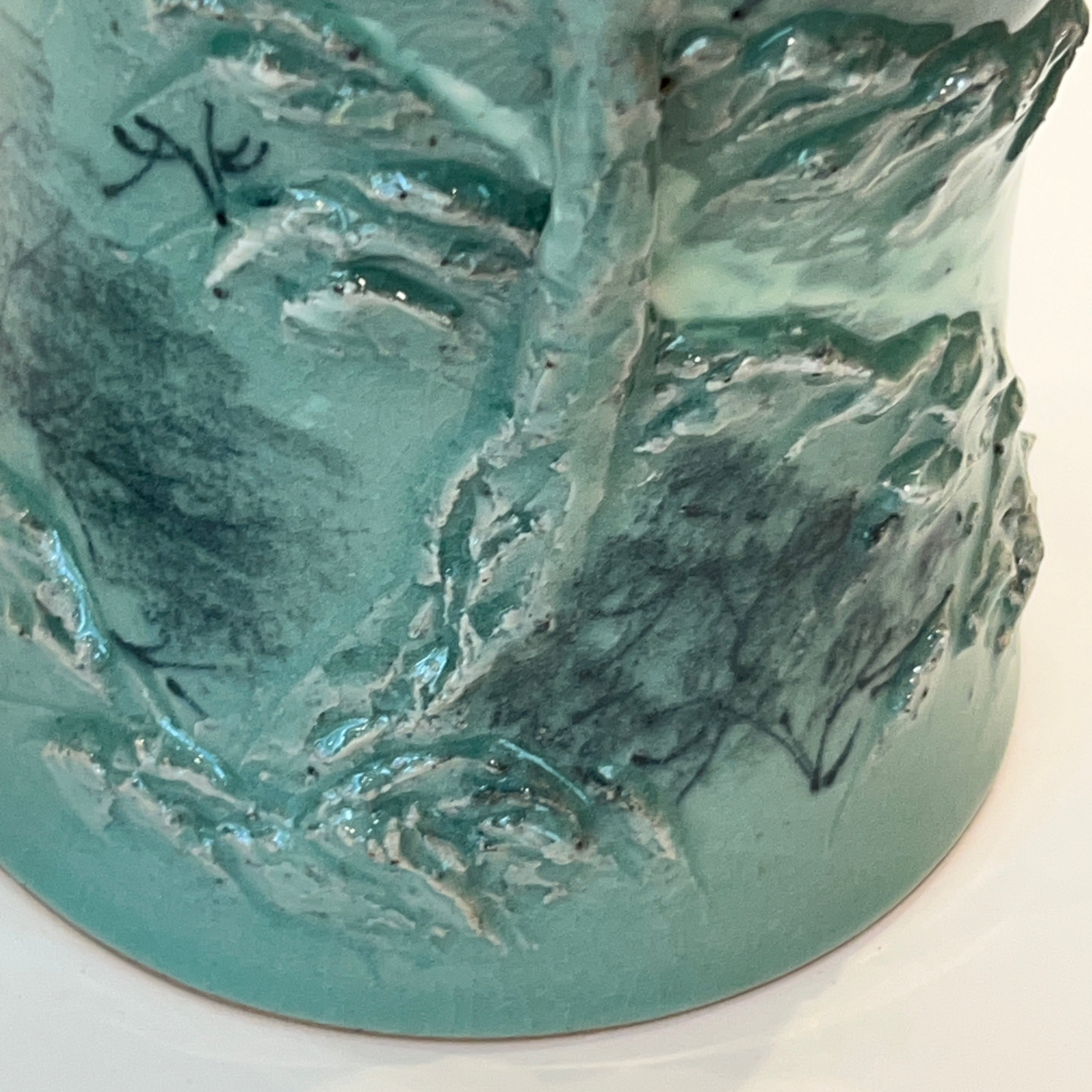
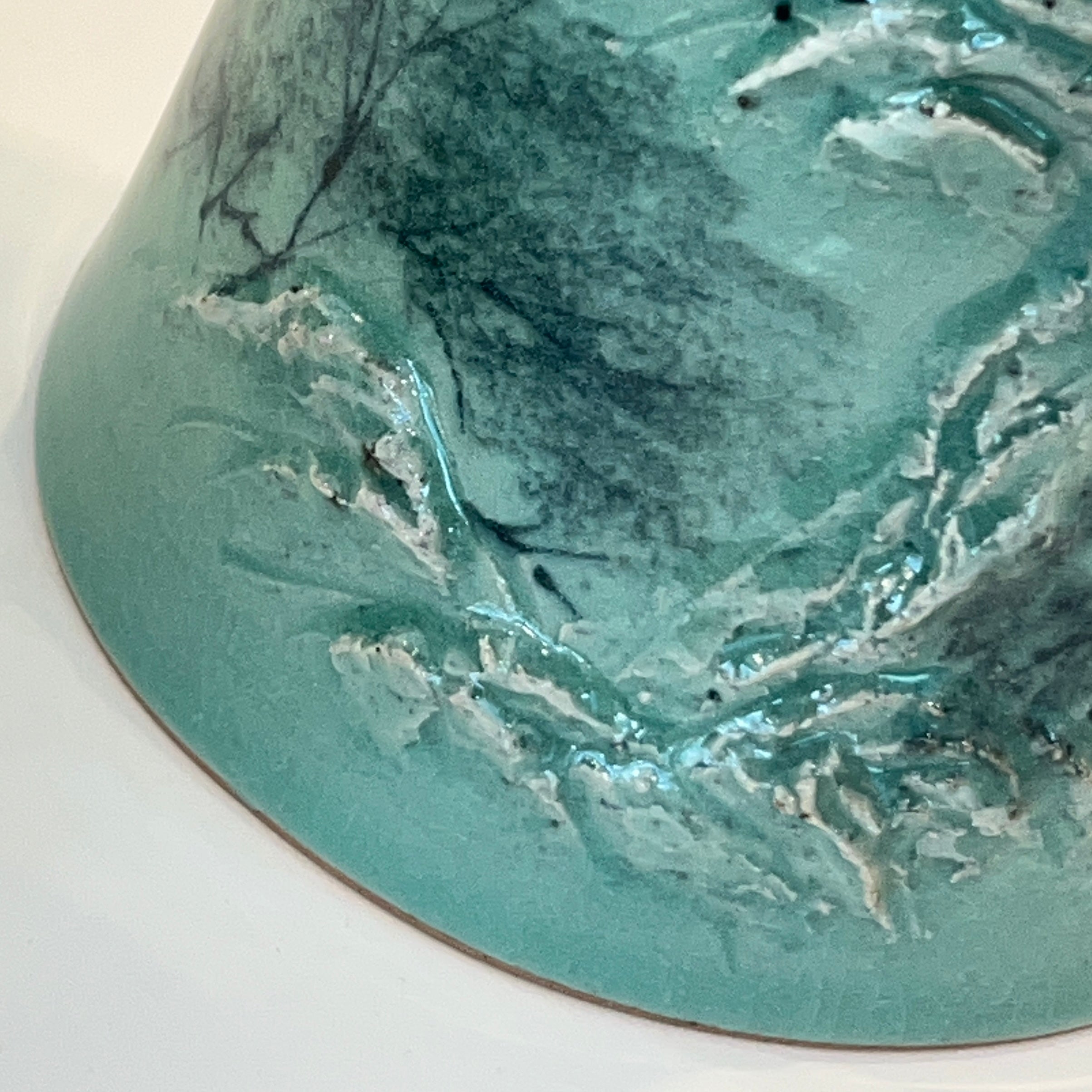
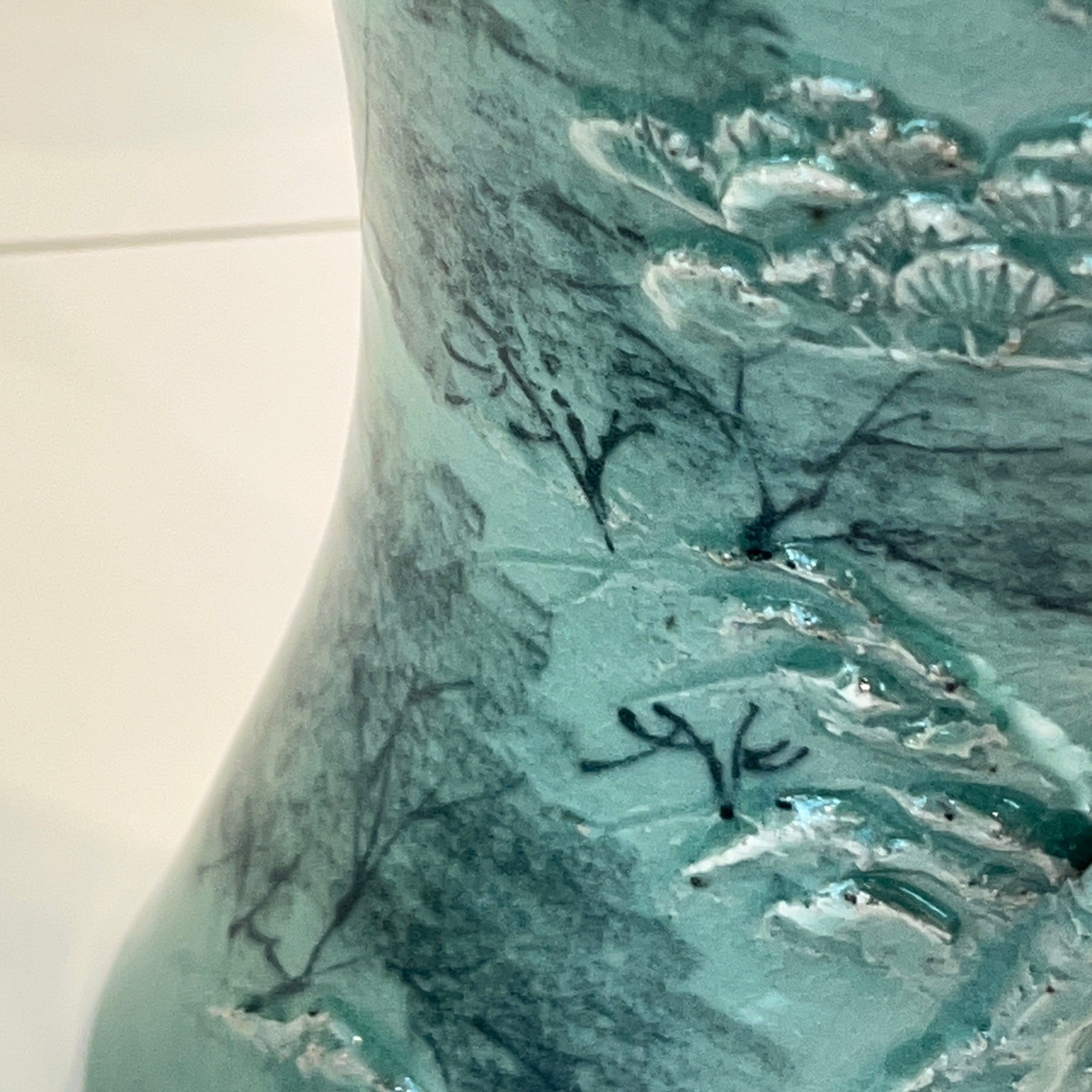
Created by the Icheon ceramic master Oh-hak Kwon, this celadon maebyeong vase transforms the classical Korean motifs of pine and crane into a sculptural landscape of unusual depth and grace. At first glance, the work appears calm and stately, defined by the poised silhouette of the maebyeong form and the quiet authority of celadon glaze. Yet the longer one looks, the more the surface reveals itself as an inhabited terrain: pine trunks lift and curve across the lower body, rocky ground begins to gather, and cranes pass through the open expanse above like signs of breath, movement, and blessing.
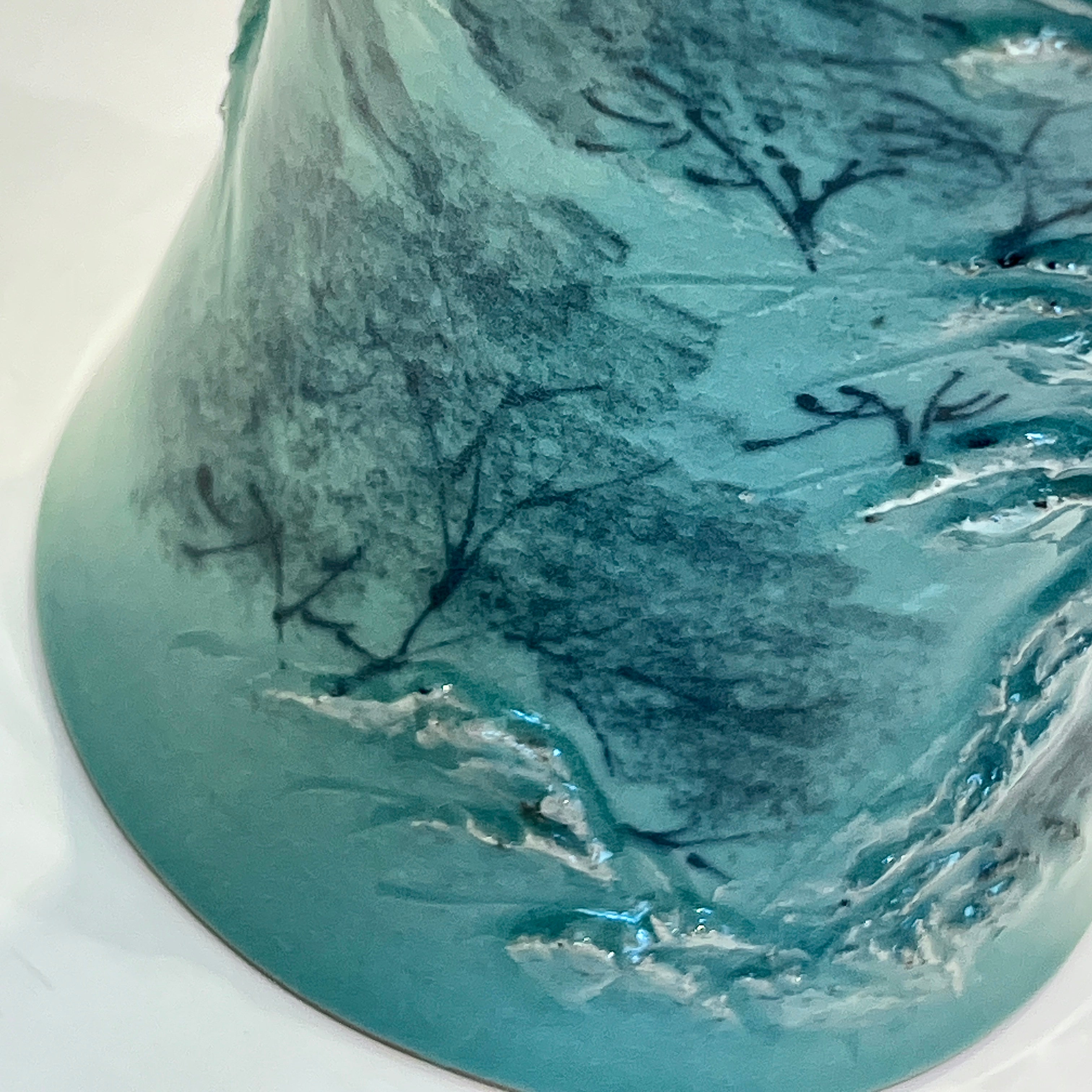
That unfolding is possible because the artist has not treated the vessel as a neutral support. The rounded body of the maebyeong becomes the pictorial field itself. Its broad upper section creates a spacious atmospheric zone, while its narrowing lower body concentrates the landscape and gives weight to the grounded elements below. This distinction is important. The upper register feels open, suspended, and airy; the lower portion feels inhabited, rooted, and materially present. The scene therefore moves from earth to air, from mountain ground to distant flight, and the viewer experiences the vase not as a decorated object but as a vertically ordered world.
The symbolism of the motifs deepens that experience. In Korean tradition, the pine is one of the most enduring images of constancy and moral strength. It remains green in winter, and for that reason has long been associated with fidelity, uprightness, and unchanging principle. The crane, by contrast, introduces a different but complementary register: elegance, longevity, and cultivated nobility. It is a creature of distance and elevated bearing, often appearing in Korean art as a bearer of auspicious aspiration. Together, pine and crane belong to the wider language of longevity imagery, yet here they do more than signify good fortune. They create a vision of the ideal life: enduring, refined, and harmonised with nature.
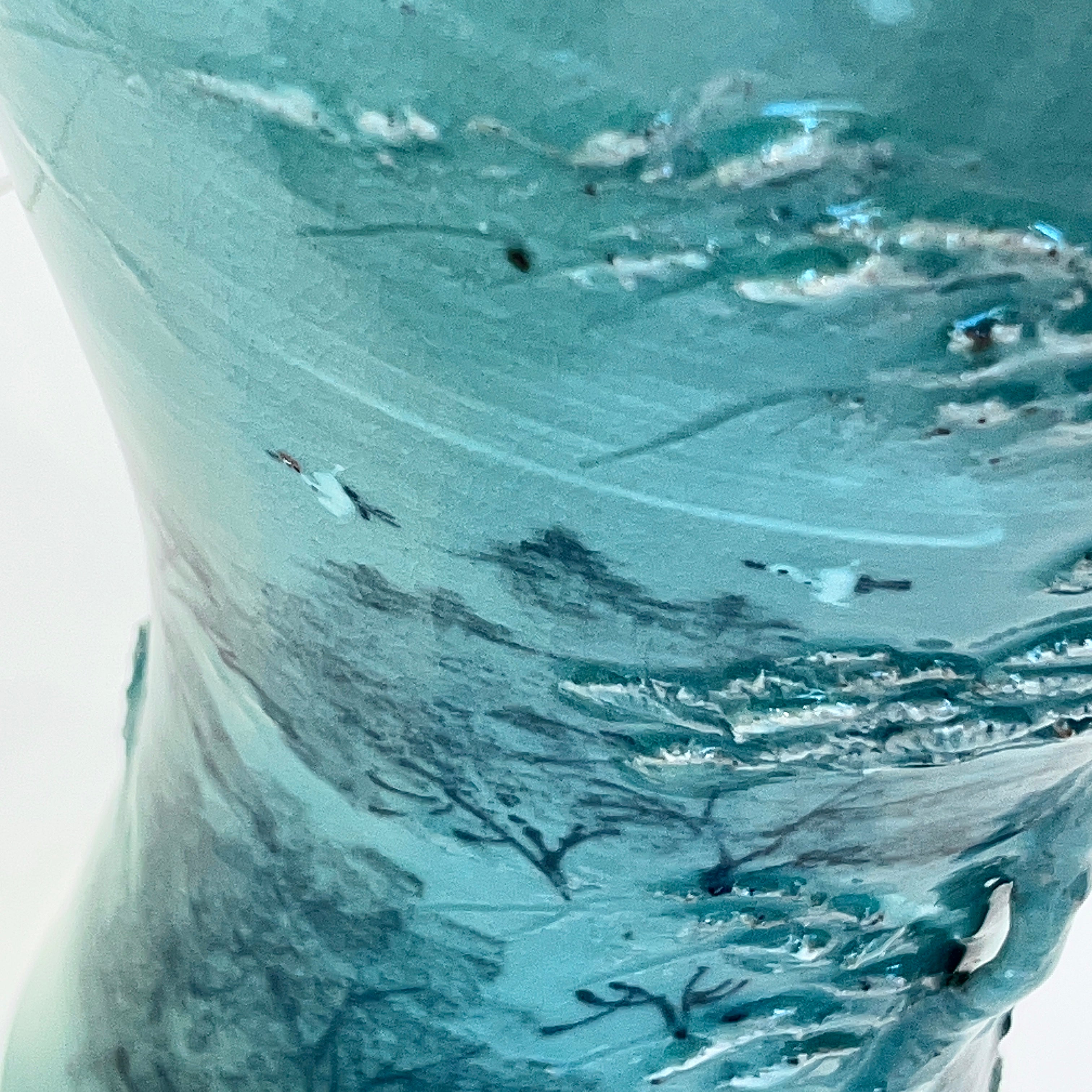
The applied relief technique is central to why this symbolism feels so alive. The pine forms and surrounding landscape elements are not merely drawn or lightly incised onto the surface; they are separately shaped and attached to the vessel’s curved wall. This makes the scene physically present. Branches advance slightly from the surface, ridges and rocky ground acquire mass, and the vase becomes tactile in a way that painting alone could never achieve. The relief allows the motif to inhabit the vessel rather than simply decorate it.
That same technique, however, is what makes the work so difficult. Applied relief on celadon carries significant technical risk, especially on a form as smoothly curved and tension-sensitive as the maebyeong. Every added element must adhere perfectly to the main body while maintaining compatible thickness and moisture content. If the relationship is misjudged, the joins may crack during drying, detach in firing, or distort as the clay contracts. The challenge is even greater because the work must survive not only structurally, but aesthetically: the relief must remain fully unified with the form, without appearing awkwardly attached or visually disruptive. In a successful piece such as this, the difficulty has disappeared into coherence.
The celadon glaze completes that coherence with remarkable subtlety. Its soft green tone does not flatten the modeling, but gathers along edges and recesses, clarifying the relief while simultaneously veiling it in atmosphere. This is one of the great strengths of celadon when handled with sensitivity: it can reveal form and soften it at the same time. Here, that dual quality allows the landscape to feel both articulated and dreamlike. Pine bark, distant terrain, and cranes in flight remain legible, yet they do not harden into illustration. Instead, they hover within a lyrical field suggestive of mist, spring light, and quiet mountain air.
The sense of spring vitality is also essential. Although pine and crane are classical motifs, the vase does not feel static or memorial. The scene carries renewal. The branches rise with living force, the air opens above them, and the cranes animate the composition without disturbing its calm. This is why the work can be described as holding “the vitality of a blossoming spring day” within clay. It is not vitality as exuberance, but as quiet emergence: a natural world awakening into fullness while retaining order and serenity.
What finally gives this vase its authority is the union of several difficult achievements. It is symbolically rich without becoming sentimental. It is technically ambitious without calling attention only to difficulty. It is sculptural, yet never heavy; pictorial, yet never merely descriptive. The applied relief makes the imagery physically immediate, the celadon glaze gives it atmosphere, and the maebyeong form holds the whole in a state of poised restraint. The result is a work that preserves the dignity of Korean celadon while allowing nature, auspiciousness, and artistic discipline to appear as one continuous presence.
Dimensions
- Diameter- 22cm (8.66 inch)
- Height- 37cm (14.57 inch)
Choose options