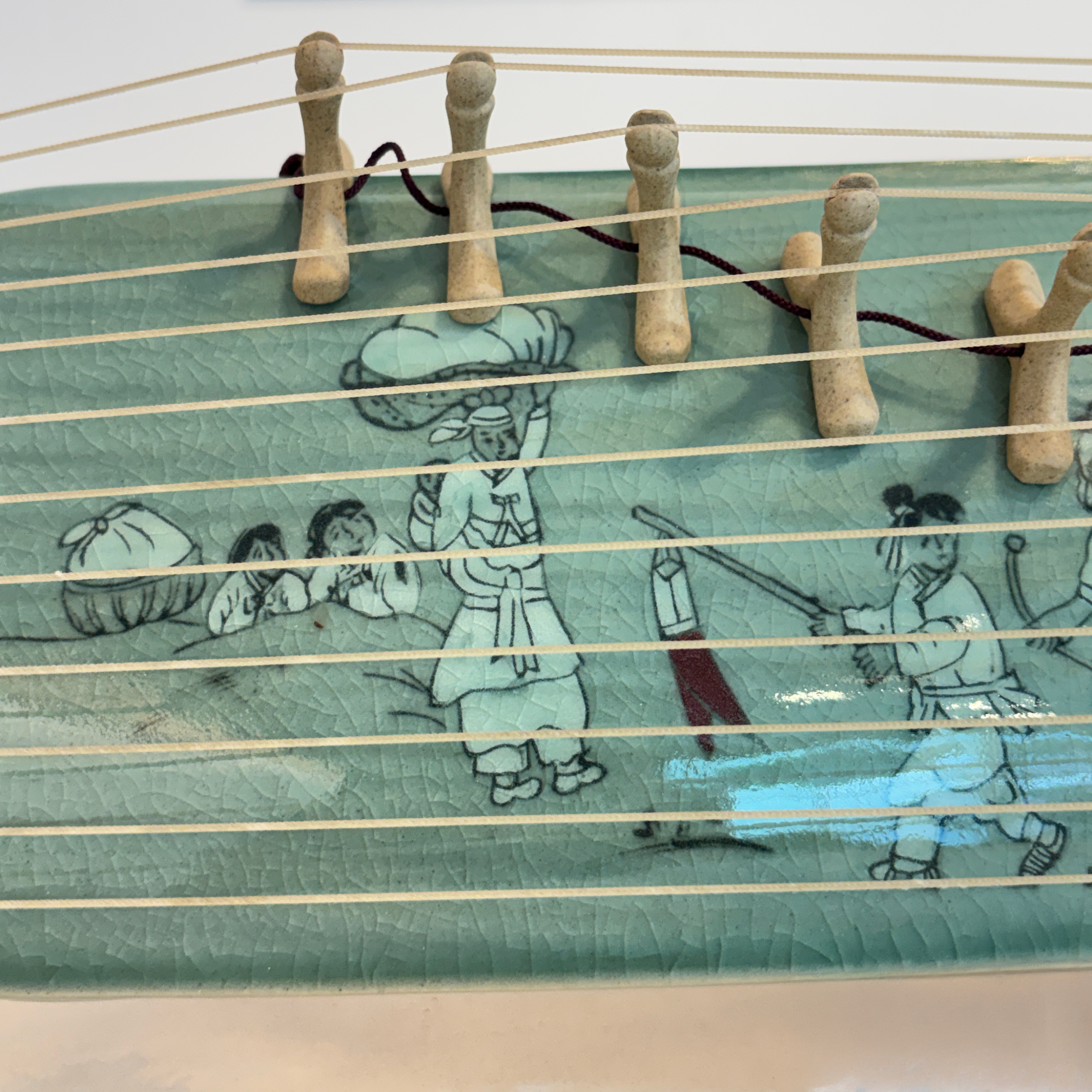

Celadon Sanjo Gayageum Sculpture: Inlaid Wedding Procession Motif, 2019
This work is chosen by those who understand that an object can preserve the memory of performance even when silence has become part of its form.
"The strings remain still, yet beneath them an entire procession continues to move."
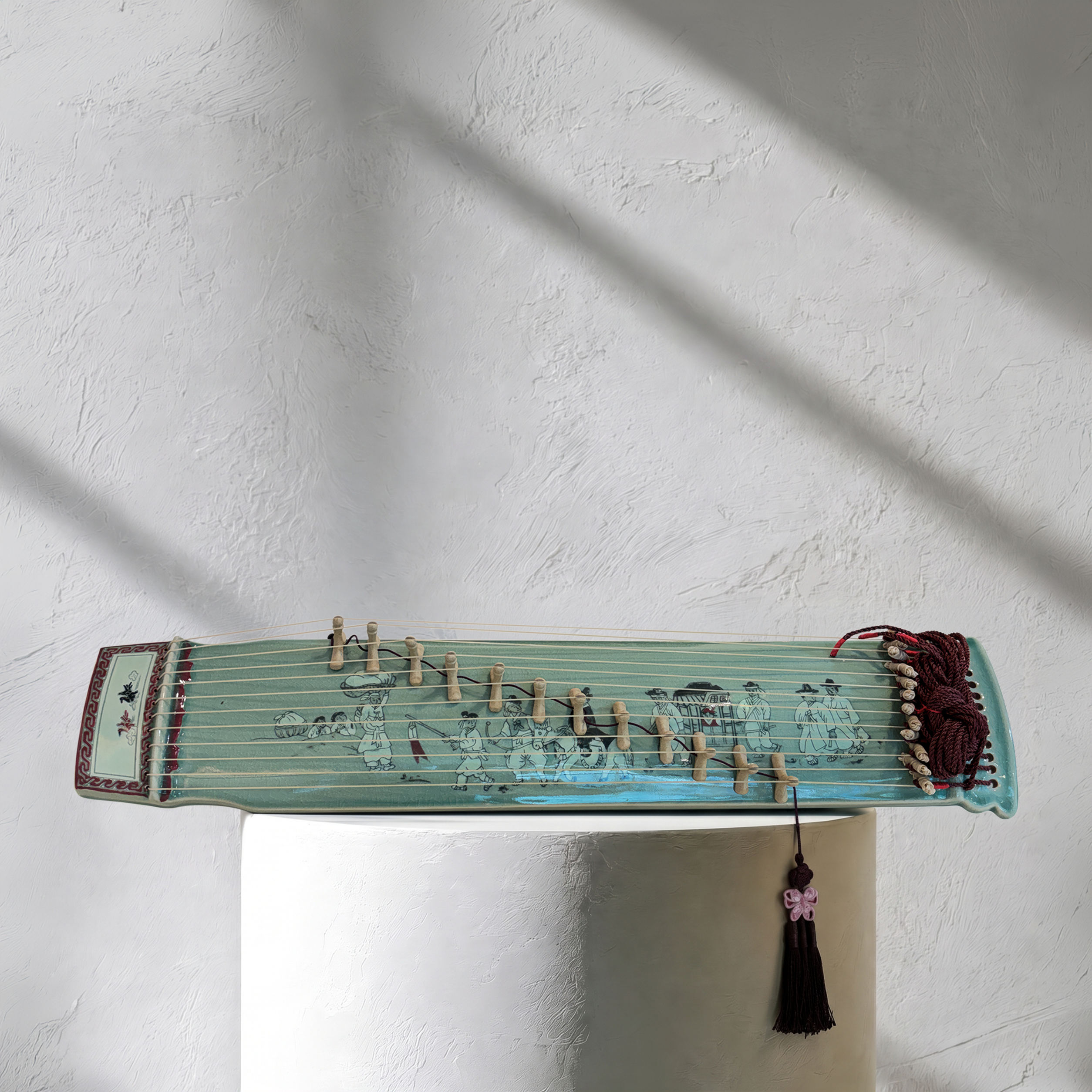
Kwon O-hak’s Celadon Sanjo Gayageum Sculpture: Inlaid Wedding Procession Motif begins with a deliberate contradiction. It takes the form of an instrument whose identity ordinarily depends upon vibration, resonance and touch, yet it has been created in fired clay and conceived as sculpture rather than as a playable gayageum. Its silence, however, does not empty the object of movement. Instead, movement has been transferred elsewhere — from sound into image.
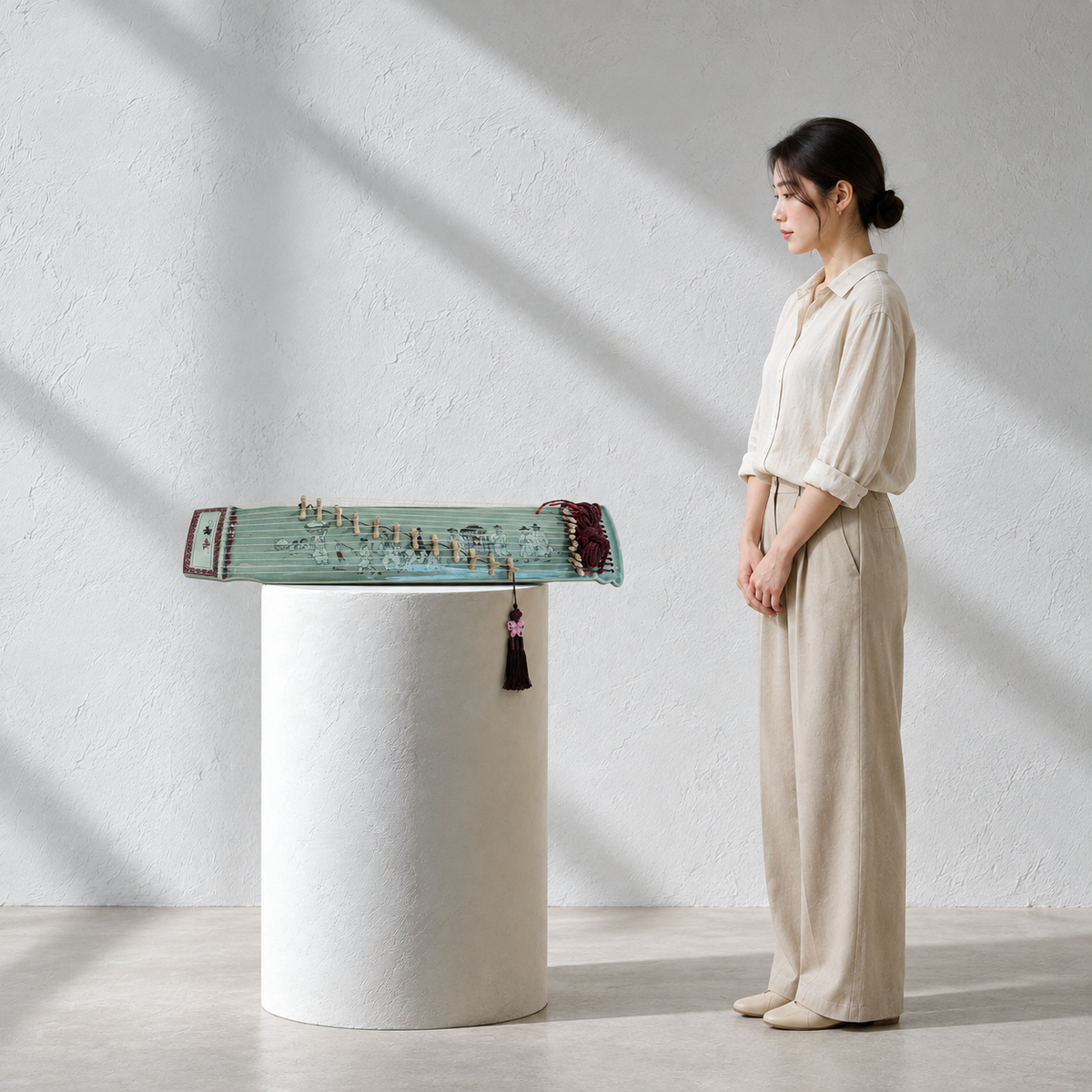
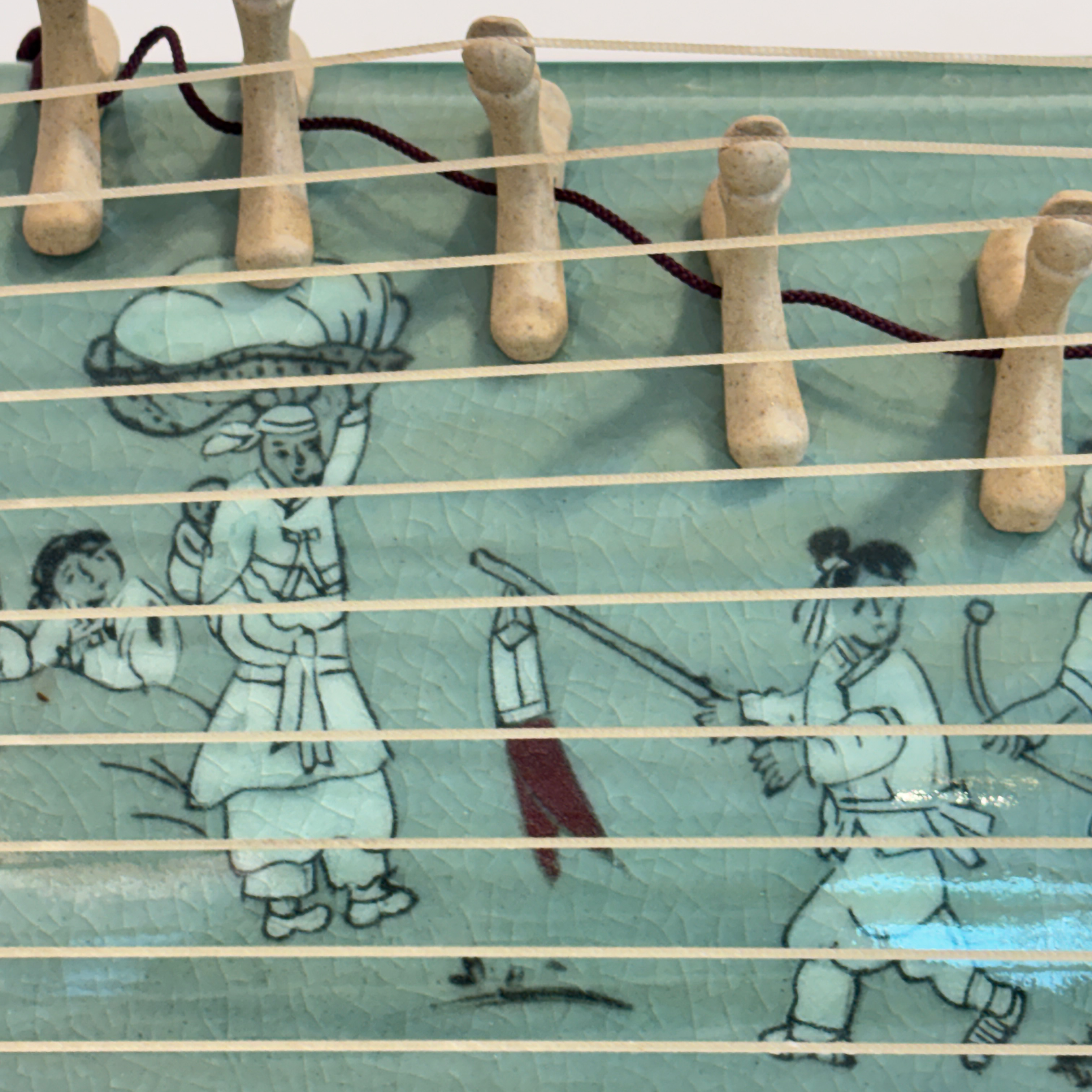
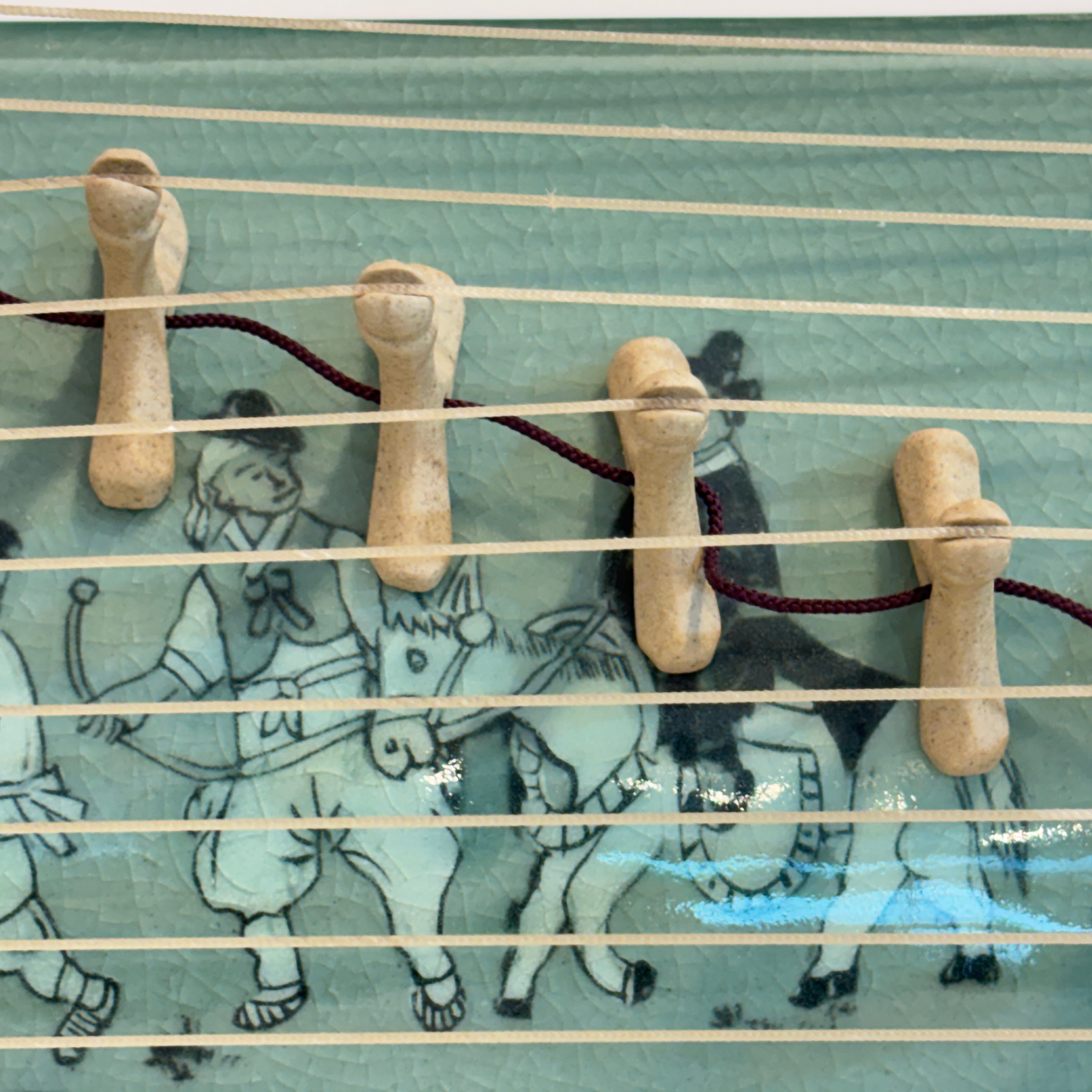
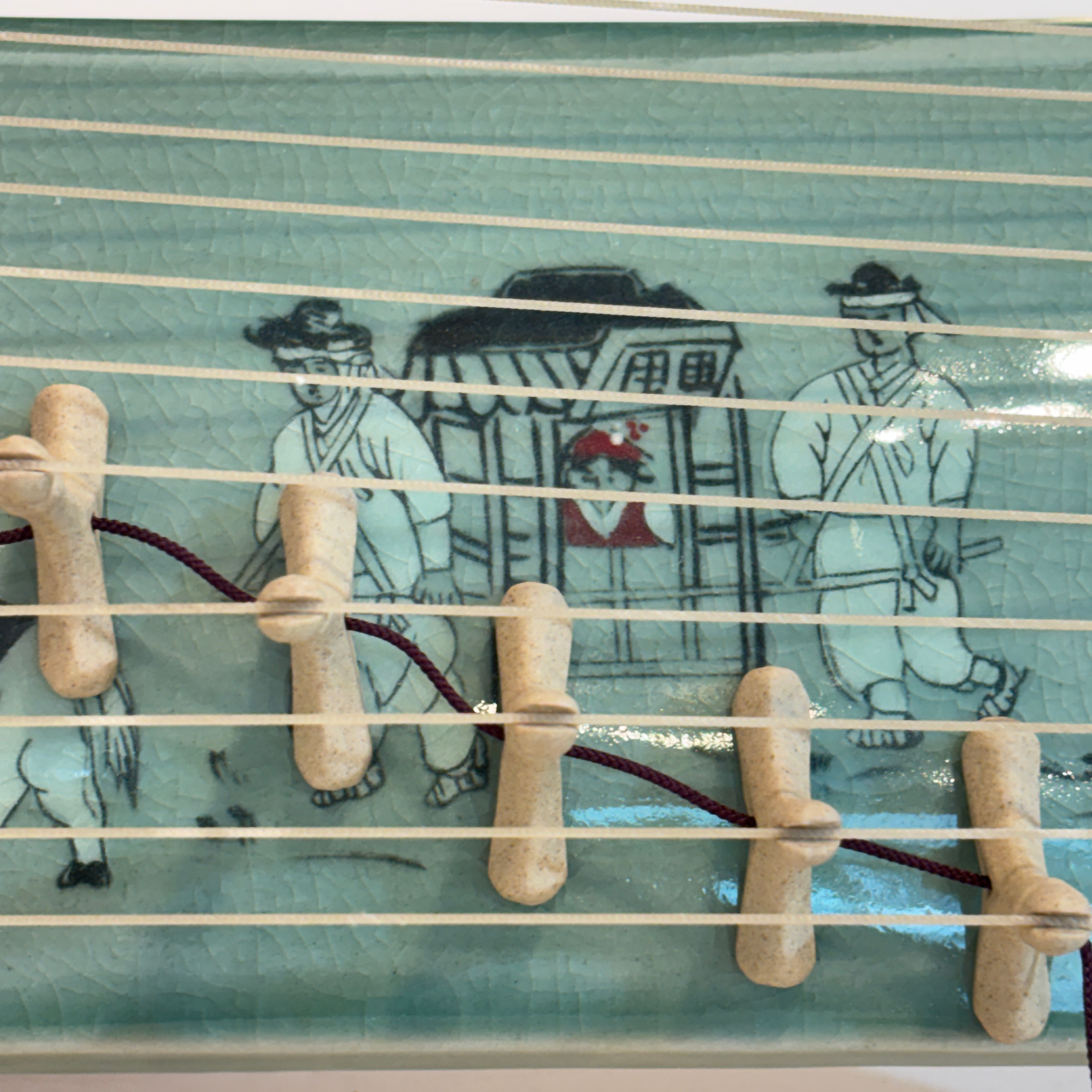
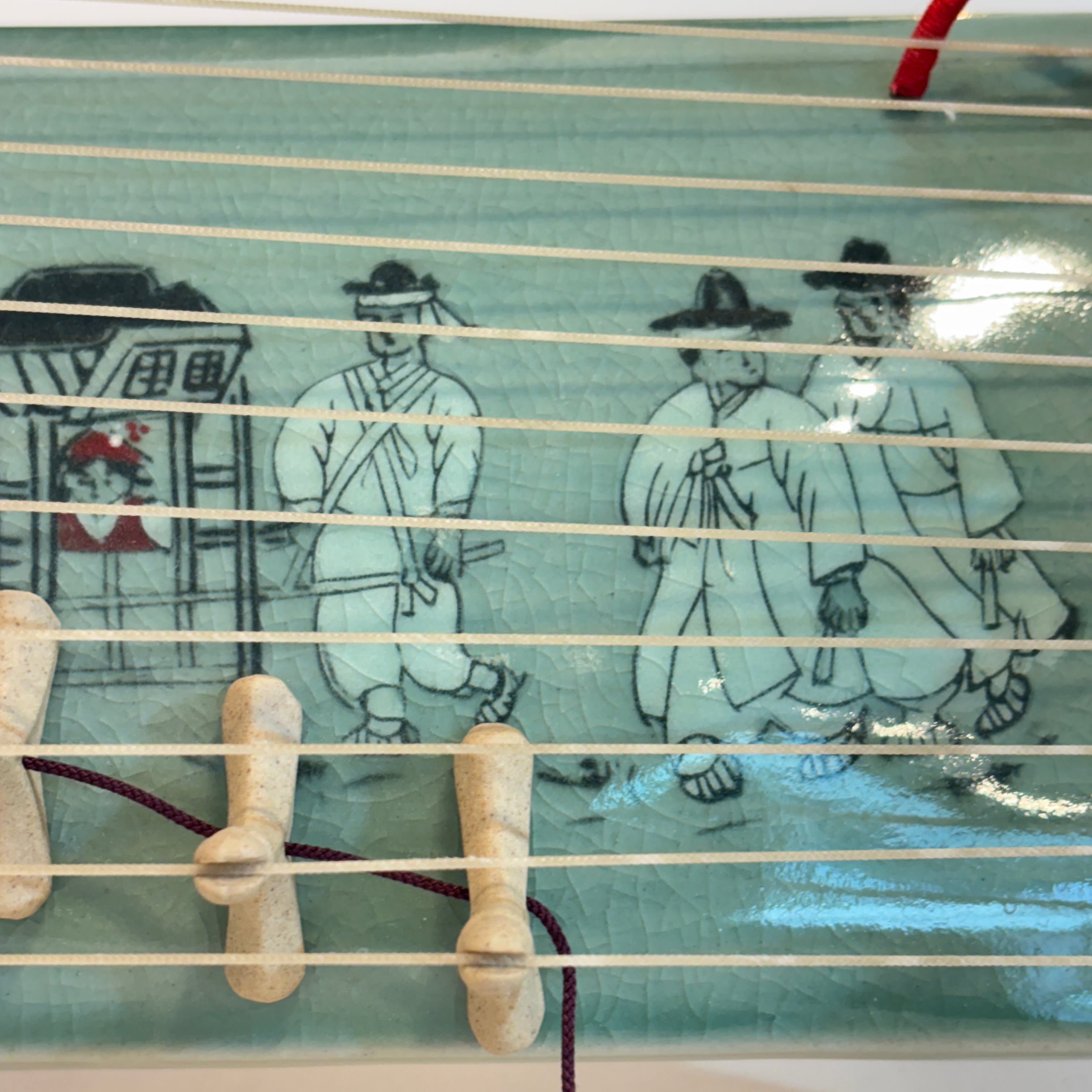
Across the approximately 56 cm ceramic body, a traditional Korean wedding procession unfolds from left to right.
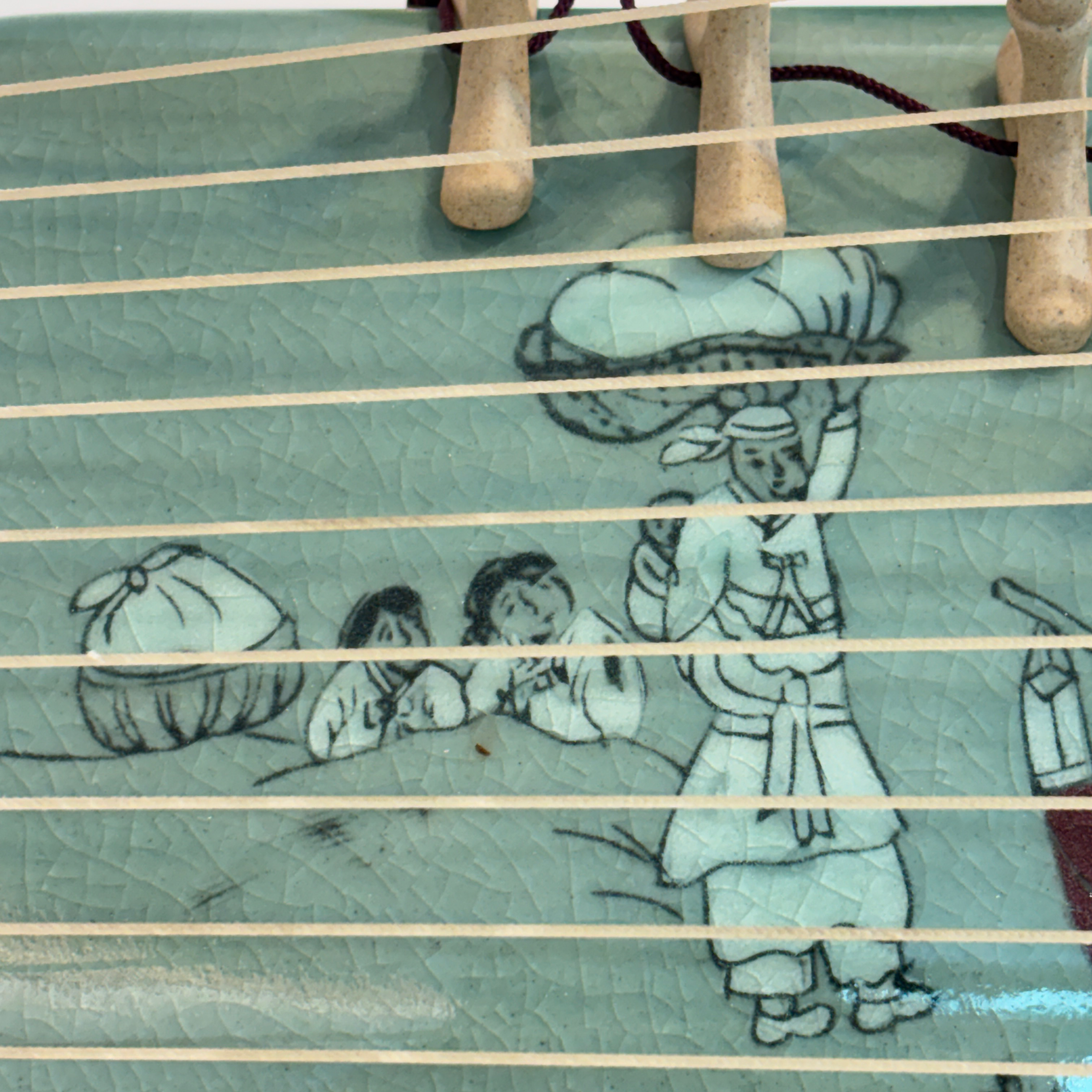
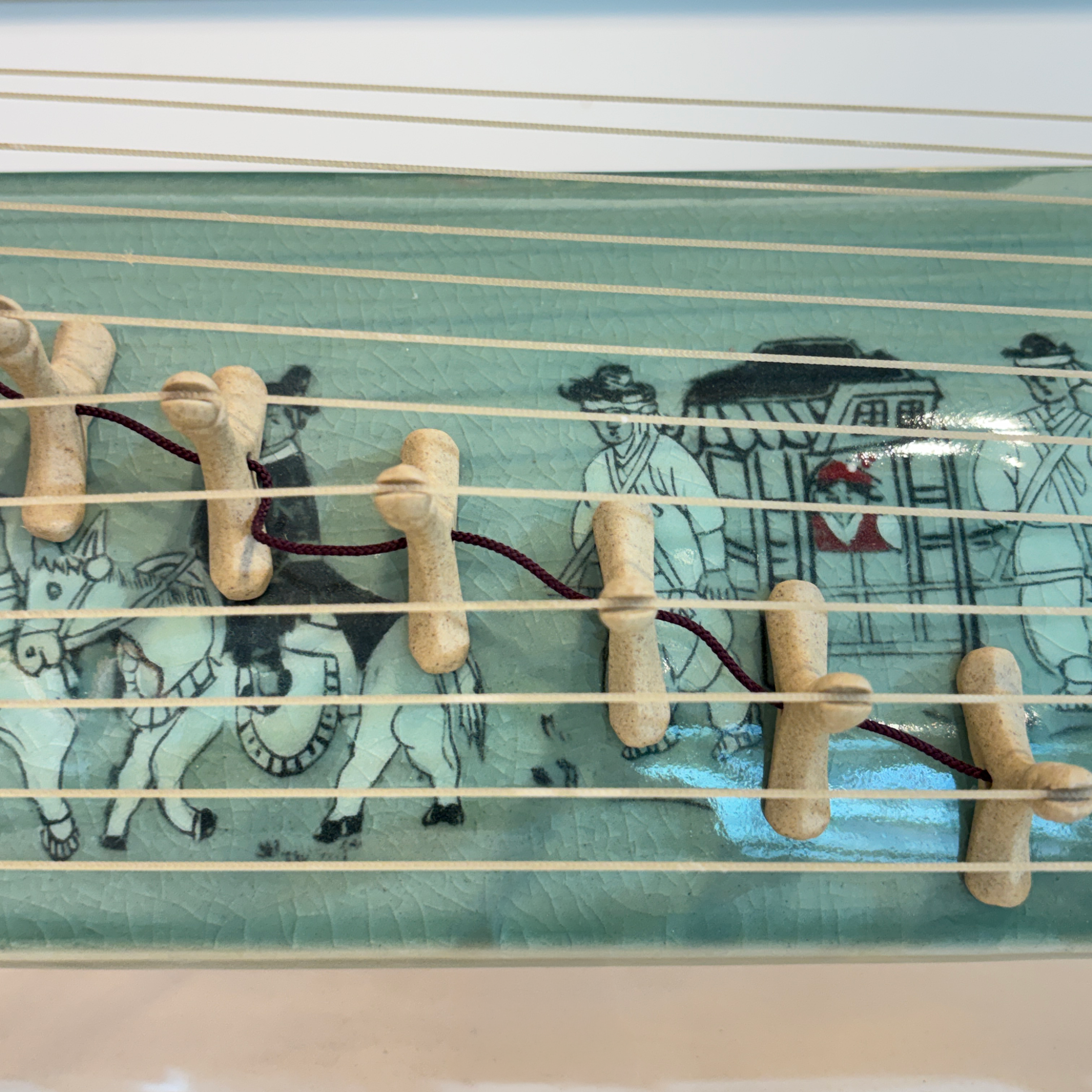
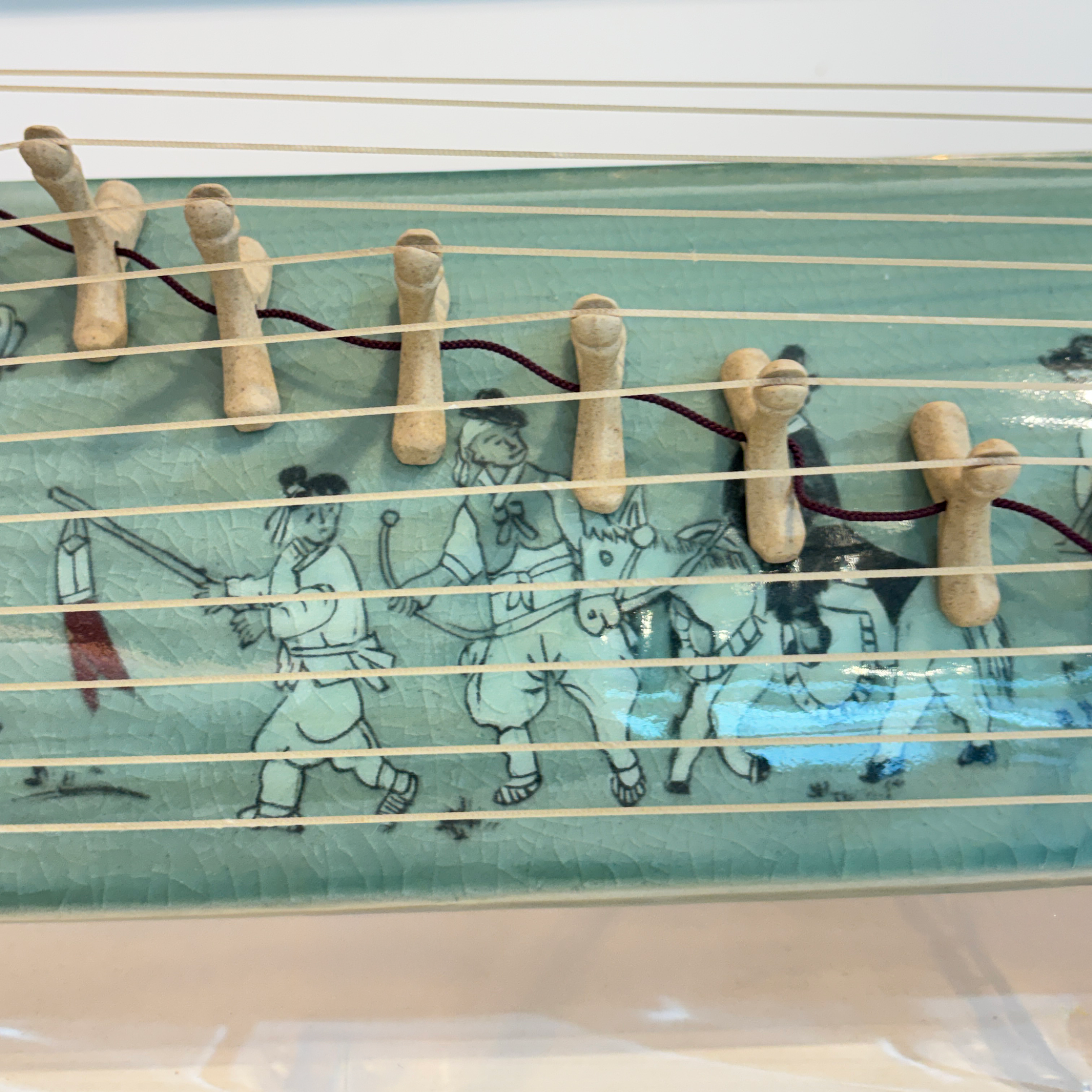
The narrative concerns the passage in which the groom travels to the bride’s household and, after joining with the bride, proceeds towards the groom’s home. Kwon does not condense this event into an emblematic bride-and-groom pairing. He gives attention instead to the larger social body surrounding the marriage: attendants, travellers, carried possessions, animals, a covered conveyance and figures distinguished through different garments and gestures.
This is important because the ceremony is presented not simply as union, but as transition.
Marriage here is movement between households, between one social condition and another, and between departure and arrival. The unusually long horizontal body of the gayageum gives that transition a physical direction. The procession is therefore not merely placed upon the instrument; it is composed according to the instrument’s shape.
The gayageum itself becomes a kind of road.
Its extended body encourages the eye to travel laterally. Parallel strings reinforce this direction, producing a continuous visual current from one end of the work to the other. Against this strict horizontal order, the human figures provide variation: one carries, another walks, another turns, another accompanies an animal. Their small differences prevent the procession from becoming pattern. It remains populated by individuals.
The composition becomes particularly sophisticated where narrative and instrumental structure overlap.
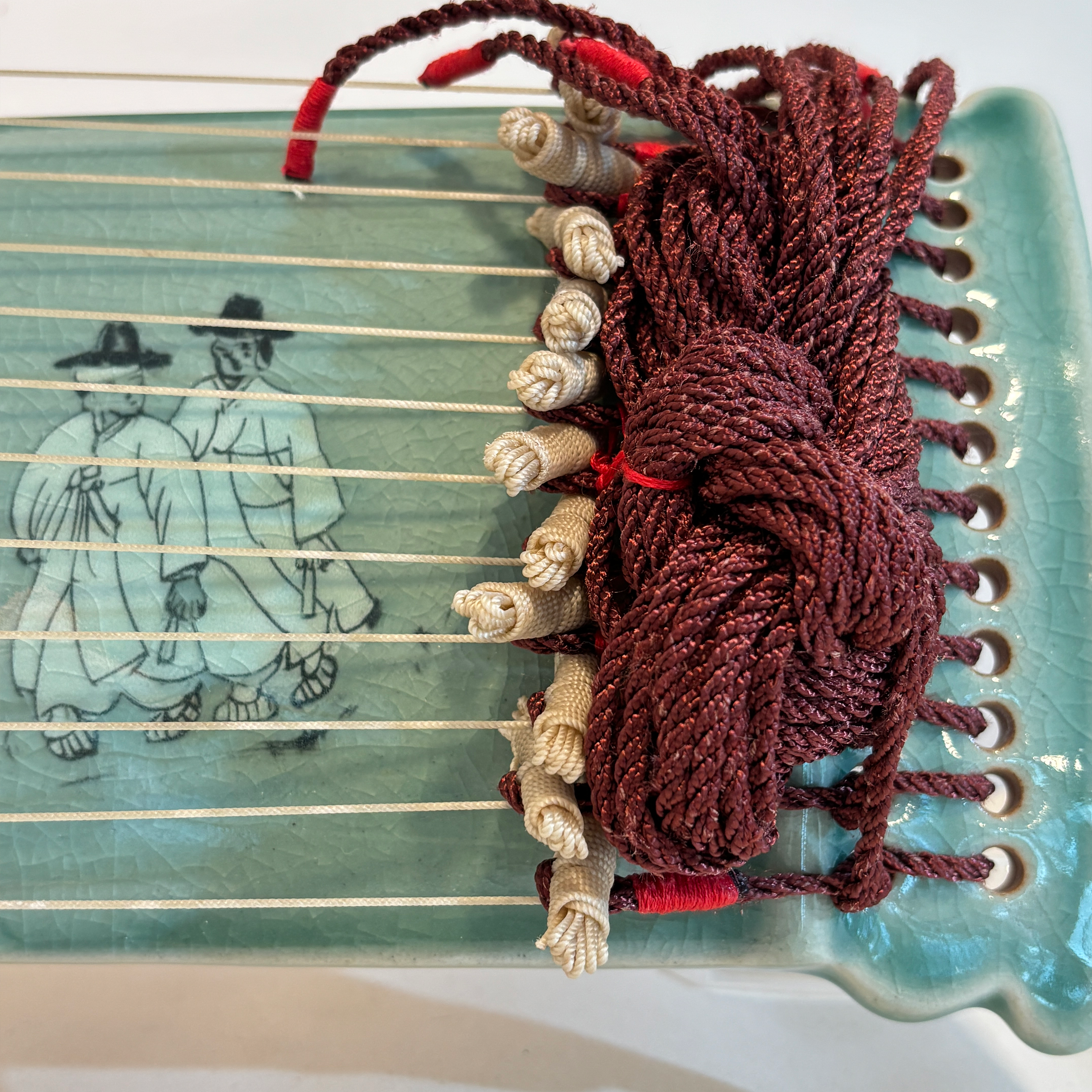
The figures do not occupy an unobstructed pictorial field. They must exist behind a working vocabulary of strings and bridges. The anjok rise at intervals across the glazed surface, physically interrupting the image, while the strings stretch across faces, garments, animals and architecture. From a conventional pictorial point of view, such interruptions might seem undesirable. Here, they are fundamental.
Kwon allows two systems to occupy the same plane.
One is the visual order of music: repeated strings, measured intervals, bridges and tension. The other is the narrative order of procession: people, movement, ceremony and travel. Neither completely yields to the other. Instead, the viewer continually changes modes of attention. From a distance, the sculpture first reads as a gayageum. At closer range, the wedding scene becomes increasingly legible. Closer still, the eye begins to move between ceramic surface, line, string and individual bridge.
The work was made this way because the gayageum is more than a convenient support for decoration. Its structure supplies an implicit rhythm to the procession. The evenly stretched strings establish continuity, while the changing positions of the bridges create syncopation across the surface. In visual terms, they perform something close to musical phrasing: repetition interrupted by measured variation.
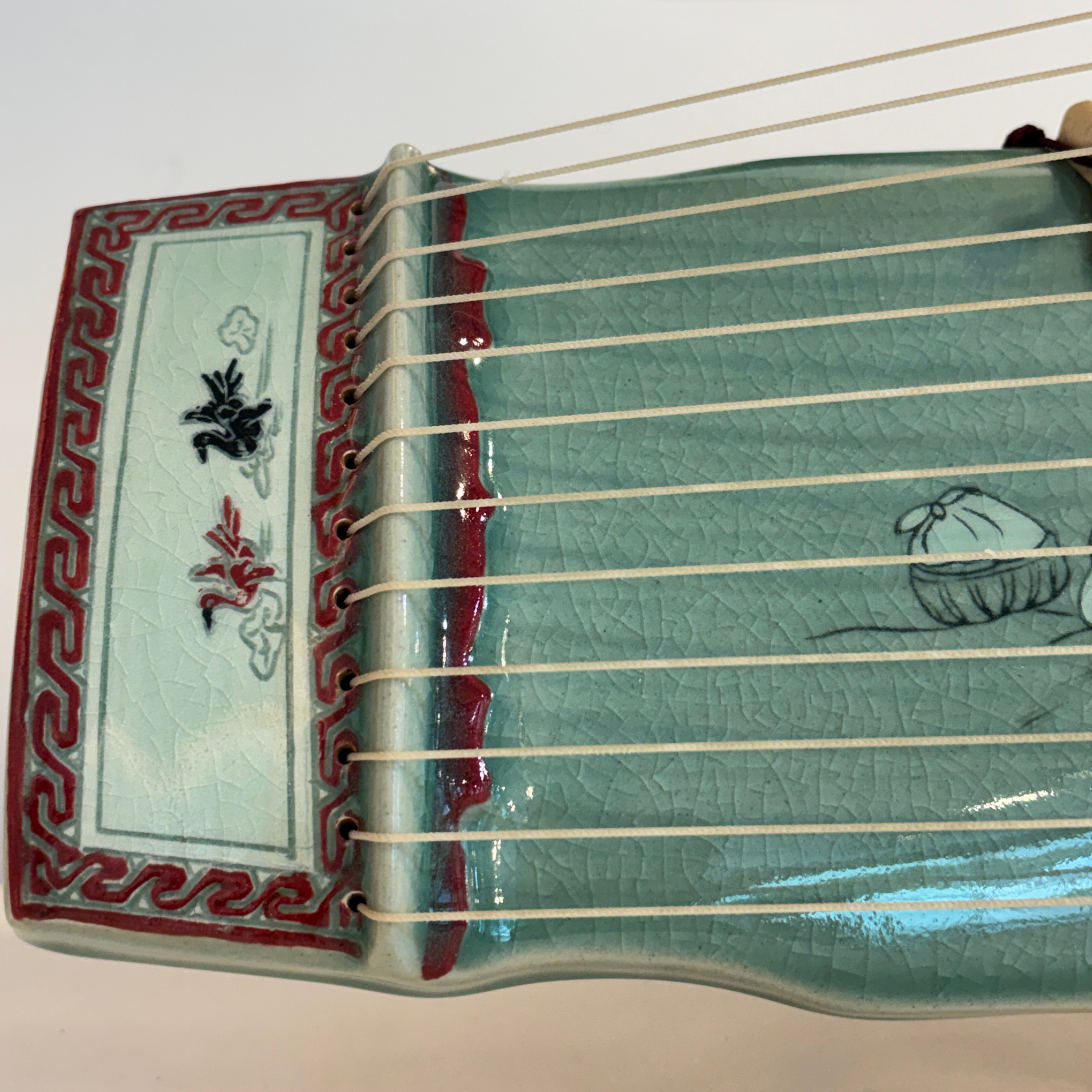
The wedding procession similarly introduces rhythm through recurrence. Figures appear, separate and regroup. Garments alternate between pale fields and darker outlines. Red is used sparingly, creating small visual accents within the dominant celadon atmosphere. Rather than flooding the work with ceremonial colour, these concentrated notes of red allow the eye to pause at particular moments.
The ceramic body itself holds these systems together.
Its celadon glaze is pale and luminous, with a fine crackled surface that prevents the large expanse from appearing visually empty. The glaze creates depth without competing with the narrative. At different angles, reflections move across the body, briefly obscuring and then returning the figures to view. The procession therefore never appears entirely fixed. Light continually modifies it.
The technical implications of making such a form are considerable. A ceramic body of this length must remain sufficiently straight and stable through drying and firing. The greater the horizontal span, the more consequential even slight distortion becomes. Clay contracts. Weight is redistributed. Heat does not act upon every area identically. A form that may appear disciplined before firing can bend, fracture or collapse in the kiln.
For this reason, creating the gayageum body is already an exercise in controlled risk before the narrative decoration is considered.
The sanggam imagery increases that demand. A large field must be planned with enough consistency for the procession to remain readable from end to end, while the intervention into the ceramic surface must coexist with the structural requirements of the body. Scale, decoration and form cannot be treated as separate stages. Each affects the survival and visual balance of the others.
Although the work is not playable, the artist has not reduced the instrument to a simplified symbol. Traditional components — including elements identified as anjok, hakseul and budeul — have been carefully recreated. The strings are secured along the body, the bridges stand independently across the surface, and textile cords gather densely at one end. Even the differing materials and colours contribute to the sense that this is an instrument arrested just before use.
That fidelity changes the meaning of its silence.
If the form were only loosely suggestive of a gayageum, silence would be expected. Because its structure is rendered so attentively, however, the absence of performance becomes perceptible. The viewer recognises an instrument and instinctively anticipates sound, yet none arrives.
Instead, the procession supplies another form of rhythm.
The figures continue from one side to the other; the strings continue above them; the eye continues moving. Sound has been replaced by duration.
In Korean culture, both the gayageum and the traditional wedding ceremony belong to practices understood through sequence rather than isolated image. Music unfolds in time. A procession unfolds through movement. By joining these two temporal forms within the permanence of fired celadon, Kwon creates an unusual tension between moment and endurance.
The wedding party is forever travelling.
The strings are forever waiting.
And the ceramic body holds both conditions in suspension.
The sculpture ultimately asks to be experienced not as an imitation of an instrument, nor simply as a decorated ceramic object, but as a meeting of three Korean cultural languages: celadon as material memory, the gayageum as musical structure, and the wedding procession as collective passage.
Its most compelling quality lies precisely in the fact that none of these remains untouched by the others. The instrument becomes landscape. The procession becomes rhythm. And clay, once fired into stillness, becomes the place where both continue.
Dimensions
- Width- 56cm (21.65 inch)
- Depth- 14cm (5.51 inch)
- Height- 6cm (2.36 inch)
Choose options